









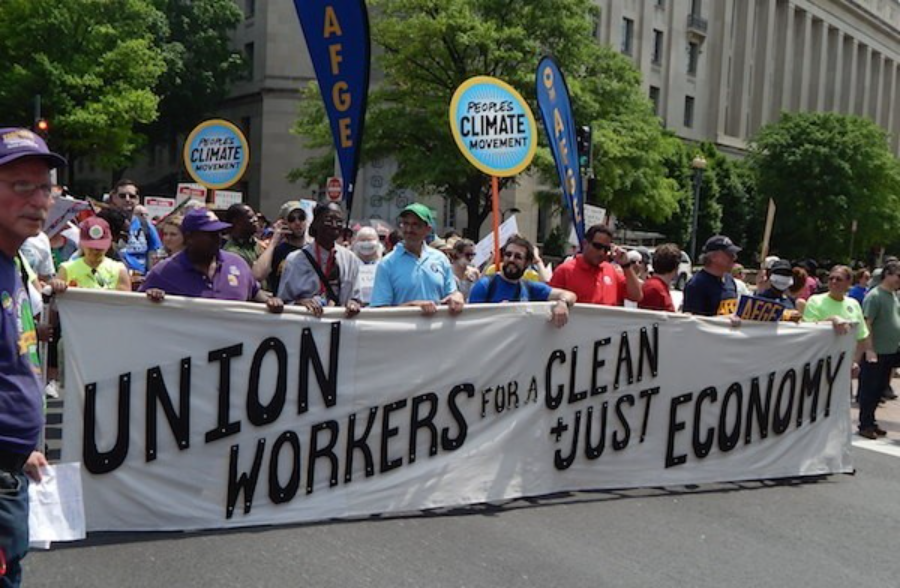
Todd Vachon, RCEI Affiliate, is a co-author of a new study that explores how different groups—like labor unions, environmental advocates, and community organizations—can work together to create fair and effective climate policies. The study, published in Environmental Politics, compares two major efforts in Washington State and Colorado to build what are called “just transition” coalitions.
A “just transition” means making sure that as we move away from fossil fuels, we don’t leave workers or vulnerable communities behind. The study looks at how coalitions in both states tried to do this—but with very different results.
In Washington, the coalition created a ballot initiative called Initiative 1631. This was a proposal that voters could approve directly. It aimed to reduce carbon pollution by charging a fee on emissions and using the money to invest in clean energy, pollution cleanup, and support for workers and communities most affected by climate change. The coalition behind it—made up of labor unions, environmental groups, Indigenous leaders, and community justice organizations—worked hard to make sure everyone had an equal voice. They even included protections for tribal lands and gave communities control over how funds would be spent.
Although Initiative 1631 was ultimately defeated at the ballot box in 2018—after a massive opposition campaign funded by fossil fuel companies—it showed how inclusive, democratic coalitions can create bold and equitable climate proposals.
In contrast, Colorado passed a law in 2019 called House Bill 19-1314, which created a state-led plan to help coal workers and communities transition to cleaner energy. While this was a legislative success, the coalition behind it became narrower over time. Environmental justice groups were largely left out of the final decision-making process, and the plan focused mainly on coal-related jobs, leaving out other fossil fuel industries like oil and gas. As a result, the policy didn’t fully address racial or environmental justice concerns.
This raises a tough question: if more inclusive and fair proposals like Washington’s are harder to pass, should coalitions aim for simpler, more politically “safe” plans like Colorado’s? The authors argue that while fairness may come with political risks, it also builds stronger, more lasting coalitions. Washington’s plan may have lost at the ballot box, but it created a model for how to center justice in climate policy. And as public awareness grows, future proposals that are both fair and effective may have a better chance of becoming law.
“This research shows that when communities, workers, and environmental advocates truly share power, they can build climate solutions that uplift everyone—not just the most powerful,” said Vachon.
This research has real-world value. It can help policymakers, activists, and communities design better climate and energy plans that are not only environmentally sound but also socially just.
The original study can be found here.
This article was written with assistance from Artificial Intelligence, was reviewed and edited by Oliver Stringham, and was reviewed by Todd Vachon, a co-author on the study.
Related posts:
 Rutgers to Receive Almost $800K to Help Small Businesses Across NJ Reduce Hazardous Waste
 NJ Youth Share Solutions to Combat Climate Change Effects in Their Own Communities
 Researchers Find Climate Change Threatens Global Food Supply
 Rutgers Botanist Builds Bridge Between Science and Art in MoMA Exhibit on Hilma af Klint