









Derek Shendell, DEnv, MPH, professor in the Department of Environmental and Occupational Health and Justice at the Rutgers School of Public Health and RCEI Affiliate, is co-author of a new study published in the Journal of Environmental Health. You can read the full study here1.
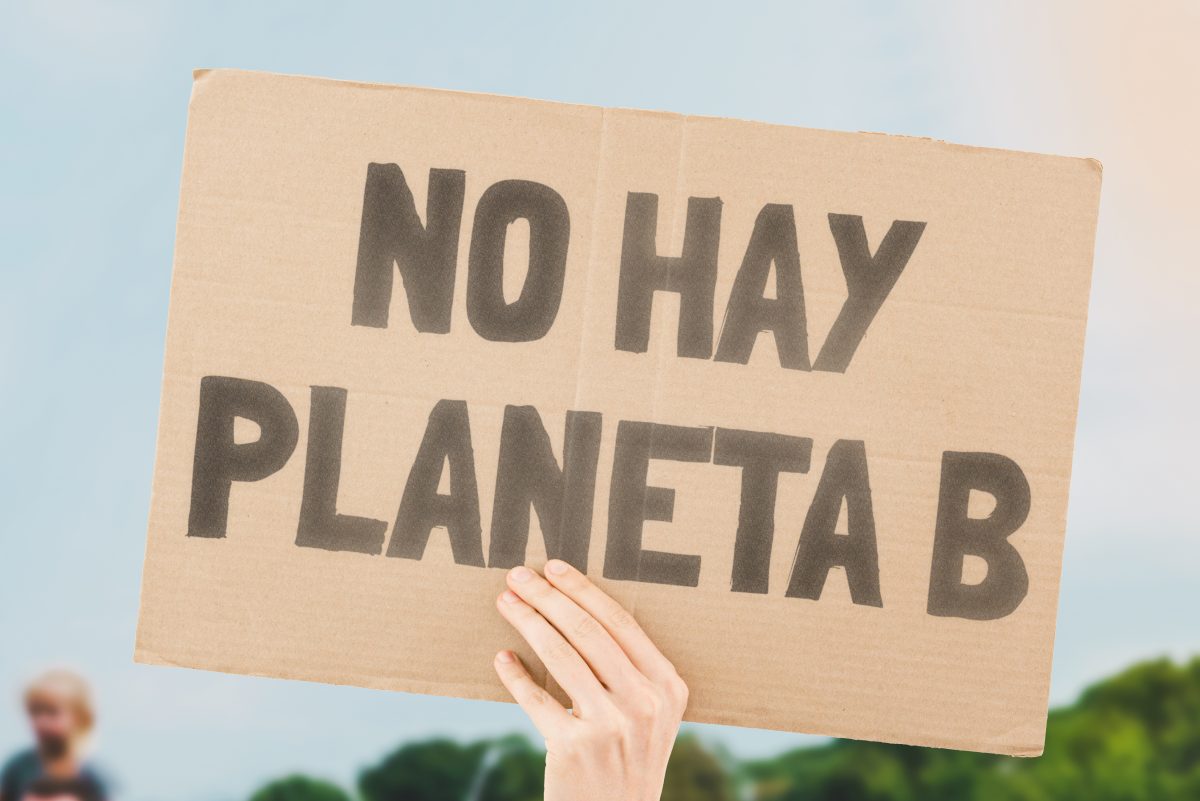
Many students in New Jersey and across the U.S. speak English at school but speak Spanish at home with family. When it comes to learning about complex topics like climate change and environmental justice, having materials available in Spanish can make a big difference. It helps students better understand, talk about, and act on what they learn — especially when sharing information with parents or their communities.
In this study, the authors translated an existing online course on climate change, sustainability, and environmental justice into Spanish. The course, created by the New Jersey Safe Schools Program, includes five modules that teach students about climate science, the role of human activities, and why environmental justice matters locally. The new Spanish version was piloted in two New Jersey schools and one in Houston, Texas.
Importantly, the pilot included both students and teachers. Teachers play a big role because they can keep using what they learn to reach more students year after year. In this pilot, 10 people completed the full course — six students and four teachers — across two New Jersey schools and one in Houston, Texas.
Even with this small group, the results were encouraging. Most students and teachers recognized climate change as a real and human-driven problem. Many reported taking steps like reducing single-use plastics and saw environmental justice as closely tied to protecting the environment. Teachers’ involvement is especially important because they can guide class discussions and help students connect lessons to their own communities.
By offering this course in Spanish, the project helps include more students from immigrant and Spanish-speaking families in climate education. This can increase public awareness and empower young people to share knowledge in their communities, supporting efforts to address local climate challenges and health impacts.
This article was written with assistance from Artificial Intelligence, was reviewed and edited by Oliver Stringham, and was reviewed and edited by Professor/Dr. Derek G. Shendell, D.Env, MPH a co-author on the study and two papers on the original English version of the course and data from activities within it (published in IJERPH2 and Elsevier EXPLORE: Health and Environment3). He is also Principal Investigator/Director of the NJ Safe Schools Program.
1Rehman M, Aggarwal J, Zuluaga K, Shendell DG. (2025). An educational intervention among Spanish-speaking youth to help build community advocacy around climate change, sustainability, and environmental justice. Journal of Environmental Health, 87(8), 16–21. https://doi.org/10.70387/001c.133852
2Shendell DG, Black L, Way Y, Aggarwal J, Campbell M, & Nguyen K. 2023. Knowledge, Attitudes and Awareness of Public High School Students Regarding Concepts and Environmental Health Aspects of Climate Change, Sustainability and Environmental Justice. International Journal of Environmental Research and Public Health, 20(3), 1922. https://doi.org/10.3390/ijerph2121167
3Black LF, Li K, Shendell DG. 2022. Expanding Awareness of Climate Change, Sustainability, and Environmental Health through an Introductory Short Online Course for High School Students. Elsevier EXPLORE: Health and the Environment. 18 (3): 381-383. https://doi.org/10.1016/j.explore.2022.03.006
Related posts:
 NJ Youth Share Solutions to Combat Climate Change Effects in Their Own Communities
 Rutgers to Receive Almost $800K to Help Small Businesses Across NJ Reduce Hazardous Waste
 Rutgers Global Grant Awardee Jack Harris Develops Study Abroad Course on Scottish Sustainability
 Why Health and Price, Not Sustainability, Drive U.S. Meat Consumption Choices