









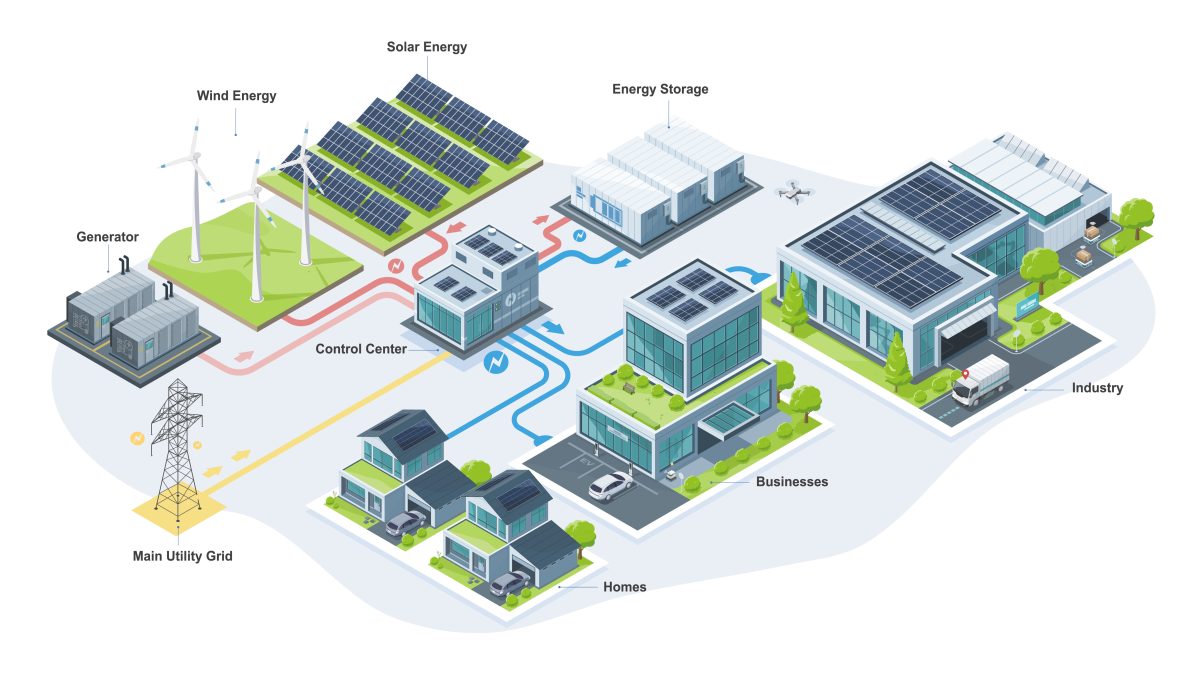
Keeping the lights on during storms, blackouts, or equipment failures is a growing challenge as we shift toward renewable energy. A new study published in Computers & Industrial Engineering explores how advanced artificial intelligence (AI) can help design microgrids—localized energy systems that combine solar, wind, batteries, and other sources—to be both cost-effective and highly reliable.
The study was co-authored by David Coit, RCEI Affiliate, Professor in Rutgers Department of Industrial & Systems Engineering, and Mark Rodgers, RCEI Affiliate, Assistant Professor in Rutgers Business School.
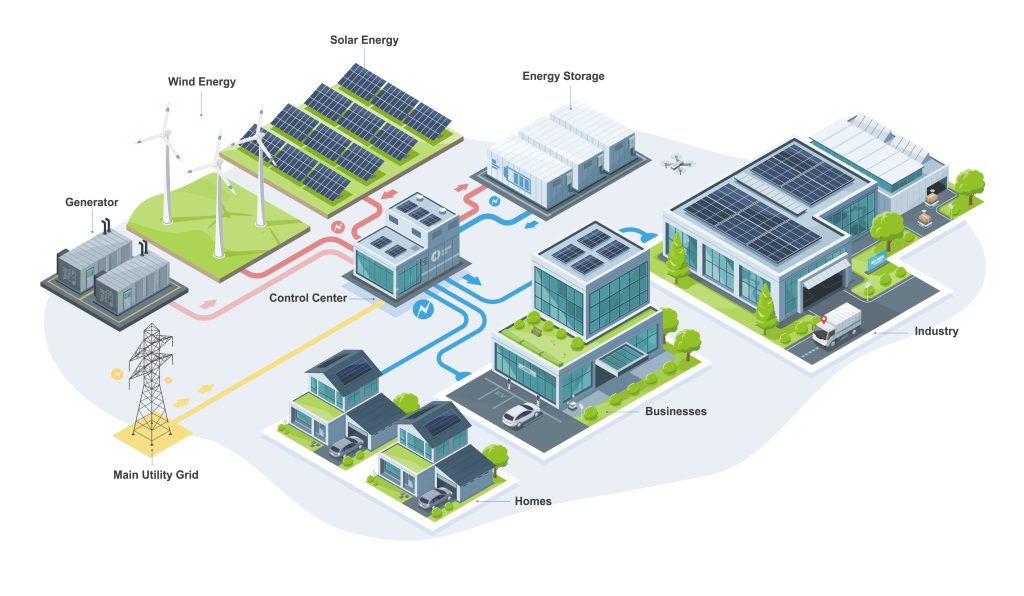
Microgrids are often seen as key tools for improving resilience in the face of climate change. Unlike traditional power grids, they can operate independently and keep critical facilities like hospitals and emergency shelters powered during outages. But planning these systems for the long-term is tricky. Costs, technology performance, and weather patterns all change over time.
To address this, the authors built a new planning model that uses “deep reinforcement learning,” a type of AI that learns through trial and error. By running simulations of a community microgrid with real-world solar, wind, and demand data, the model showed how to make smarter investment choices over 20 years—like when to add new batteries or solar panels—to balance affordability and reliability.
The results showed big benefits. Compared with relying on diesel generators alone, the AI-based strategy cut greenhouse gas emissions while saving money. This means communities could meet their energy needs more sustainably while also improving resilience against climate-related power outages.
“This research helps communities and policymakers see how clean energy can be both practical and reliable,” said Coit. “By planning smarter, we can cut costs, reduce emissions, and protect critical services from power disruptions.”
Beyond energy savings, the study highlights how advanced planning can support global sustainability goals, guide public policy, and help communities prepare for a more electrified future.
You can read the full study here.
This article was written with assistance from Artificial Intelligence, was reviewed and edited by Oliver Stringham, and was reviewed by David Coit and Mark Rogers, co-authors on the study.
Related posts:
 Leading Light Wind, an American-Led Offshore Wind Project, Awarded Contract by State of New Jersey
 With Global Ambitions, Rutgers Engineers and Scientists Launch Wind Energy Research Center
 Cows and Solar Panels? In a New Jersey First, Project Melds Farming With Electricity Generation
 Wind Energy Conference Highlights Rutgers’ Role as Hub for Innovation and Collaboration