



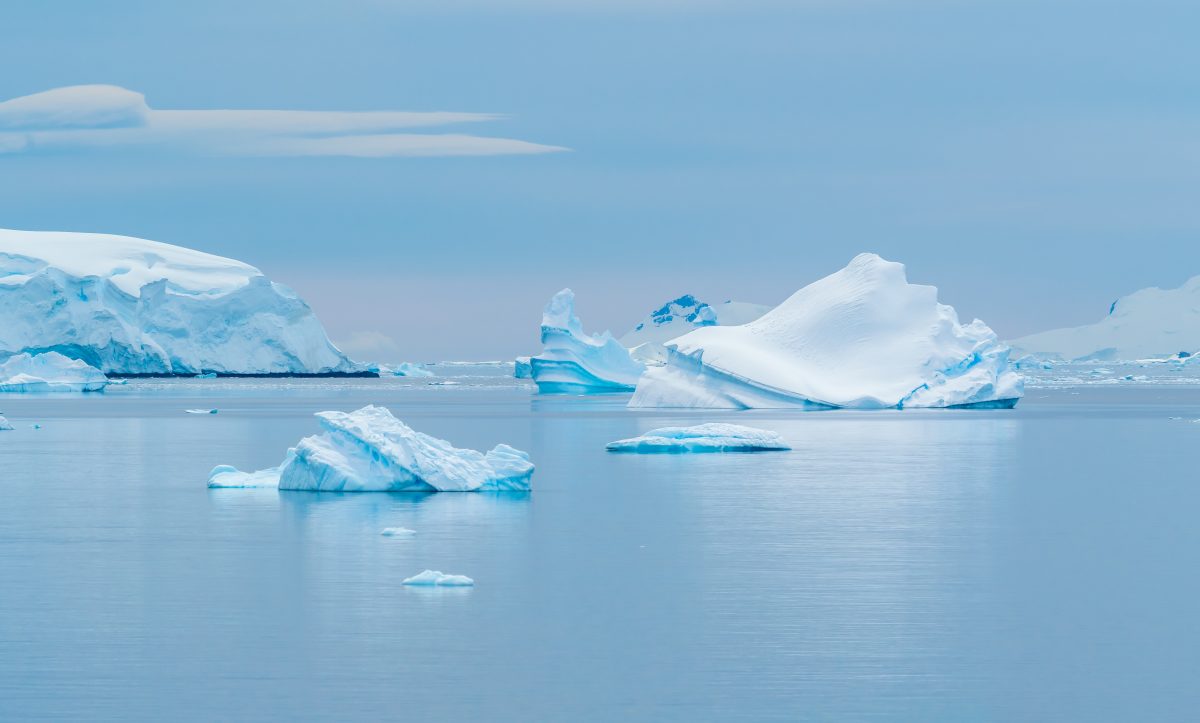
About 3.3 million years ago, during a period called the Pliocene epoch when Earth’s atmosphere contained CO₂ levels similar to today’s, a short but intense cooling event occurred that scientists call Marine Isotope Stage M2. Understanding what happened during this 25,000-year period matters today because it reveals how sensitive ice sheets are to changes in ocean circulation—a process currently being disrupted by global warming.
A new study in the journal Nature Communications has developed a technique three times more precise than previous methods for measuring ancient ocean temperatures and ice volume. Yair Rosenthal, RCEI Affiliate and Distinguished Professor in the Department of Marine and Coastal Sciences, co-authored the study.
The research reveals that sea levels fell by approximately 55 meters (about 180 feet) as ice sheets expanded in both hemispheres. Critically, the study shows this massive ice growth was triggered not by a drop in CO₂, but by changes in how ocean currents transported heat around the planet. Specifically, the opening and closing of seaways near Central America and Indonesia redirected warm water away from polar regions, allowing ice to accumulate rapidly.
Here’s why this matters for our warming world: today’s climate change is already disrupting ocean circulation patterns. The Atlantic Meridional Overturning Circulation—which includes the Gulf Stream—is slowing due to melting ice adding freshwater to the North Atlantic. While the Pliocene event shows ice growing when ocean heat transport decreased, the reverse process applies today: as warming oceans deliver more heat to polar regions and disrupt protective circulation patterns, ice sheets become vulnerable to accelerated melting. The study demonstrates that relatively small changes in ocean heat distribution can trigger dramatic shifts in ice volume—in this case within just 10,000 years.
“This research reveals how quickly ice sheets can respond to changes in ocean circulation, even when CO₂ levels are moderate,” said Rosenthal. “In today’s warming climate, we’re disrupting these same ocean circulation patterns, but in reverse—delivering more heat to polar regions where our ice sheets sit. Understanding that ice sheets can change rapidly in response to ocean dynamics helps us recognize that sea level rise may accelerate faster than models based solely on atmospheric warming would predict, making adaptation planning for coastal communities even more urgent.”
The improved measurement technique can now help scientists better predict how Greenland and Antarctic ice sheets will respond as warming continues to alter global ocean circulation.
You can read the full study here: https://doi.org/10.1038/s41467-025-62446-x
For more on related research by Yair Rosenthal, read his recent study published in Science.
This article was written with assistance from Artificial Intelligence, was reviewed and edited by Oliver Stringham, and was reviewed by Yair Rosenthal, a co-author on the study.
Related posts:
 Large Ice Sheets Existed Much Earlier Than Scientists Thought
 Extreme Monsoon Changes Threaten the Bay of Bengal’s Role as a Critical Food Source
 RUCOOL Researchers Find Decades of Warming and Salinity Changes in the Caribbean Sea
 Meltwater Pools on Greenland’s Ice Are Speeding Up Melting More Than Expected