



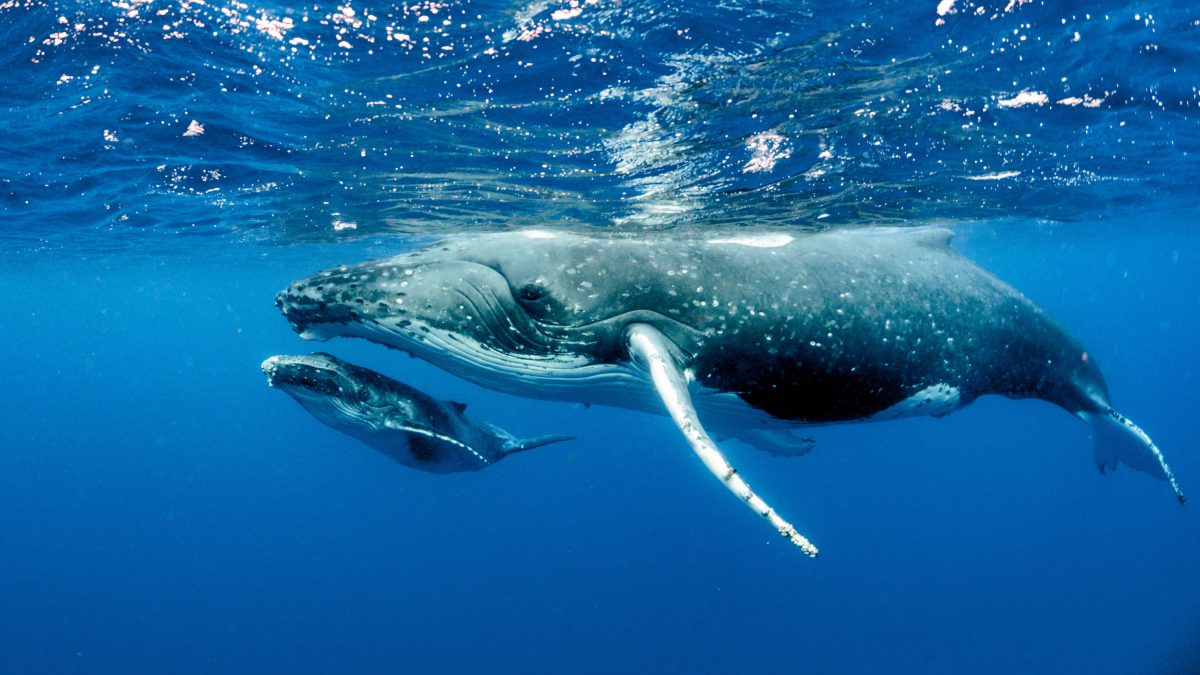
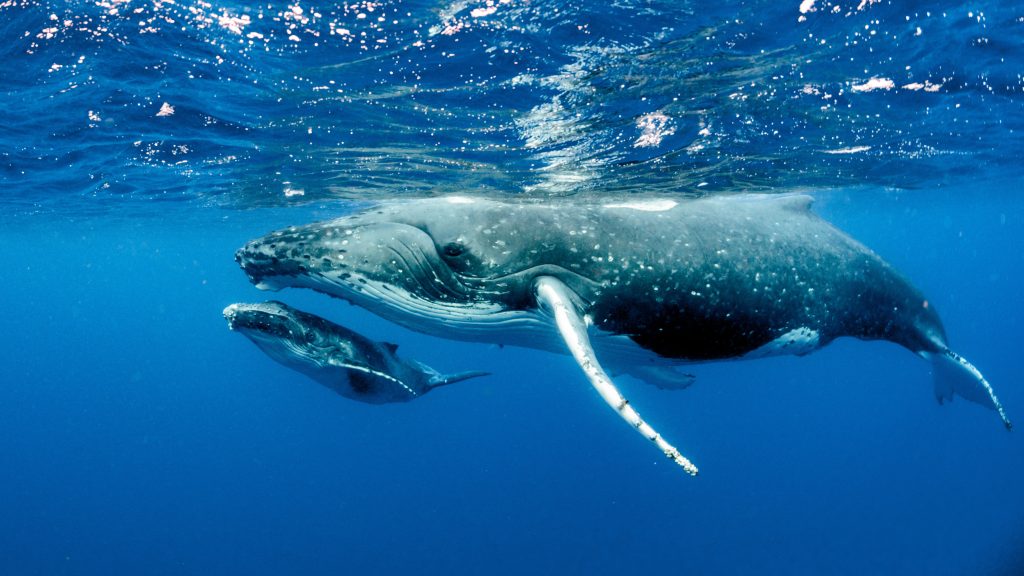
A new study in Global Biogeochemical Cycles explores whether protecting ocean animals like fish, whales, and other marine life could help slow climate change. The authors reviewed current science to see how these animals store and move carbon in the ocean—a process that could help keep carbon out of the atmosphere. Grace Saba, RCEI Affiliate and associate professor in the Department of Marine and Coastal Sciences, is a co-author on the study.
The study found that marine life can play a meaningful role in removing carbon from the atmosphere. Carbon dioxide gas that is absorbed by the ocean can be converted to organic material by phytoplankton, the single-celled algae floating in the surface ocean. When animals feed on phytoplankton, carbon enters the food chain. Fish contribute to moving carbon through this food chain by producing waste that sinks to deeper waters or is released when they swim to deeper depths. Additionally, fish and whales themselves may die and sink to the ocean floor. These natural processes that transport carbon from the surface to the deep ocean, termed the biological carbon pump, could store carbon for years to centuries.
The study found that fish might move about 1–3 billion tons of carbon each year from the ocean surface to deeper waters. While this is smaller than the carbon stored in ocean water and sediments, it’s still important. The authors also warned that there is a lot of uncertainty—especially about how much carbon whales and mesopelagic fish (which are highly abundant in the deep ocean) really store or move.
These findings relate to climate because if we protect or restore fish and whale populations, it could help store more carbon and reduce greenhouse gases in the air. This might support “natural climate solutions,” which use nature to help fight climate change.
“Our research shows that protecting marine life and encouraging sustainable fishing practices aren’t just good for biodiversity—they could also help mitigate the changing climate,” says Saba. “While more research is needed, these natural climate solutions could become an important component of climate policy and conservation.”
Beyond helping the climate, protecting marine life can also benefit fishing communities, tourism, and ocean ecosystem health.
You can read the full study here.
This article was written with assistance from AI, was reviewed and edited by Oliver Stringham, and was reviewed and edited by Grace Saba, a co-author on the study.
Related posts:
 Rutgers Scientists Observe Unusual Ocean Conditions Possibly Linked to Mortality in Marine Life off New Jersey
 Scientists Harness AI to Help Protect Whales, Advancing Ocean Conservation and Planning
 Extreme Monsoon Changes Threaten the Bay of Bengal’s Role as a Critical Food Source
 Researchers Track How Iron Deficiency Disrupts Photosynthesis in Crucial Ocean Algae