



By Marjorie Kaplan
More than 85 scientists from the United States and nations around the world have authored a 450 page compendium reviewing a July 2025 United States Department of Energy (DOE) Climate Working Group report; the DOE report was also featured in the recent United States Environmental Protection Agency (EPA) reconsideration of the 2009 Endangerment Finding that climate change poses a danger to human health and welfare.
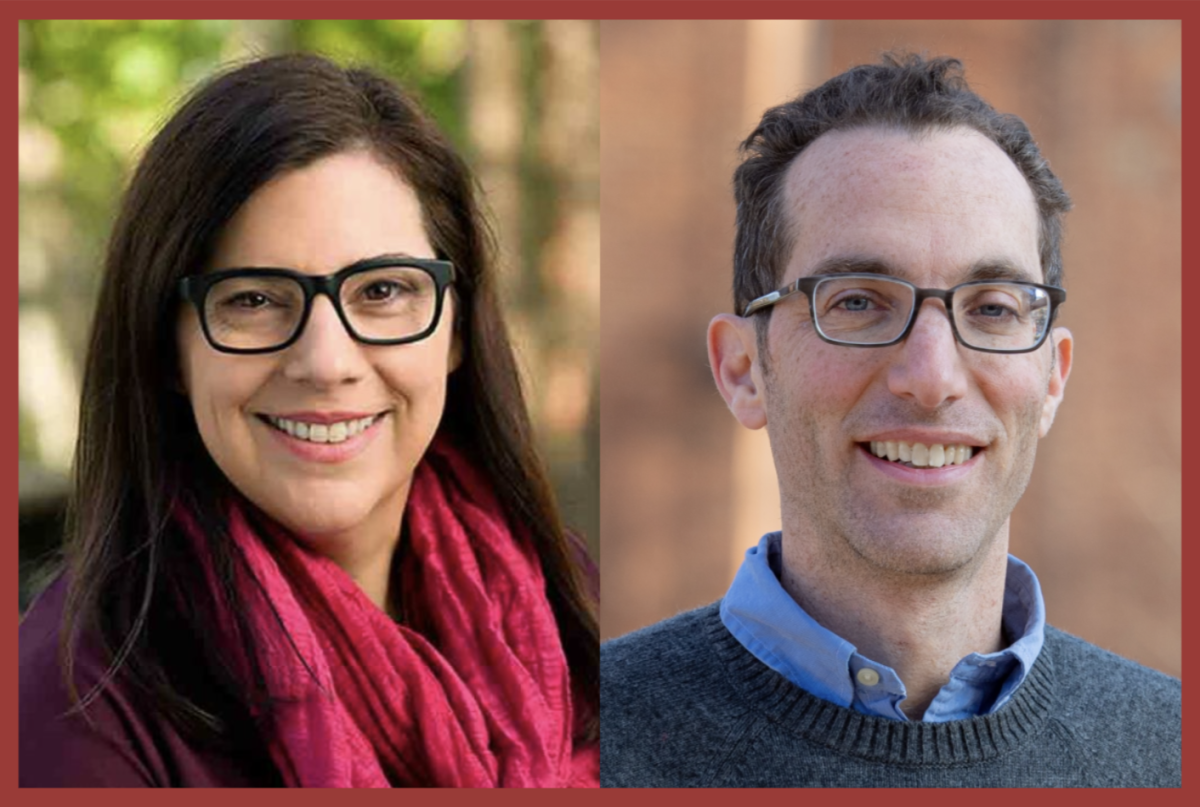
RCEI Affiliates Robert Kopp, Distinguished Professor of Earth and Planetary Sciences at Rutgers University and Pamela McElwee, Professor in the Department of Human Ecology are compendium co-authors, and Kopp also served as Co-Editor of the Climate Experts’ Review of the DOE Climate Working Group Report which concludes that the DOE report’s “key assertions – including claims of no trends in extreme weather and the supposed broad benefits of carbon dioxide—are either misleading or fundamentally incorrect.” The experts noted the DOE authors “reached these flawed conclusions through selective filtering of evidence (‘cherry picking’), overemphasis of uncertainties, misquoting peer-reviewed research, and a general dismissal of the vast majority of decades of peer-reviewed research.”

“As someone who works on biodiversity and ecosystems, a glaring omission of the report is the complete absence of any review of the data indicating our natural world is rapidly changing in response to climate change,” elaborated McElwee. “Rising temperatures and more frequent extreme events like marine heat waves, among other impacts, are changing where species live, their population sizes, and when they hibernate or migrate. The enormity of these changes across hundreds of species, well-documented in the scientific literature, was completely ignored by the DOE, even though it presents a striking data set indicating the scale and magnitude of climate change. These changes in our natural world will also have enormous economic and social consequences for the US – our coral reefs alone provide an estimated $1.8 billion in coastal protection from storms and floods annually in places like Florida and Hawaii.”
The expert review was submitted to DOE, in response to a request for public comment on its report, and to the National Academy of Sciences, Engineering and Medicine’s fast-track review of the latest scientific evidence on whether greenhouse gas emissions are reasonably anticipated to endanger public health and welfare in the U.S. It will also be submitted to EPA on the proposed repeal of the Endangerment Finding.
“There is still time for experts and the public to weigh in,” said McElwee. “The EPA comment period is open until September 15th and information to submit comments can be found here. Many of our scientists here at Rutgers know the impacts that hurricanes, heat waves, sea level rise, air pollution and other harms have on the welfare of New Jerseyans, and hopefully all our collective comments could help prevent this change to EPA rule-making that would open the door to more pollution and increased climate change impacts.”
Additional and referenced coverage of this initiative can be found at the following media outlets: The New York Times, NPR, The Hill, Reuters, CNN, CBS, France24, and RawStory.