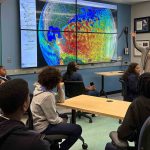











What if the key to solving our planet’s biggest challenges lies with young people? A new study shows that empowering youth to develop innovative solutions could accelerate progress toward global sustainability goals—but only if we give them the right support and opportunities.
Wendy Purcell, RCEI Affiliate and professor at Rutgers School of Public Health, is the lead author on the study published in the Journal of Education for Sustainable Development. Purcell and her colleagues examined how education systems can better prepare young people to tackle climate change and other pressing environmental issues through innovation and entrepreneurship.
The authors found that while some programs exist to support youth-led sustainability projects, many young innovators face significant barriers. These include lack of funding, limited access to mentors, and educational systems that don’t include sustainability as a core subject. Most concerning, current progress toward the United Nations’ Sustainable Development Goals has slowed dramatically, making youth engagement more urgent than ever.
The study proposes a framework for “Education for Sustainable Development” that explicitly includes innovation. This means teaching students not just about environmental problems, but empowering them to create real solutions. The authors highlight successful examples, from university programs connecting students with green entrepreneurs to innovation competitions that provide funding and mentorship.
Climate change directly affects young people’s futures, making their involvement critical. The study shows that youth bring unique advantages: digital fluency, fresh perspectives, and creative problem-solving abilities. However, they need access to innovation hubs, professional guidance, and opportunities to turn ideas into action.
“Youth are leaders now and for tomorrow, and we must transform education to enable them to make their fullest contribution to the innovation necessary to deliver global betterment for all,” said Purcell. “This means not just teaching about problems but creating pathways for young people to develop and scale their solutions.”
The authors recommend specific policy changes: making sustainability education mandatory at all levels, opening existing innovation hubs to young people, and creating mentorship programs connecting youth with experienced professionals. They also emphasize the importance of mental health support, recognizing that young climate activists often experience burnout and anxiety about the future.
Programs like Google’s Developer Student Clubs and UNICEF’s imaGen Ventures demonstrate what’s possible—they’ve supported thousands of young innovators across dozens of countries. But the study argues these efforts need to be scaled dramatically if we’re to meet global sustainability targets by 2030.
You can read the full study here: https://journals.sagepub.com/doi/10.1177/09734082251366127
This article was written with assistance from Artificial Intelligence, was reviewed and edited by Oliver Stringham, and was reviewed by Wendy Purcell, the lead author on the study.