



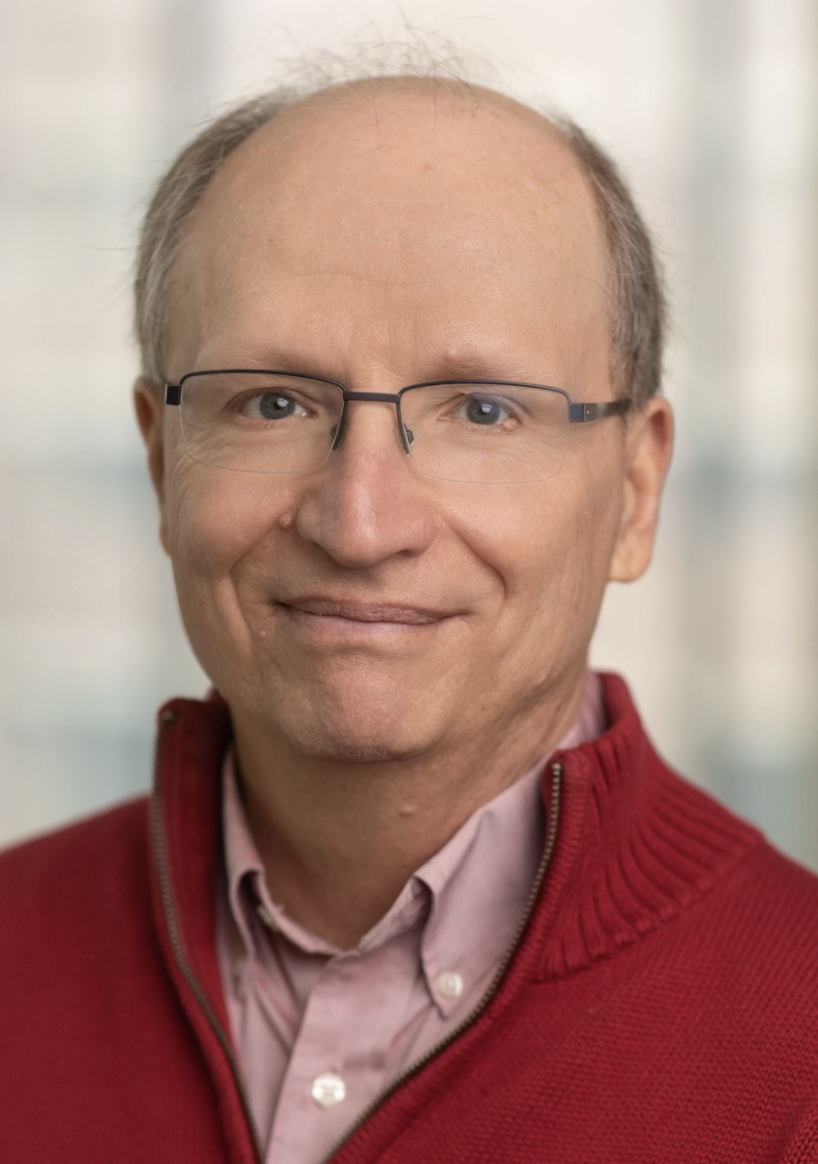
RCEI Area Lead in Earth Systems Science
By Shania Arora and Aleen Mirza

Long before becoming an atmospheric scientist, Dr. Anthony J. Broccoli was just a young boy glued to the window, searching the skies for any signs of snow. Like many children, he hoped for an impromptu day off from school. His early curiosity in predicting snow days was not just a childhood phase. It sparked a lifelong passion for understanding the Earth’s climate system.
Dr. Broccoli’s fascination with the weather grew in college, where his studies in meteorology opened the door to a keen interest in climate science. Although climate science was not a formally recognized field of study at the time, its close ties with weather intrigued him and helped shape his future career.
Today, Dr. Broccoli is a Distinguished Professor of Atmospheric Sciences in the Department of Environmental Sciences at Rutgers-New Brunswick, and the RCEI Earth Systems Science Area Lead. He also serves as the Director of the Graduate Program in Atmospheric Science and the Center for Environmental Prediction. As an acclaimed climate scientist, Dr. Broccoli focuses on understanding climate dynamics: the study of how statistical patterns of weather interact and respond to variable changes. He is especially interested in exploring how the planet’s climate system has evolved over millennia.
Dr. Broccoli’s research is highly collaborative and often involves his students. Inspired by the approachable professors he worked with during his university years, he strives to create a similarly supportive environment for every student he mentors. Together, their main research goal is to understand past and future patterns in the climate system. By studying prehistoric weather evidence, also known as paleoclimate changes, they work to uncover Earth’s vast climate history to better predict what lies ahead for a warming world.
Over time, Dr. Broccoli has come to learn that Earth’s climate system is highly sensitive and responds to minute changes, both positive and negative. As we add greenhouse gases to the atmosphere, the climate warms, but the complete effects of the warming are not felt immediately. Meaning that even if humans completely eliminated their carbon footprint, Earth’s temperature would continue to rise for the next several decades. To help explain this concept, Dr. Broccoli uses a car analogy: imagine driving a car and the speed limit represents Earth’s pre-industrial temperature (13.5ºC). Driving above the speed limit represents an increase in global temperature. The faster you drive, the longer it takes to slow down. Meaning, the hotter the planet gets (for instance, above 2ºC), the longer it will take to return to the pre-industrial temperature of 13.5ºC. In other words, Earth’s climate system does not respond instantly to corrective actions aiming to ‘undo’ the effects of climate change.

However, Dr. Broccoli remains hopeful and stresses that reducing greenhouse gas emissions immediately is still crucial, as delaying action only worsens the problem. He likens waiting to act until we can fully “foresee” the consequences of climate change to inching closer to a cliff’s edge and accidentally risking the point of no return. At the same time, Dr. Broccoli strongly cautions against having a doomsday mindset. While he acknowledges that the effects of climate change may outlast generations, he encourages individuals to stay optimistic and emphasizes that every effort counts.
Much of Dr. Broccoli’s urgency stems from the reality that climate science is still heavily debated in the public sphere, despite decades of scientific consensus. He explains, “In the public sphere, [climate change] is debated on whether it will happen. As a scientist, that is not the question. The questions are: how large will it be, what will the implications be, what does it mean for things like hurricanes/winter storms/droughts/floods?” Although frustrated by the lack of progress, Dr. Broccoli is not easily discouraged, as his students are a glimmer of hope. He finds that today’s college-aged students are more informed and engaged about climate change than ever before. He firmly believes that education is the foundation for meaningful impacts, as everyone has the potential to be a leader and a pioneer of the future.

Even so, awareness alone is not enough. Tackling the climate crisis, Dr. Broccoli asserts, requires collective effort. While individual choices matter, true progress hinges on collaboration. He encourages people, regardless of their profession, background, or where they live, to advocate for systemic, environmentally friendly reforms in their communities. In his view, making a difference does not require a STEM degree, just a willingness to get involved. For Dr. Broccoli, raising our voices and taking initiative is essential for shaping the future we all depend on.
Shania Arora served as an Office of Climate Action intern and is a member of the Class of 2025. She majored in Psychology and Philosophy and minored in Medical Ethics and Health Policy in the School of Arts and Sciences.
Aleen Mirza is a RCEI intern and a member of the Class of 2026, majoring in Environmental Policy, Institutions, and Behavior, and minoring in Sustainability, within the School of Environmental and Biological Sciences.
Related posts:
 2025 Climate and Weather Day Students Learn From the Best
 A Professor’s Path to Students Loving Science Involves Cranberries, Craisins and Cran-Apple Juice
 Rutgers Immersive Learning through Science Storytelling Lab Fosters Student Success and Interdisciplinary Partnerships
 NJ Youth Share Solutions to Combat Climate Change Effects in Their Own Communities