



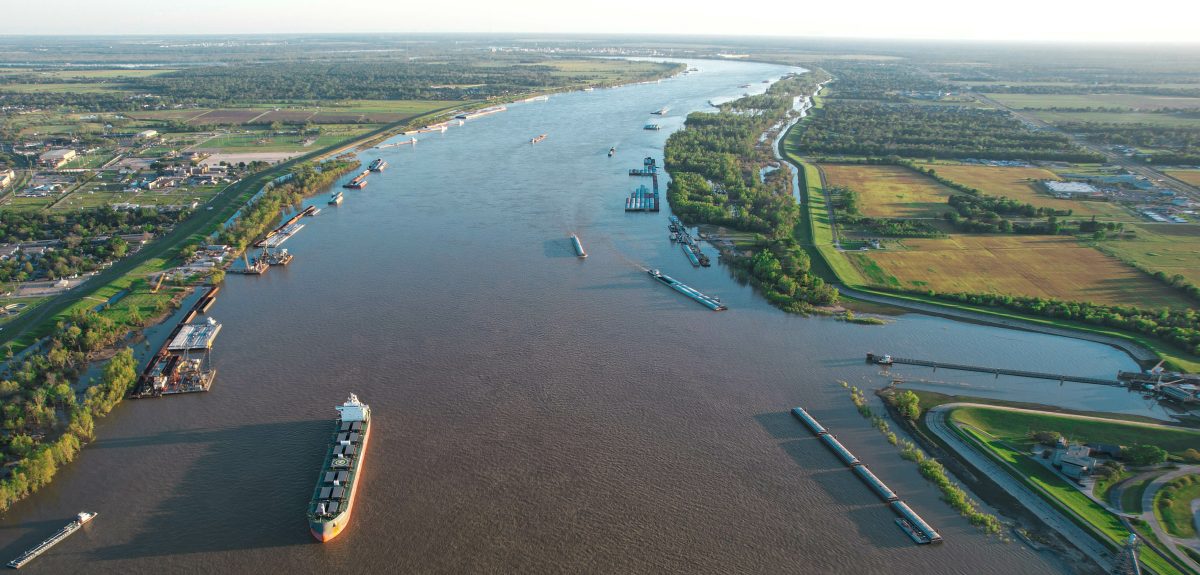
When drought and extreme weather lower water levels on the Mississippi River, it doesn’t just slow boats—it can ripple through the whole economy. A new study in Risk Analysis shows how climate change–related disruptions to fertilizer shipments along the river can shrink GDP and raise prices, especially in states like Illinois and Minnesota.
Fred Roberts, RCEI Affiliate and distinguished professor in the Department of Mathematics, is a co-author on the study. Roberts and other authors explored what happens when drought, lock failures, and import disruptions hit at once. Using a computer model of the U.S. economy, they estimated that these “complex disruptions” could cost the nation about $18.6 billion and make goods slightly more expensive. In states that rely heavily on barge-transported fertilizer, the economic effects could be several times worse.
The Mississippi River is a key route for moving fertilizer to farms. When water levels drop because of drought—made worse by climate change—barges can’t carry as much, and shipping costs skyrocket. Damaged locks or disrupted imports could add even more problems. Together, these issues can make it harder and pricier to get fertilizer where it’s needed, which can then affect crop production and food costs.
“This research shows why protecting river infrastructure matters for everyone, not just farmers or shippers,” says Roberts. “By understanding these risks, planners and policymakers can take steps to keep food and energy supplies stable.”
Beyond agriculture, the study highlights how climate-related disruptions to supply chains could ripple out, affecting inflation and economic stability nationwide.
You can read the full study here.
This article was written with assistance from AI, was reviewed and edited by Oliver Stringham, and was reviewed by Fred Roberts, a co-author on the study.
Related posts:
 Fertilizer Recommendation Support Tool Launches Nationwide to Digitize Crop Nutrient Management
 Researchers Find Climate Change Threatens Global Food Supply
 Rutgers Scientists Observe Unusual Ocean Conditions Possibly Linked to Mortality in Marine Life off New Jersey
 Clams Grew Slower in Warmer Ancient Seas, Study Finds