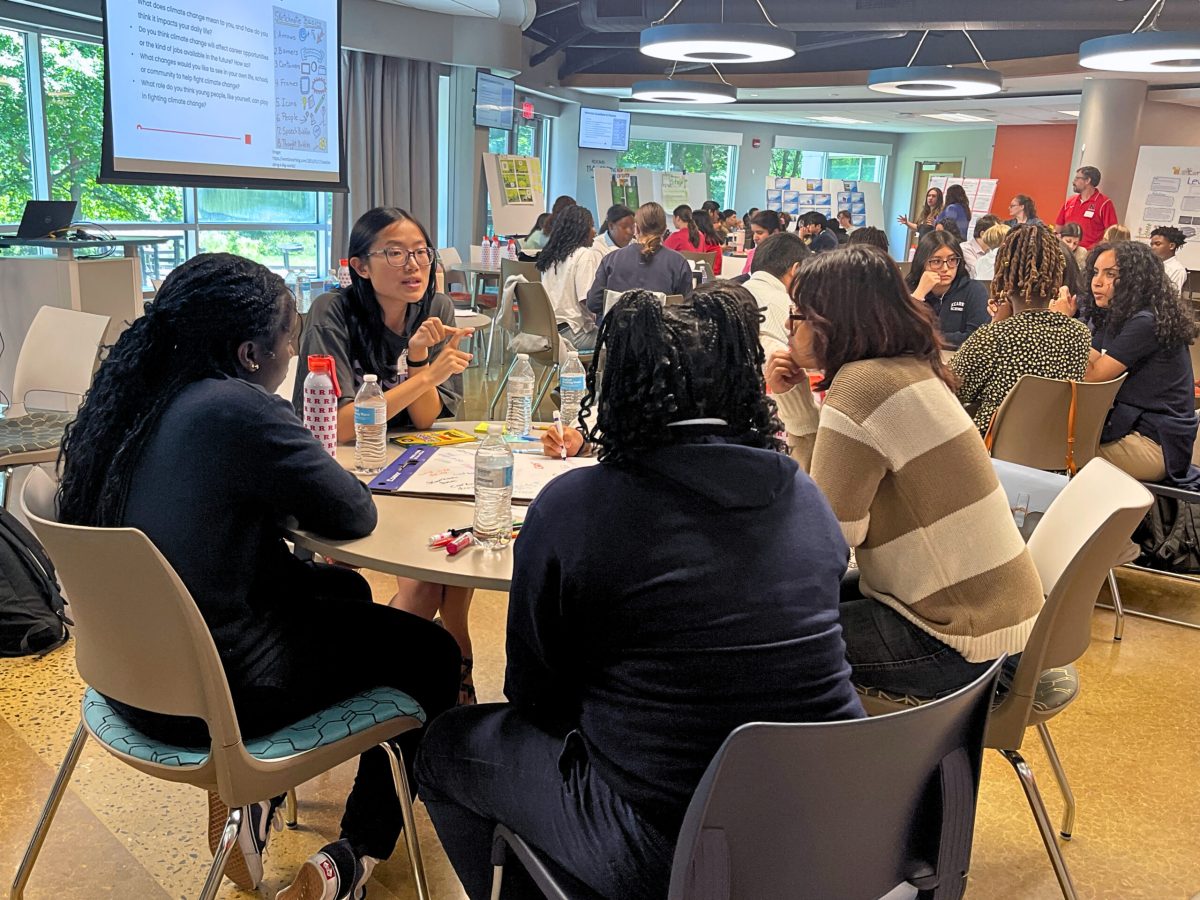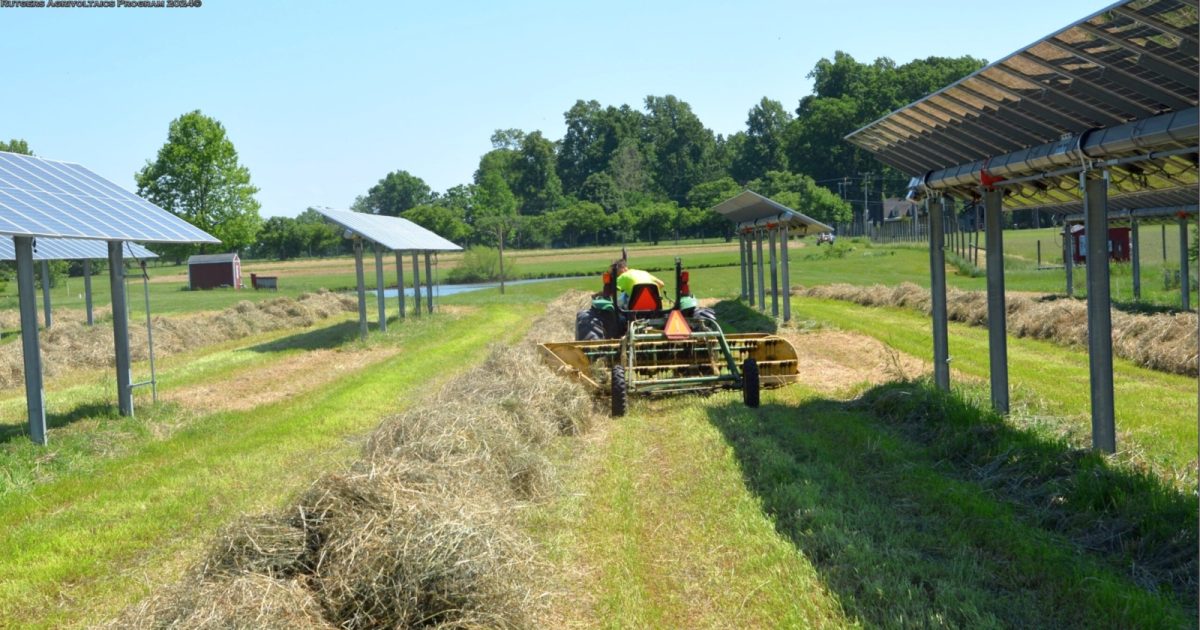









A founding principle of the Growing Convergent Research (GCR) project led by RCEI Affiliate Kay Bidle (Department of Marine and Coastal Sciences) is to address the complex global challenge of climate change through transdisciplinary collaboration and convergence of diverse knowledge and methods to generate innovative solutions. As a multi-institutional, transdisciplinary initiative funded by the National Science Foundation (NSF), the project seeks to understand
Rutgers Professor Kay Bidle Selected as an ARIS Inaugural 2025 Research Fellow
RCEI affiliate Kay Bidle, professor in the Department of Marine and Coastal Sciences (DMCS), has been selected for the Center for Advancing Research Impact in Society’s ARIS inaugural 2025 Research Fellowship. Created to support notable researchers who are equally invested in their research and its impacts, the ARIS Research Fellowship focuses on how researchers can increase their capacity to frame their research as …
Scientists Develop Deep-Blue LEDs Expected to Greatly Enhance General Lighting
A Rutgers-led team pioneers the discovery of an eco-friendly, ultra-bright LED material A Rutgers-led team of scientists has developed an eco-friendly, very stable, ultra-bright material and used it to generate deep-blue light (emission at ~450 nm) in a light-emitting diode (LED), an energy-efficient device at the heart of all major lighting systems. The new copper-iodide hybrid emitter materials are expected …
RUCOOL Researchers Find Decades of Warming and Salinity Changes in the Caribbean Sea
A new study led by Rutgers researchers reports long-term warming and shifts in salinity in the Caribbean Through‑Flow (CTF), a major ocean current that connects the tropics to the North Atlantic. The findings, published in Nature Scientific Reports, suggest that ongoing changes in this region may play a role in influencing broader ocean and climate dynamics. Using more than six decades of oceanographic …
Flapping Into the Future: How New Wing Tech Could Revolutionize Flying Robots
A new study explores a smarter way to make small flying robots—called ornithopters—by mimicking how birds and insects flap their wings. Instead of using motors and gears, the authors designed wings that move using special materials that change shape when electricity is applied. Onur Bilgen, RCEI Affiliate, is a co-author of this study, which appears in the journal Aerospace Science …
Climate and Energy Dialogues: Human Dimensions, Environmental Communications, and Humanities
Atif Akin (Associate Professor of Art and Design and RCEI’s Area Lead for Environmental Communications and the Humanities) and Kevon Rhiney (Associate Professor in Geography and RCEI’s Area Lead for Human Dimensions of Climate Mitigation, Adaptation and Resilience) organized an April 2025 gathering of Rutgers faculty and research staff whose interests lie at the intersection of the human dimensions of climate and energy, …
ECE Professor is a Top 12 Finalist in the International T Challenge 2025
In early June, RCEI affiliate Dario Pompili, a professor in the School of Engineering Department of Electrical and Computer Engineering and the director of the Cyber-Physical Systems Laboratory, and two of his team members, doctoral candidates Zhile Li and Songjun Huang, went to Bonn, Germany to compete as one of 12 finalist teams in the 2025 T Challenge. Sponsored by Deutsche …
Helping People Spot Greenwashing: A New Tool to Tell Truth from Hype
Greenwashing—when companies make themselves look more eco-friendly than they really are—is becoming a serious problem as the world tries to tackle climate change. A new study helps people understand when a company is being honest about going green and when it’s just using “green” talk to distract or mislead. The study, published in Ecology and Society and available online here, …
New Catalyst Breakthrough Could Make Clean Ammonia Easier to Produce
Producing ammonia—a key ingredient in fertilizer and a promising hydrogen energy carrier—traditionally requires lots of energy and fossil fuels. But a new study offers a more efficient, greener method for making ammonia using only nitrogen from the air and water, with help from electricity. Huixin He, RCEI Affiliate, is one of the corresponding authors of this study, published in ACS …
A Heat Wave Hits New York Earlier Than Usual for a Second Year in a Row
The effects of climate change recently displayed themselves very clearly in New York, as a heatwave struck the Northeast with record breaking temperatures that were only observed to that level many decades ago. Central Park, 99 degrees, reported its highest June 24th temperature in recorded history, and as the scorching heat grew and maintained due to the “heat dome” phenomenon, …