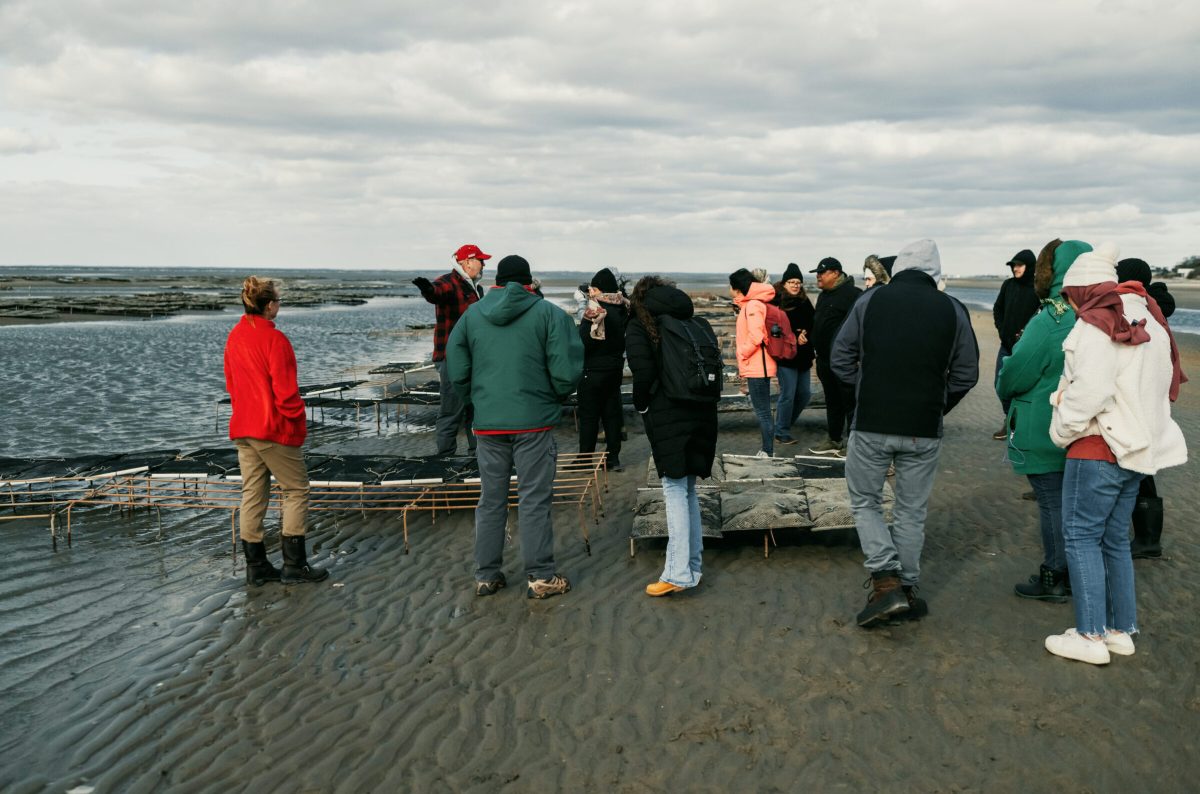



The original article, “Tagging Fluke,” is reprinted, with permission, by On The Water magazine. Paul Ziajski, owner of Great Bay Outfitters, is the primary author of this article. Chase Wunder, the Margaret A. Davidson Graduate Fellow at the Jacques Cousteau National Estuarine Research Reserve, who is pursuing a master’s degree in Ecology and Evolution at Rutgers, contributed to this article. Hundreds of customers …
Dancing For Change: Movement to Inspire Climate Action
Cristina Marte has always known that movement holds power, and she has spent her life sharing that power with others. As a dancer, educator, curriculum designer, and advocate, she has built a career around the belief that dance is not only performative, but also emotional, educational, and transformative. She has been able to make these connections with environmental issues, including climate change. This belief in the power of movement deeply informs her approach to education …
Smarter Transportation Systems Could Cut Wait Times for Drivers
Finding a parking spot at a busy shopping mall or waiting to charge an electric vehicle can be frustrating. A new study published in IEEE Transactions on Intelligent Transportation Systems explores how to make these everyday challenges easier. The authors developed a computer framework called ‘Multi-Personality Multi-Agent Meta-Reinforcement Learning’, which helps transportation systems adapt faster and coordinate better. You can …
What Bees Can Tell Us About Conservation and Land Use
A new study has challenged a long-held belief in ecology: that a bee’s body size determines how far it travels and, in turn, how much land around it matters. The authors of the study, published in Ecography, tested this idea—called the “mobility hypothesis”—by analyzing 84 species of wild bees across 165 sites in the northeastern U.S. What they found was …
New Arctic Bacteria Could Help Us Understand Climate Change’s Impact on Carbon Release
In a recent study published in ISME Communications, researchers discovered five brand-new species of cold-loving bacteria in the Arctic tundra of northern Finland. Lee Kerkhof, RCEI Affiliate, Professor in the Department of Marine and Coastal Sciences, and Max Häggblom, RCEI Affiliate, Distinguished Professor in the Department of Biochemistry and Microbiology, were co-authors on the study done in collaboration with Minna …
Stable at -450°F: Why These Rare Earth Materials Matter for Clean Energy Tech
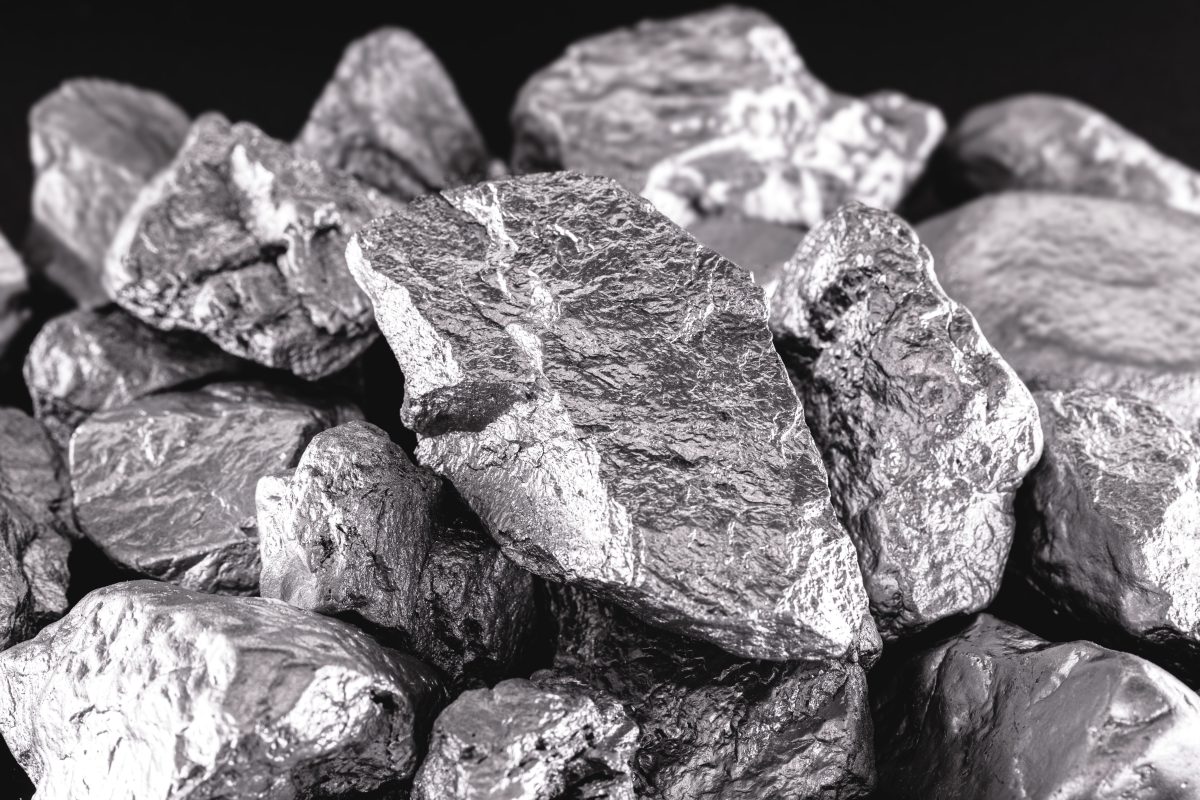
Rare earth elements (REEs) play a big role in modern technologies, including electronics, magnetics, and systems that generate clean energy. A new study explores the stability of some rare earth materials—specifically, rare earth oxychlorides—which is crucial for their future applications in clean energy and advanced electronics. Richard Riman, RCEI Affiliate and a Distinguished Professor in the Department of Materials Science …
Learning Earth’s Origins Through Meteorites and Resilience
Over 4.5 billion years ago, Earth formed through elemental and celestial processes whose chemical and isotopic signatures remain preserved in Earth and space rocks. Some of these ancient materials originate from nearby planetary bodies and fall to Earth as meteorites. For Dr. Katherine Bermingham, Associate Professor in the Department of Earth and Planetary Sciences, studying these fragments of space began with curiosity …
Rutgers Immersive Learning through Science Storytelling Lab Fosters Student Success and Interdisciplinary Partnerships
The Rutgers Immersive Learning through Science Storytelling Lab in the School of Environmental and Biological Sciences supports students from a wide variety of majors to partner with Rutgers researchers in the co-creation of compelling video narratives that communicate science as journeys of discovery for peer and public audiences. The lab’s innovative pedagogical model was recently recognized by the New Jersey State Senate …
Where Solar Investments Pack the Biggest Climate Punch
An article from Fast Company reports on new research showing where solar energy investments can most effectively reduce carbon emissions across the United States. The study, published in Science Advances, modeled how increasing solar capacity by just 15% nationwide could cut annual carbon dioxide emissions by 8.54 million metric tons. The findings highlight that while regions like California, Texas, Florida, …
New Way to Keep the Power On: Smarter Use of Local Energy
As we use more electricity for things like cars and heating, power distribution systems are becoming more stressed—especially as our electric grids get older—and power outages are becoming more impactful. But what if the local solar panels, batteries, or even electric cars and heaters themselves could help keep the lights on? That’s the big idea in a new study published …