





Scientists around the world are studying different ways we might respond to climate change, including controversial approaches called solar radiation modification (SRM), which aims to reflect some of the sun’s energy back to space to cool the Earth. To better understand how these approaches might work, researchers need to run complex computer simulations using climate models, and they need to coordinate their efforts so they can compare results.
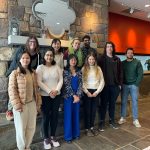
In May 2025, nearly 160 scientists gathered in Cape Town, South Africa, for the fifteenth annual workshop of the Geoengineering Model Intercomparison Project (GeoMIP). Among them was Alan Robock, RCEI Affiliate, who is a Distinguished Professor in the Department of Environmental Sciences and co-chair of GeoMIP. The meeting brought together both experienced researchers and newcomers to plan standardized experiments that different research teams around the world will run using their climate models.
The authors of the study, published in the Bulletin of the American Meteorological Society, describe how the workshop focused on designing experiments for the next major phase of climate model comparisons. These computer simulations will test different scenarios, including injecting reflective particles into the atmosphere at different locations and brightening marine clouds over oceans. By having many research groups run the same experiments, scientists can better understand how reliable their predictions are and how different approaches might affect regions around the world.
This research helps inform public policy about climate responses by providing data on potential risks and benefits of different intervention strategies. The coordinated approach ensures that scientists worldwide—including researchers from developing countries—can participate in understanding these complex climate questions.
“By bringing together diverse perspectives from researchers around the world, we’re ensuring that our climate models can provide the most reliable information possible to help society make informed decisions about how to respond to climate change,” said Robock.
You can read the full study here: https://doi.org/10.1175/BAMS-D-25-0191.1
This article was written with assistance from Artificial Intelligence, was reviewed and edited by Oliver Stringham, and was reviewed by Alan Robock, a co-author on the study.
Related posts:
 Climate Intervention Technologies May Create Winners and Losers in World Food Supply
 Creating Visionaries: The Role of Convergence Research in Shaping a New Generation of Scientists
 The Most Cost-Effective Approaches to Protect Against Rising Seas Are Flexible, Adaptable
 Rutgers Immersive Learning through Science Storytelling Lab Fosters Student Success and Interdisciplinary Partnerships