



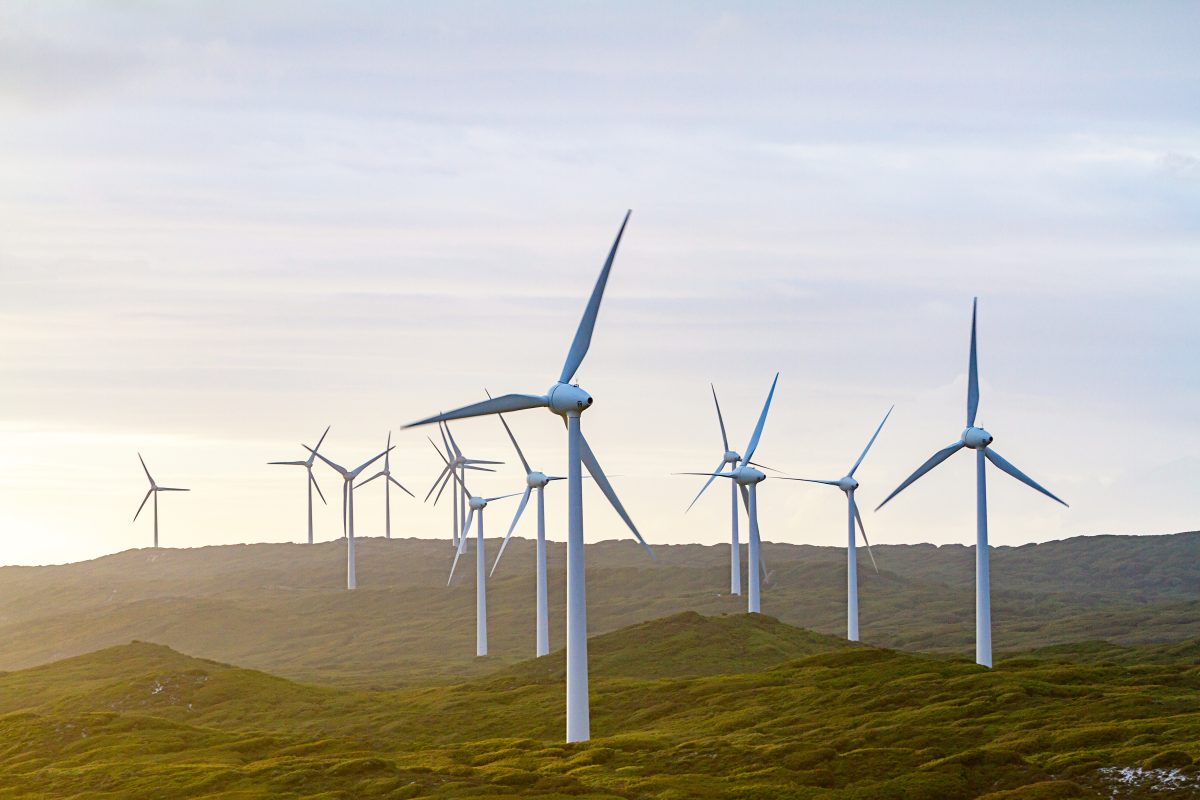
As more wind farms around the world get older, big decisions need to be made: should they keep running, be upgraded with new parts, or be shut down completely? Answering these questions requires accurate assessments of their reliability—how frequently failures occur and how costly those failures are. A new study in the journal Wind Energy takes a close look at this problem by studying two aging wind farms in North Africa that have been running for more than 20 years. You can read the full study here.
Ahmed Aziz Ezzat, RCEI Affiliate, Assistant Professor in the Department of Industrial and Systems Engineering at Rutgers University, is a co-author on the study, in collaboration with researchers from Ain Shams University in Egypt.
The authors examined thousands of maintenance and repair records to see which parts of the turbines break down most often and which ones cost the most to fix. They found that the hydraulic system, sensors, and electrical system fail most often. But when it comes to cost, the gearbox and generator are the most expensive to repair, making them critical to consider when deciding whether to extend the life of a wind farm. The authors then drew important comparisons between the reliability of aging wind farms and those in early or intermediate stages of operation.
This research is important for the future of clean energy. Wind farms play a major role in the shift away from fossil fuels, but if older turbines fail too often or cost too much to repair, that can slow down this shift. By identifying which parts are most likely to cause problems, the study gives operators important insights to plan smarter maintenance activities, helps managers and policymakers budget for repairs, and prevents costly breakdowns.
That planning has real benefits for society. Smarter maintenance helps keep energy affordable and reliable, supports local jobs, and extends the lifetime of critical energy infrastructure. It also gives policymakers better information about when it makes sense to replace, upgrade, or retire wind farms.
“Our work provides data-driven insights into the reliability of aging wind farms. These insights are especially timely for planning the future of energy infrastructure and ensuring that the clean energy transition remains reliable and sustainable,” said Ezzat.
As wind energy continues to grow, studies like this can help keep turbines spinning longer, stronger, and at lower cost—supporting the clean energy future we need.
This article was written with assistance from Artificial Intelligence, was reviewed and edited by Oliver Stringham, and was reviewed and edited by Ahmed Aziz Ezzat, a co-author on the study.
Related posts:
 Leading Light Wind, an American-Led Offshore Wind Project, Awarded Contract by State of New Jersey
 With Global Ambitions, Rutgers Engineers and Scientists Launch Wind Energy Research Center
 Wind Energy Conference Highlights Rutgers’ Role as Hub for Innovation and Collaboration
 Rutgers Alumna on the Front Row of Combating Climate Change