





An article from Fast Company reports on new research showing where solar energy investments can most effectively reduce carbon emissions across the United States. The study, published in Science Advances, modeled how increasing solar capacity by just 15% nationwide could cut annual carbon dioxide emissions by 8.54 million metric tons. The findings highlight that while regions like California, Texas, Florida, and parts of the mid-Atlantic and Southwest yield the greatest benefits due to high solar potential and supportive policies, even neighboring regions can experience indirect emissions reductions when clean energy is exported.
RCEI Affiliate Arpita Biswas, a computer science professor at Rutgers University and the lead author of the study, emphasized the importance of identifying where solar investments create the most impact: “Our ambitious goal is to highlight that, first of all, there is a big advantage in investing in solar. And this paper shows where the strategic investment could be.” This underscores how the research provides a roadmap for policymakers to prioritize solar deployment in areas that can generate the greatest climate returns.
Biswas also pointed out that localized investments can ripple across the energy grid, noting: “If you increase solar in California by something like 15%, it actually has some effect in decreasing carbon dioxide emissions in the Northwest and Southwest regions.” Beyond guiding large-scale energy policy, Biswas highlighted how individuals and communities could also benefit by adopting solar for both cost savings and sustainability: “It makes it a win-win situation.”
The study offers practical guidance at a time when U.S. energy demand is surging, particularly from data centers and manufacturing hubs. By showing where solar investments can pack the biggest climate punch, the research equips decision-makers and communities with tools to align clean energy growth with emissions reduction goals.
Read the full article here.
This article was written with assistance from Artificial Intelligence, and was reviewed and edited by Edith Zhao and Oliver Stringham.
Related posts:
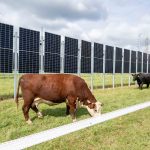 Cows and Solar Panels? In a New Jersey First, Project Melds Farming With Electricity Generation
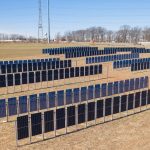 Rutgers Tests Renewable Energy System for Agrivoltaics Project on Cook Campus
 Rutgers Agrivoltaics Program Wins North American Agrivoltaics “Solar Farm of 2025″ Award
 Curiosity Cultivates Solar Solutions: Innovating Agrivoltaics for a Sustainable Future