



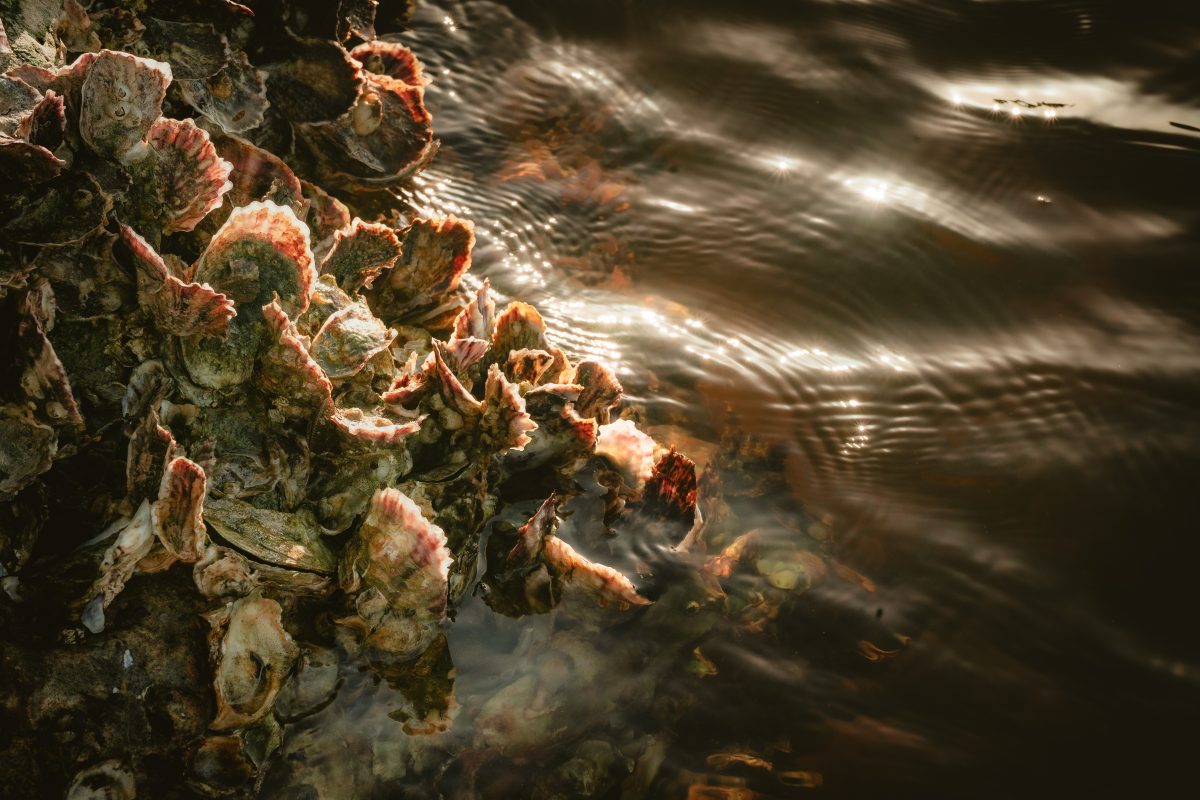
Oysters are one of the world’s most important seafood products, with farms producing about 7 million metric tons each year. Now, researchers have unlocked the complete genetic code of a special hybrid oyster, providing a valuable tool that could help improve how these shellfish are farmed.
The study, published in Scientific Data, presents the first chromosomal-level genome assembly of an allotetraploid oyster—a hybrid containing two sets of genetic material from two closely related oyster species. Ximing Guo, RCEI Affiliate, Distinguished Professor in the Department of Marine and Coastal Sciences, was a co-author on the study.
Today, over 30% of the farmed oysters worldwide are triploids, which have three sets of chromosomes. These oysters grow faster and produce better quality meat because they are genetically robust, remain largely sterile and don’t waste energy reproducing. To produce triploids efficiently, farmers cross diploid oysters with tetraploid oysters (which have four sets of chromosomes) that were first developed at Rutgers over 30 years ago. The allotetraploid sequenced in this study combines genetic material from Pacific oysters and Portuguese oysters, the two most commonly farmed oyster species worldwide. The Portuguese oyster can tolerate higher water temperatures than the Pacific oyster.
This genetic blueprint has important implications for climate resilience and food security. The warning and acidification of world oceans pose a threat to aquaculture, and understanding how two different oyster genomes interact after hybridization could help farmers develop varieties better adapted to changing environments. The research provides insights into genome reorganization after duplication and hybridization—processes that may create beneficial genetic variations for oyster breeding programs.
“Having this complete genome sequence gives oyster breeders a powerful new resource,” said Guo. “By understanding how genes from these two species work together in a hybrid, we can potentially develop more resilient oyster stocks and make the aquaculture industry more efficient and sustainable.”
The authors used advanced DNA sequencing technology to map the oyster’s 1.23 billion DNA letters across 20 chromosomes, identifying nearly 60,000 genes.
You can read the full study here: https://doi.org/10.1038/s41597-025-05775-2
This article was written with assistance from Artificial Intelligence, was reviewed and edited by Oliver Stringham, and was reviewed by Ximing Guo, a co-author on the study.
Related posts:
 Researchers, U.S. Military Install Concrete Modules With Self-Healing Oyster Reef Structure in Florida Panhandle Bay to Protect Base
 Scientists Develop Deep-Blue LEDs Expected to Greatly Enhance General Lighting
 Surf Clams Off the Coast of Virginia Reappear – and Rebound
 A Shore town turns to oysters to fight rising seas and erosion