









By Marjorie Kaplan and Oliver Stringham
On November 12, 2025, researchers, faculty, and student scholars from academic and research institutions across the Mid-Atlantic gathered for Rutgers’ annual Climate Symposium, designed to foster collaboration among the climate change and energy research communities in our region.
Rutgers-New Brunswick Provost and Executive Vice Chancellor for Academic Affairs Jason Geary welcomed the full house of in-person attendees as well as those watching the livestream, noting that the symposium, “celebrates the vital work that you do to understand climate change, develop solutions, and strengthen collaboration across disciplines and across our region.”
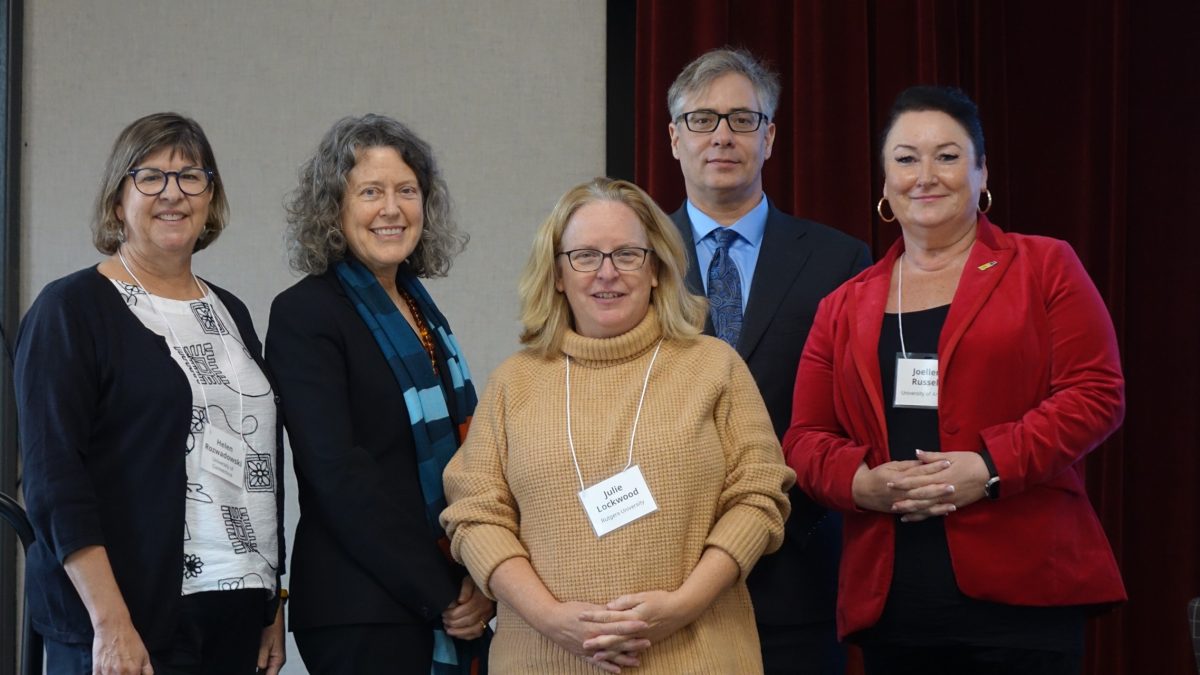
The 2025 theme, The Blue Planet, invited consideration of the role of the oceans in Earth’s climate and the tightly connected ramifications of the climate crisis for the oceans. RCEI Director Julie Lockwood emphasized RCEI’s commitment to perseverance in challenging times nothing that “Climate change and its impacts are obviously not going to go away. It doesn’t matter what the political environment is. Physics doesn’t change, right? We still have the pieces of climate change; we are experiencing those daily. So, we really need to work and continue that work fearlessly.”
Experts featured during the morning plenary who spoke to ocean science, history, technology, and law included:
- Joellen Russell, Distinguished Professor, University of Arizona
- Helen Rozwadowski, Professor of History, University of Connecticut
- Jason Cotrell, Founder and CEO, Sperra
- Cymie Payne, Professor, Rutgers University and RCEI Affiliate
Joellen Russell: Ocean Innovation and the Southern Ocean’s Critical Role
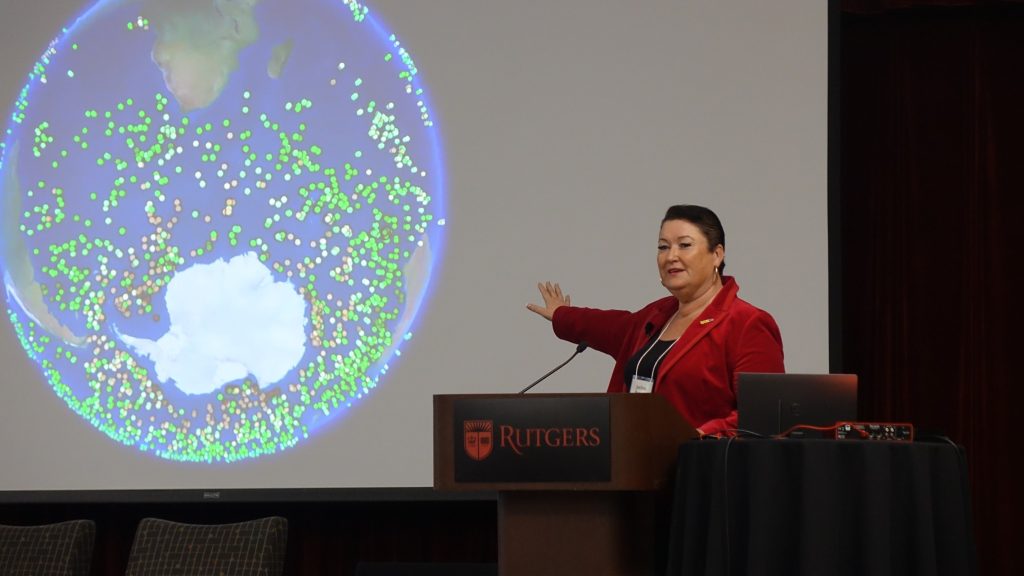
Joellen Russell opened the symposium with a compelling presentation on ocean observation technologies and climate prediction. Russell, who specializes in the Southern Ocean, emphasized the region’s outsized importance in global climate regulation, “Fifty percent of all the carbon dioxide that the ocean has taken up went in around Antarctica. Seveny-five percent of all the heat … of the [global] energy budget … went in around Antarctica. That’s why we study the Southern Ocean, because it’s doing a heavy lift.”
Russell highlighted the revolutionary impact of ‘Argo’ floats—autonomous ocean monitoring systems that have transformed oceanographic research. Starting from zero Argo floats in 2014, the program now has 846 active floats worldwide, conducting real-time data collection. Russell explained the technology’s efficiency compared to traditional ship-based measurements, “Instead of the five profiles [from a ship], I will get 250 minimum and up to as many as 500 profiles for the same money.”
Addressing the critical shortage of ocean scientists, Russell noted. “Roughly 6,000 PhD-level oceanographers are working in the world today, and roughly 60,000 meteorologists and 600,000 geologists … 6,000 people to take care of 72% of the Earth’s surface and 93% of the energy budget! So come on in — the water’s fine. We need your help.”
Russell also discussed her public outreach work as a founding member of Science Moms, describing it as “a side hustle” aimed at communicating climate science more broadly. She explained that the initiative creates accessible content for busy parents, “We try to make a minute and a half clips like the level of Tik Tok or Instagram… that you should be able to watch while you’re sitting in the line in your car waiting to pick up your kid.” The group produced a Super Bowl ad that “was rated eighth in impact” by industry analysts, demonstrating the power of scientists engaging directly with public audiences.
Helen Rozwadowski: Ocean Histories and Cultural Perspectives
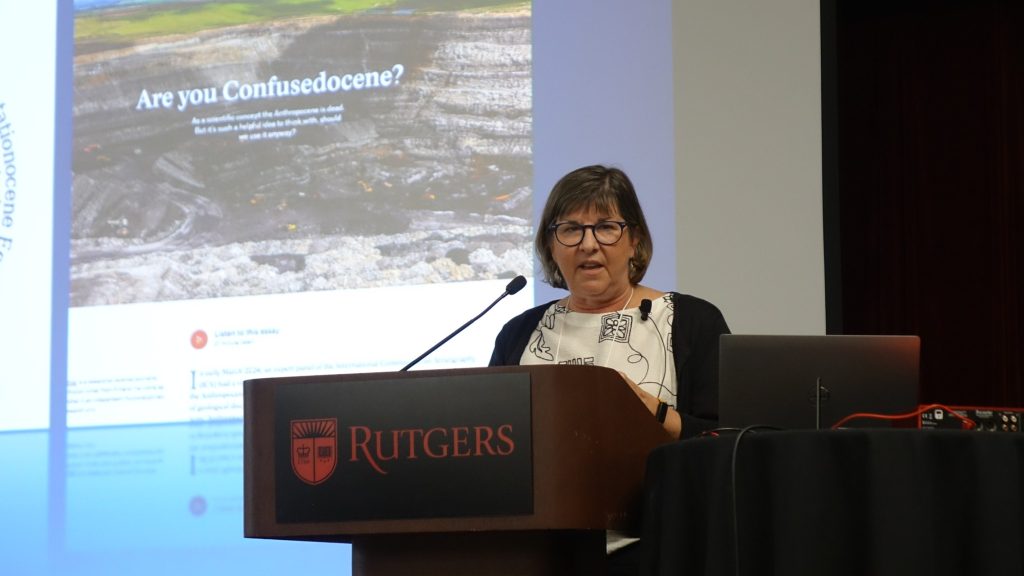
Helen Rozwadowski challenged the audience to reconsider historical perspectives on the ocean, arguing that Western culture has long viewed “oceans as outside of history. We think of them as eternal. We think of them as virtually endless. We think of them as most especially as a place apart from humanity. This perception has hindered ocean conservation efforts and must change if we are to address the climate crisis effectively.”
Rozwadowski emphasized the importance of recognizing diverse ocean relationships across cultures, particularly citing Tongan novelist and anthropologist Epeli Hau’ofa’s concept of “seas of islands,” which “emphasizes the decentering of land in Pacific Island cultures both past and present relative to their sense of home, oceans and the heavens.”
She critiqued problematic ocean metaphors that have shaped policy, particularly the “ocean frontier” concept. This metaphor, she explained, “reinforced beliefs of the limitlessness of ocean resources, even extending the embrace of that myth in the face of mounting evidence to the contrary over the second half of the 20th century.” The frontier metaphor also “implies the inevitability of development as the inexorable outcome of so-called progress,” which becomes particularly concerning in the context of deep-sea mining and the exploitation of natural resources.
Rozwadowski concluded by calling for new frameworks, “What we need from the young people in this audience are new metaphors that can help deliver and support new relationships with oceans that are ethical and just and sustainable.”
Jason Cotrell: Ocean Renewable Energy and Floating Data Centers
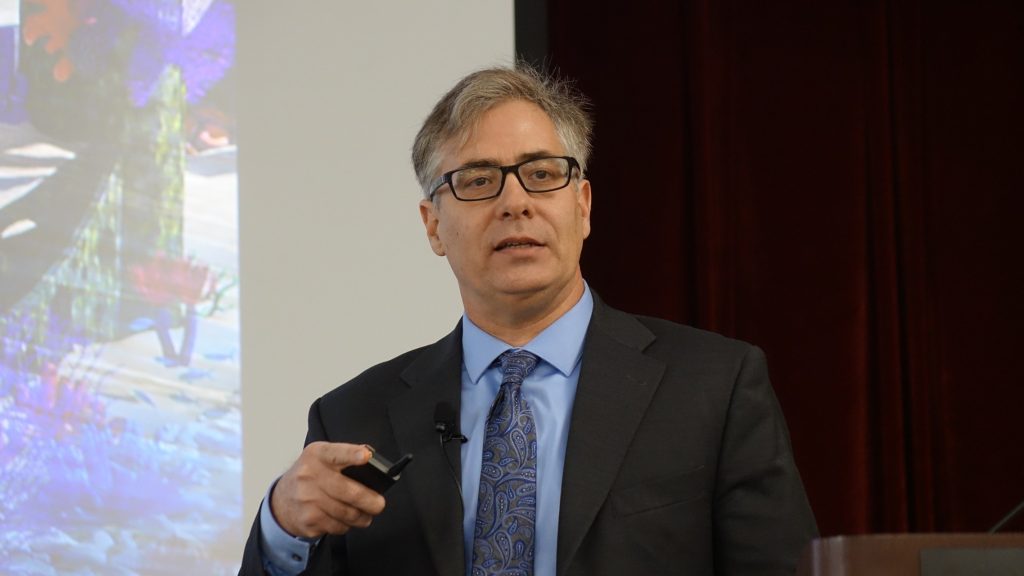
Jason Cotrell presented an innovative approach to powering data centers using ocean renewable energy. He explained that data centers face a massive infrastructure challenge, with global capacity expected to grow from 82 gigawatts in 2025 to 219 gigawatts by 2030—”about one quarter of the entire [global] electrical grid.”
Cotrell’s solution involves moving data centers offshore where renewable energy is abundant: “What we want to do is move the data center where the power is—or at least could be—that is in the ocean adjacent to some of these major population centers.” His company, Sperra, uses 3D concrete printing to create marine infrastructure, including platforms for floating solar arrays and offshore wind integration.
On the critical importance of hybrid renewable systems, Cotrell emphasized: “You always want both… Our idea was to obviously use hybrid power systems, and that’s a key technology to solving a lot of these renewable energy challenges.” He explained that when combining solar and wind energy, “you can reduce the amount of long-term storage by 70% by combining energy sources.”
Cotrell outlined his company’s sustainability goals, “We seek a triple value proposition… [providing] the lowest cost ocean electricity at about $50 a megawatt hour… [the ability to] enhance coastal resiliency… and trying to nurture these marine species” through nature-positive artificial reef structures.
Cymie Payne: International Climate Law and Ocean Protection
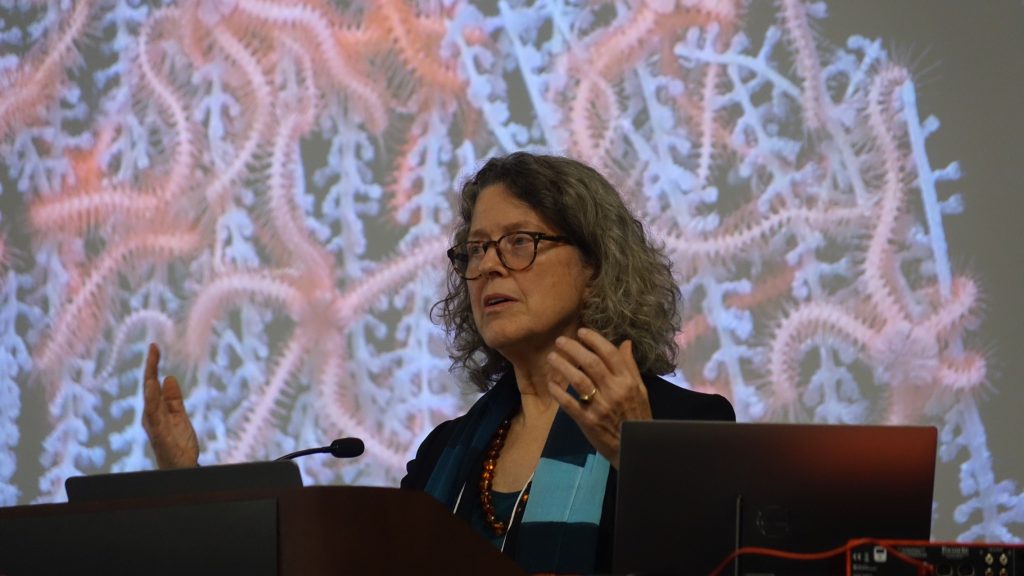
Cymie Payne discussed three groundbreaking international court advisory opinions on climate change issued in 2024 and 2025 by the International Tribunal for the Law of the Sea, the International Court of Justice, and the Inter-American Court of Human Rights. She explained that these courts “forcefully stated that governments have binding legal obligations to take urgent and ambitious action on the climate crisis.”
Payne highlighted the significance of the Law of the Sea Tribunal opinion, which “was the first time an international court has tied the 1.5 °C temperature to a legal obligation. Payne noted, “The tribunal found that “states must take all measures necessary… to prevent, reduce, and control pollution of the marine environment from any greenhouse gas emissions wherever they occur.”
The International Court of Justice (ICJ) went even further, Payne explained, “The ICJ advisory opinion said that state conduct in fossil fuel production and consumption, including granting of fossil fuel exploration licenses and subsidies, may constitute an internationally wrongful act attributable to the state.”
Payne acknowledged the critical role of scientists in these legal developments, “Scientists who publish in the peer-reviewed literature, who participate in the IPCC, have had really a tremendous influence on these opinions. And without your work, it is highly unlikely that the courts would have confidently reached these results.”
She also highlighted the new Biodiversity Beyond National Jurisdiction Agreement (BBNJ), which will come into force on January 17, 2026, noting that it “is very much a science-driven process” and provides numerous pathways for scientists to engage in ocean protection and conservation.
Panel Discussion: Inspiration, Communication, and Taking Action
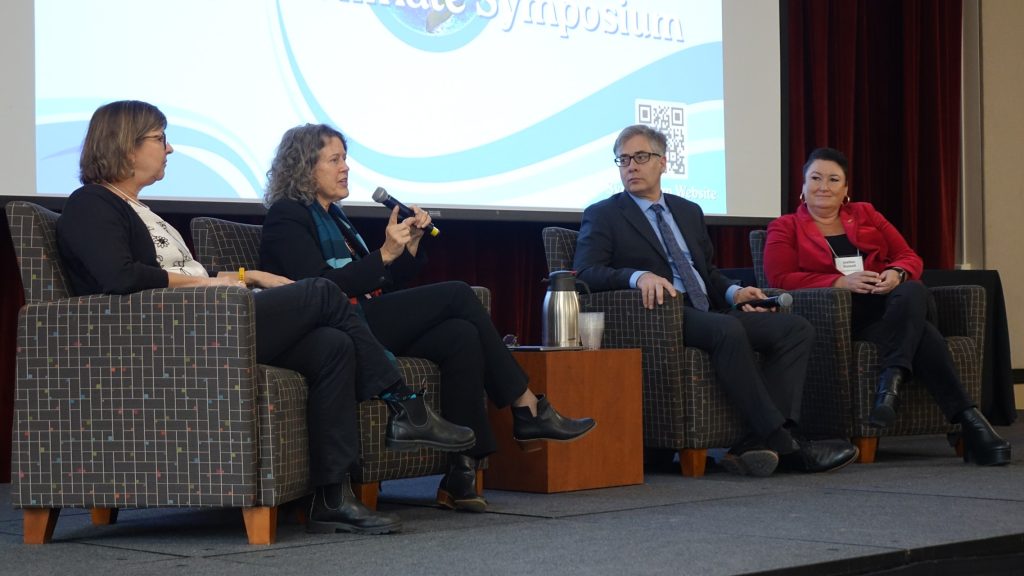
The morning plenary concluded with a lively panel discussion featuring all four speakers. When asked about finding inspiration in difficult times, the panelists offered diverse perspectives on perseverance and action.
Russell emphasized resilience and determination: “The requirements for working in this field are some combination of courage, integrity and endurance.” Part of the job of scientists is to “crawl out to the edge of what’s understood about our universe and we create new understanding.” Noting that scientists should expect to get critical reviews and that a career in science requires one to keep trying and keep getting up, it is “like being a boxer.” “I am planning to get in the ring and have somebody punch me in the head. That’s my job … to try and punch them back, right?… And I’m training students who do that, too.”
Payne highlighted that collectively, as a community, we can build and maintain institutions that last through rough times. “I keep going back to the IPCC thing, too. It’s, you know, that community of scholars, the [Rutgers] response to the Department of Energy climate report this summer, that scientists came together and rebutted that report.”
Rozwadowski discussed how she teaches her students a story of hope. “One of the things that’s amazing about ocean histories is that you can study so many different cultures and see [the] amazingly different ways that people and communities and cultures have interacted with oceans.” She points out to her students that these “histories really can help us learn things about the way people have done things in the past or are doing things now that we could adopt.”
Cotrell focused on mindset, “Believing that you can do it is the first thing because you know the flip side to that is if you don’t believe, you can’t innovate. If you can’t solve these problems, you can’t continue; well, that’s a self-fulfilling prophecy. You’re done. But if you tell yourself, ‘you can’… a lot can happen.”
Russell concluded the symposium with an inspiring message to students and early-career researchers, “You are bright and capable. And you’re here at this incredible public institution of higher education and knowledge… now is the time… Well, honestly, it’s always the time. It is remarkable how far you can go… You lock arms with all of your friends in the trenches with you… You can do it, too… I know it looks bad, but [remember] grit! Dig! You can do it. We need all of you in the boat.”
RCEI Area Lead, Professor Atif Akin of the Mason Gross School of the Arts shared student animationsaround themes of sustainability, nature and the effects of climate change that were projected during lunch.
Poster Session: Emerging Research and Regional Collaboration
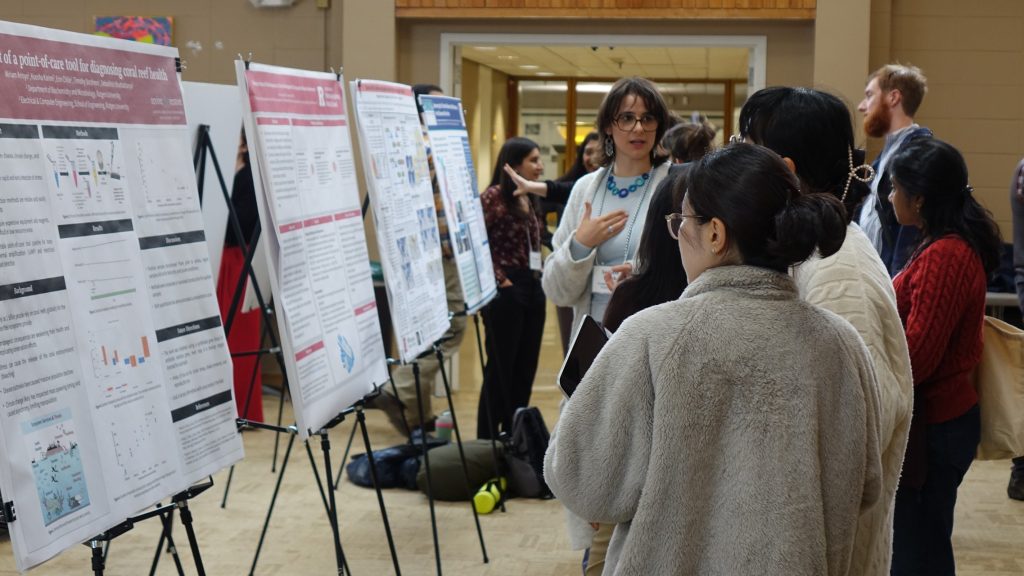
A dynamic afternoon poster session provided opportunities for sharing scholarly work on climate change and energy by researchers from throughout the Mid-Atlantic Region. The call for posters allowed for any topic related to climate change or renewable energy, not restricted to the theme of the Symposium. The 35+ posters presented showcased diverse research addressing ocean and coastal challenges, sustainable technologies, and climate adaptation strategies.
Several themes emerged from the poster presentations. Ocean health and marine ecosystems were prominent topics, with researchers presenting work on coral reef health diagnostics (Arroyo et al.), harmful algal bloom toxin tracking in New Jersey waters (Macchioni), Sargassum (seaweed) degradation dynamics (Nandi et al.), and supraglacial stream detection in Greenland using deep learning (Hassan et al.).
Sustainable materials and circular economy solutions featured prominently, including multiple presentations on low-carbon concrete alternatives. Researchers presented innovations in recycled carbonate concrete (Campbell), concrete waste recovery through mechanical processes (Dissanayaka Mudiyanselage et al.), and evaluation of low-carbon cement for oyster reef restoration (Jacobs et al.). Zhou and Li’s work on cement recovery from waste concrete demonstrated significant potential for carbon reduction while maintaining economic competitiveness.
Climate impacts and adaptation strategies were explored across multiple scales, from local flooding risk assessments in Hudson County (Ibukun and Alo) to broader analyses of the Caribbean through-flow warming (Gradone et al.) and Southern Ocean vertical motions (Feinstein and Liang). Several posters addressed green infrastructure and community resilience, including community perceptions of flooding and green stormwater infrastructure in Wilmington, Delaware (Tripuraneni et al.).
Energy systems and decarbonization pathways were represented through research on distributed energy resource control (Zhang and Mieth), pest management modeling under future climate scenarios (Shope et al.), and blue finance mechanisms for sustainable ocean economies in the Northeast U.S. (Afeku-Amenyo and Lal).
Students from the Mason Gross School of the Arts presented visual displays of quantitative data to enhance communications of climate and energy research (Huh; El-chaer; and Zeng). Also designed and displayed were music videos related to climate change that were created by Professor Akin’s students.
As one graduate student noted about previous symposia, “The RCEI Symposium provided me with the ability to meet potential collaborators across other disciplines who I wouldn’t have met otherwise.”
RCEI’s annual climate symposium is an event that is free to attendees. It is supported in part by the Frank Sposato Memorial Endowment. To learn more about sponsorship options for a future Climate Symposium, visit here.
Recordings of the presentations as well as the posters can be found on the RCEI website.
Related posts:
 In a World First, Autonomous Robot Glider to Circle the Globe in Historic Ocean Mission
 RCEI Scholars Discuss Challenges to EPA’s Endangerment Finding & Rapid Responses by the Scientific Community
 Ocean Education Tools Made by and for Oceanography Professors
 Rutgers Immersive Learning through Science Storytelling Lab Fosters Student Success and Interdisciplinary Partnerships