









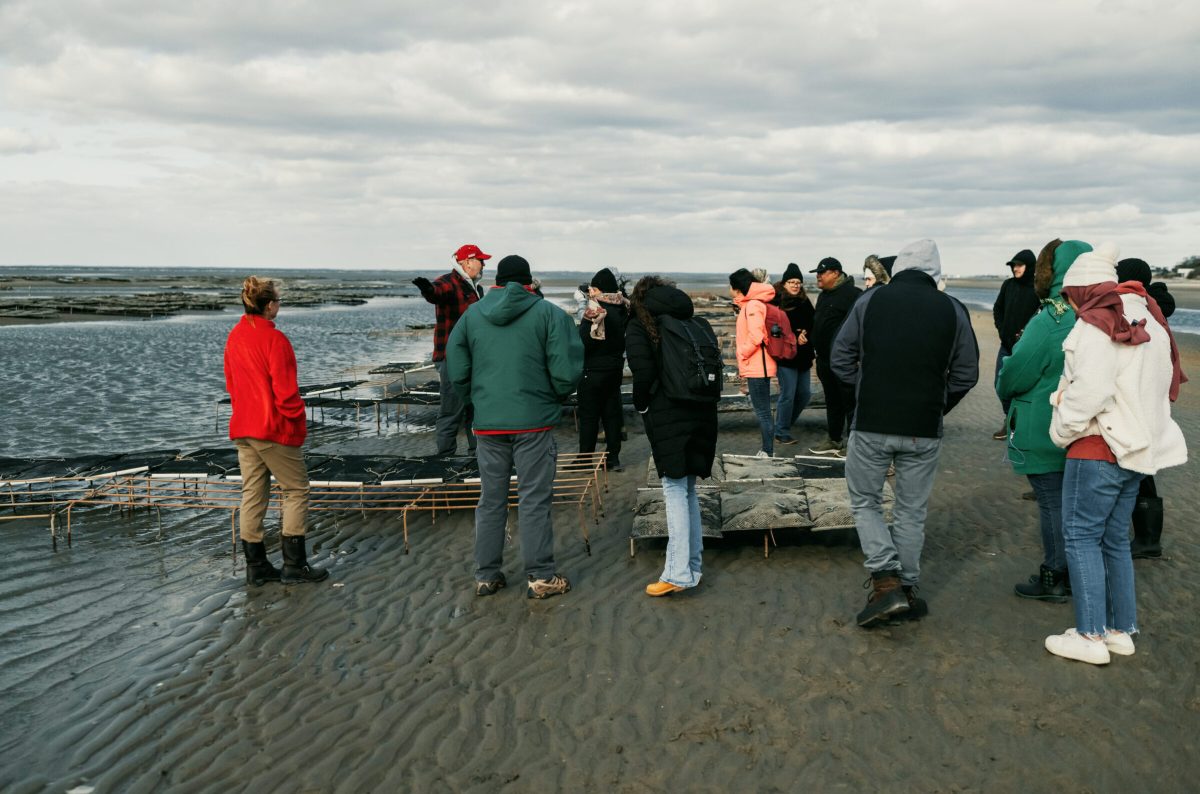
“At the end of the day, the more connections you have with other colleagues, the bigger the difference you can make at Rutgers.” This is the ethos behind the ‘SEBS/NJAES Field Trips’ according to the SEBS Office of Finance and Administration, which is piloting this new initiative. With these quarterly trips, they hope to connect on-campus SEBS/NJAES faculty and staff to the various off-campus research labs and farms across the state. In turn, these new connections will potentially foster the development of institutional knowledge among all SEBS/NJAES staff—whether they’ve worked at Rutgers for a few months or many years.
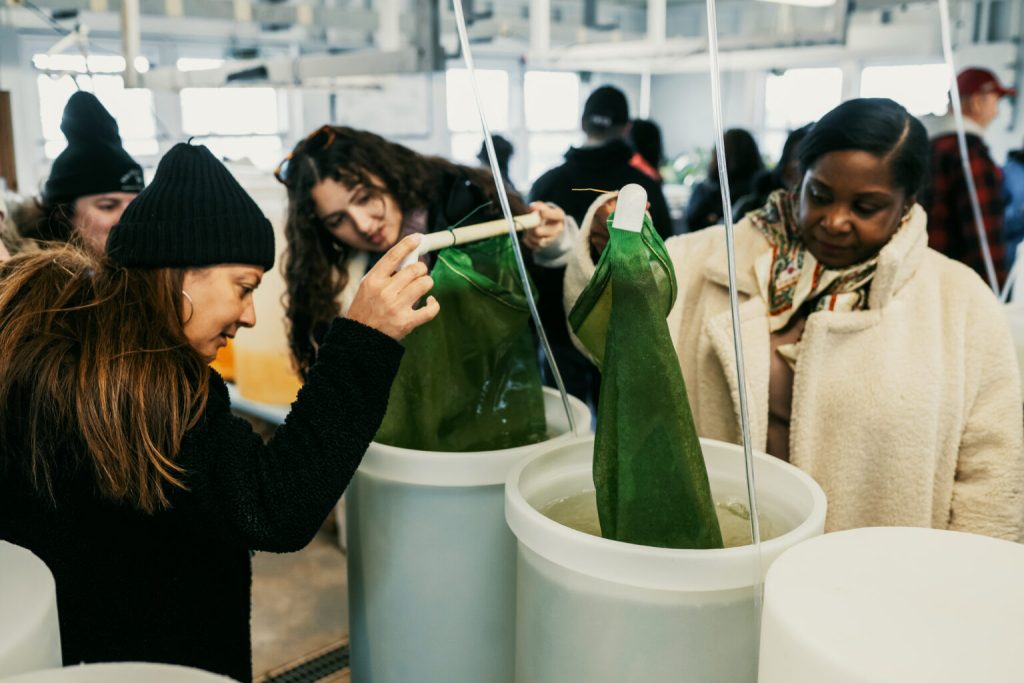
On November 18, several faculty and staff on one of these trips toured two key sites in Cape May County: the Aquaculture Innovation Center (AIC) and Cape Shore Laboratory. Both work with other coastal off-campus sites, cleverly titled ‘Rutgers Coastal Campus’, to support New Jersey’s growing shellfish aquaculture industry.
“These trips teach us what our research impact is,” said Noor Meky, senior administrative assistant within the office. The sites are uniquely situated to better serve New Jersey, allowing tight knit university-industry-community relationships to form. But it can also foster a bit of a disconnect between off-campus and on-campus faculty and staff.
“These staff members service these sites, but some have never even seen the people that work there,” explained Meky. “These field trips expose people from the business office, IT, and facilities, among others, to the research done.”
This was certainly the case for Elizabeth Lyimo, a Project Manager Supervisor within the SEBS Space Planning & Facility Management office. “I usually come down to Cape Shore for facilities-related matters,” she reflected. “But hearing more about the research done here and at the AIC during this tour makes it far more meaningful and interesting, given how it relates to the support we provide for their facilities.”
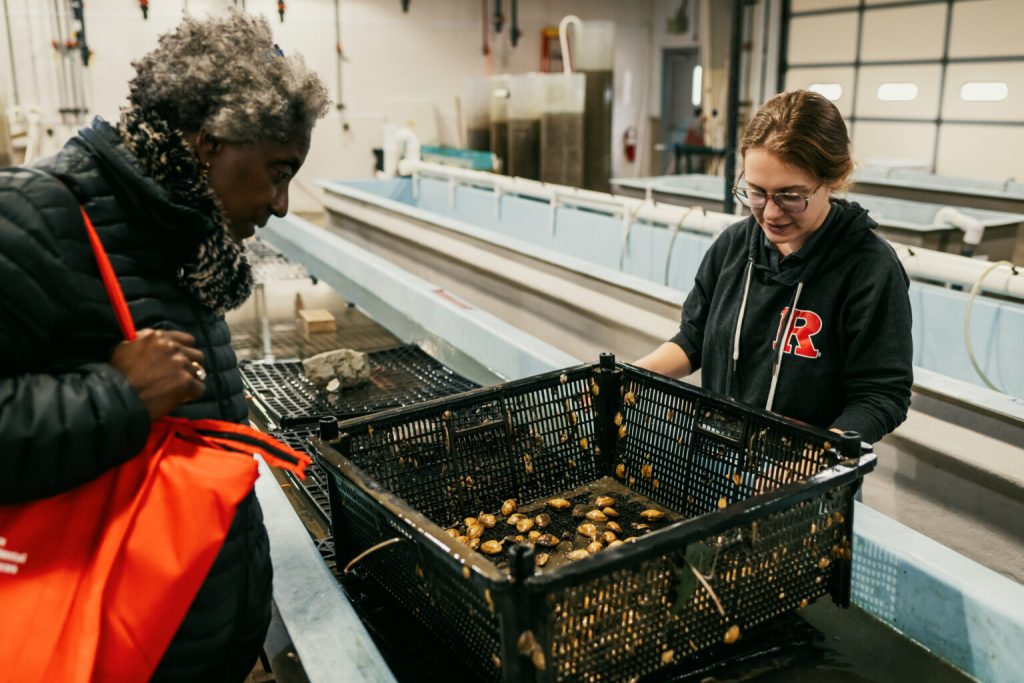
Participants heard about the various research projects being conducted over two hours away from their own offices on campus, including the work of people like Sophia Piper, a fourth-year doctoral candidate studying the predator-prey dynamics among clams, crabs and moon snails. Her work is intended to inform plans to seed clams along the continental shelf.
To Piper, this tour was a welcome development as it can be a bit of a production to connect with the main campus, partly due to the physical distance. “When one person has to go, they usually bring a laundry list of updates and errands from everyone else.” Having this opportunity to connect with on-campus staff allowed everyone involved to see just how supportive they can be to each other as Rutgers pursues impactful research.
“We work every day, including weekends, to keep the experiments here running,” RCEI affiliate Mike De Luca, director of the AIC, told the field trip participants. “For all the work the AIC does, we only have five full-time staff here. But the reason we can focus on all this research is because of your administrative support on-campus. You help us navigate the admin, funding and facility tasks involved.”
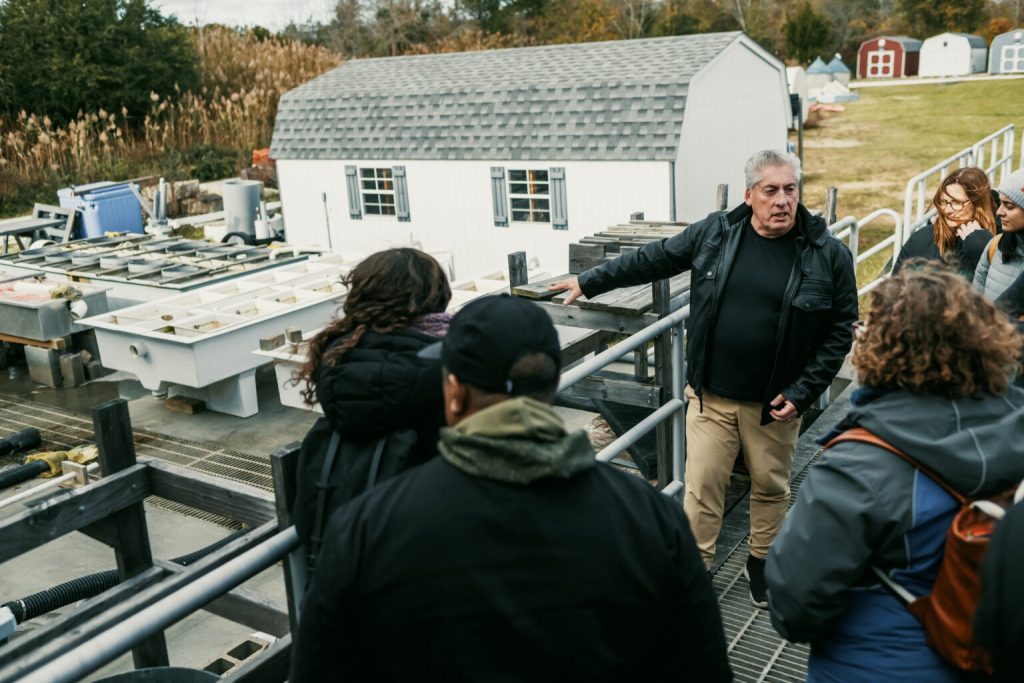
“We wanted to thank you,” he added. “We appreciate all the support you provide.”
Sam Ratcliff, who runs the operations at the Cape Shore Laboratory 20 minutes away from the AIC, said something similar. With only two year-round staff, it is small but mighty—hosting projects meant to support research, industry, local youth, and Rutgers students.
“That’s the thing about Rutgers. There’s so much available,” said Delma Yorimoto, senior program coordinator with the Department of Family and Community Health Sciences who traveled all the way from Jersey City for this trip. As a member of Rutgers Cooperative Extension of Hudson County, her role is to connect Rutgers research with the county she serves, fulfilling Rutgers’ land-grant mission. With eyes open to the facilities SEBS/NJAES can offer, she is now thinking up ways she can bring her students to Rutgers off-campus sites like these.
This article was originally published by SEBS/NJAES Newsroom.
Related posts:
 Ocean Education Tools Made by and for Oceanography Professors
 Rutgers Plays Vital Role at the 2025 New Jersey Agricultural Convention
 Rutgers Cooperative Extension 2025 Conference Focuses on “Building a Culture of Communication”
 Early-Career SEBS Faculty Forge New Connections at Back-To-School Retreat