











For eight Rutgers students, the George Washington University Planet Forward Environmental Storyfest in April was more than a conference. It was an opportunity to show how science storytelling can transform complex research into deeply human stories that connect with audiences far beyond the laboratory.
Representing the university at one of the nation’s leading gatherings for environmental communicators, the students presented Research to Reel: Science Stories in Action, a dynamic showcase of documentary filmmaking, immersive learning and collaborative science communication.
The presentation highlighted work emerging from the Immersive Learning through Science Storytelling Lab at SEBS, where students partner with scientists to document research as it unfolds in real time.

Opening the session were Ecology and Evolution major Colby Koutrakos and Marine Science major Amaya Baez, who introduced the lab’s Science-in-Action Storytelling™ model, an approach that is grounded in long-term trust and collaboration between storytellers and scientists.
“Our storytelling process focuses on discovery and the action of science as it’s happening,” explained Baez.
That philosophy has become central to the students’ work, allowing them to move beyond traditional science reporting and into the lived experience of research itself.
Koutrakos knows that transformation firsthand. With no prior experience in video storytelling, he immersed himself in hours of ocean exploration footage and eventually rose to become co-editor of Mysteries of 9° North, a feature-length documentary directed by RCEI affiliate Dena Seidel, who oversees the high-impact science video storytelling projects that integrate students in the creative process.
“Our scientists are real, relatable people who go through trials, difficulties and challenges, even failures in pursuit of their goal,” Koutrakos shared during the presentation.
The documentary centers on the groundbreaking deep-sea microbiology research of Rutgers scientist Costa Vetriani, professor in the Department of Biochemistry and Microbiology. During the session, students Bella Burnworth, a Biology major; Ben Lerner, a Philosophy major in the School of Arts and Sciences with a SEBS minor in Environmental Policy, Institutions and Behavior (EPIB); and master’s student Shaniya Utamidata in Ecology and Evolution joined the presentation to unveil the film’s trailer.
More than a preview of the documentary, the trailer offered personal reflections from the students themselves, revealing how the storytelling process reshaped their understanding of science, collaboration and communication. “I wasn’t just documenting the work of this research team. I was actually a part of it,” said Lerner.
For Burnworth, the experience revealed the broader educational power of storytelling-driven science communication. “This has the potential to be a wonderful learning tool for not only students, but the general population as well,” she said.
Utamidata emphasized the role storytelling can play in bridging the divide between researchers and the public. “We now have a clear understanding of how to close the gap between the scientific community and other community members,” she shared.

The students’ work demonstrated how rigorous scientific research — from deep-sea microbiology to ocean glider fleets, ecosystem change and climate-resilient food crops — can be translated into compelling narratives that engage broad audiences while maintaining scientific authenticity.
Following their stage presentation, students further demonstrated their collaborative production process, sharing how documentary storytelling becomes a vehicle for STEM learning, public engagement and experiential education.
“Watching our storytelling students share their experience, knowledge and commitment to authentic science communication on a national stage was very inspiring,” said Seidel.
Also participating in the Planet Forward experience were Environmental Policy, Institutions, and Behavior major Lauren Koo and Microbiology majors Tessa Sandora and Mikayla Pires, who contributed to the collaborative storytelling initiative.
Rutgers SEBS is a consortium school partner of Planet Forward, an initiative dedicated to empowering the next generation of environmental storytellers. This marked the fourth year Seidel and RCEI affiliate Xenia Morin, associate teaching professor in the Department of Plant Biology, accompanied Rutgers students to the Storyfest, continuing a growing tradition of engaging students in STEM learning through collaborative storytelling.
Supporting the students at the event was Rutgers graduate Sean Feuer, editor of Mysteries of 9° North, the full-length science-in-action documentary expected to be released this fall. Student participation in Planet Forward was also made possible through support from Rutgers alumni Penny and Don Pray, who also support the lab.
At Planet Forward, Rutgers students did more than present a documentary project. They demonstrated how storytelling can bring science to life — turning research into connection, discovery into understanding and students into powerful ambassadors for science communication.
This article was originally published by SEBS/NJAES Newsroom.
Related posts:
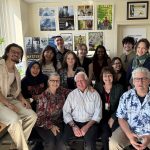 Rutgers Immersive Learning through Science Storytelling Lab Fosters Student Success and Interdisciplinary Partnerships
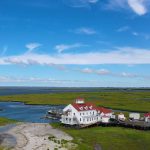 A Film Professor and His Students Film a Documentary on the University’s Marine Field Station
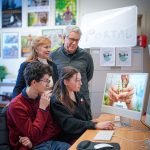 Immersive Learning Through Science Storytelling Lab Wins “2025 Broader Vision Award” by the Garden State Film Festival
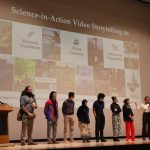 Rutgers Students Share STEM Learning through Science-in-Action Storytelling at Environmental Conference