









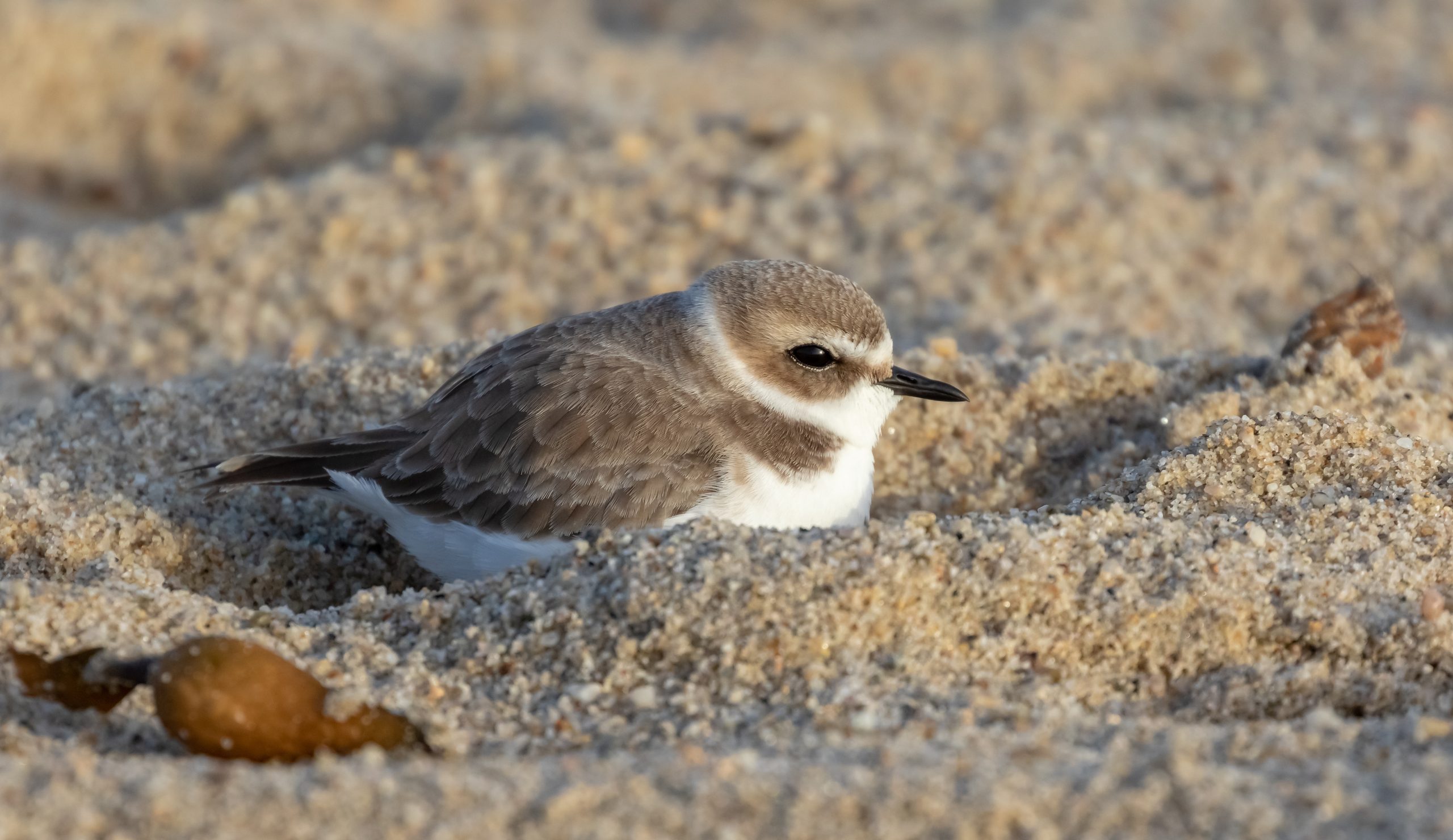
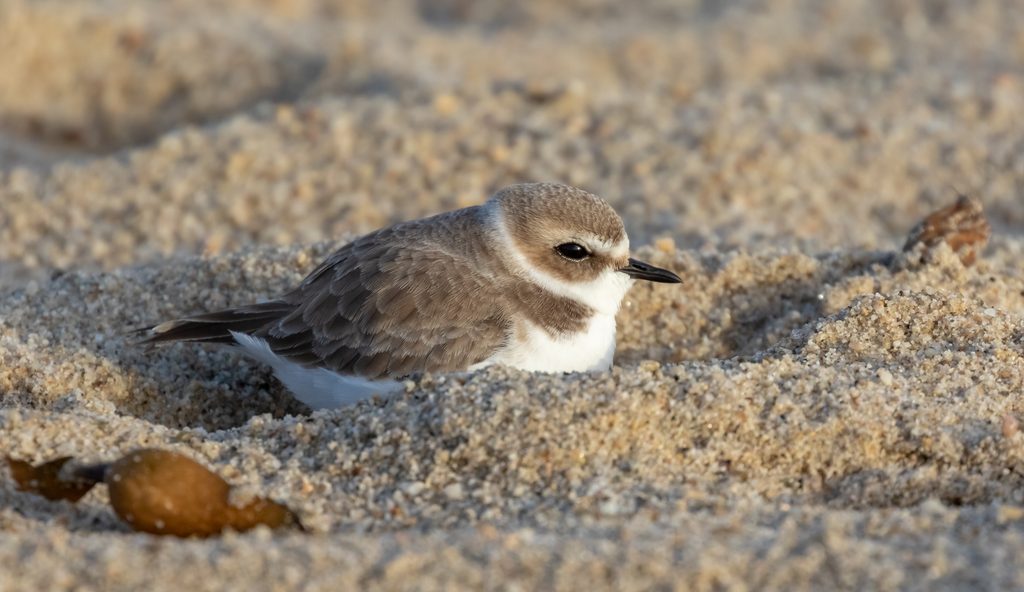
Along the white sandy shores of the northern Gulf of Mexico, two endangered species share the same narrow strip of coastline — but they don’t always want the same things from it. From a new study published in the journal, Estuarine, Coastal and Shelf Science, RCEI Affiliate Brooke Maslo, alongside co-authors Lydia Heilferty, Sara Zeigler, and Thomas Schlacher explore what it takes to protect both beach mice and snowy plovers.
By compiling related publications from 1980 to 2023, the authors synthesize the habitat preferences of both beach mice and snowy plovers. Beach mice are tiny, pale-colored rodents that live in vegetated sand dunes. Snowy plovers are small shorebirds that nest on flat, open, sandy beaches with very little plant cover. While they live side by side, these two species have very different habitat needs — and that creates a real problem for land managers trying to help both.
Climate change makes this harder. More frequent and intense storms will reshape future coastline environments. This puts pressure on managers to act quickly — and sometimes reactively — in ways that may not serve all species.
However, there could be some overlap to serving both species. The authors recommend maintaining a diverse mix of beach and dune features rather than optimizing for just one species. Vegetation that appears in both habitats can be planted. Dune heights can be regulated to appeal to both beach mice and snowy plovers. Ultimately, more work needs to be done to investigate the intersection of these preferred ecosystems.
This “habitat mosaic” approach could benefit not only mice and plovers, but also other coastal species like least terns and black skimmers — and could inform coastal management policy at the state and federal level.
“As wildlife are continually confined to managed open space habitats, meeting the conservation needs of all species becomes increasingly challenging. Identifying congruence among species of conservation concern is essential to preserving population viability.” -Brooke Maslo
You can read the full study here: https://doi.org/10.1016/j.ecss.2025.109603
This article was written with assistance from Artificial Intelligence, was reviewed and edited by Kenneth Tam, and was reviewed by Brooke Maslo, a co-author on the study.