









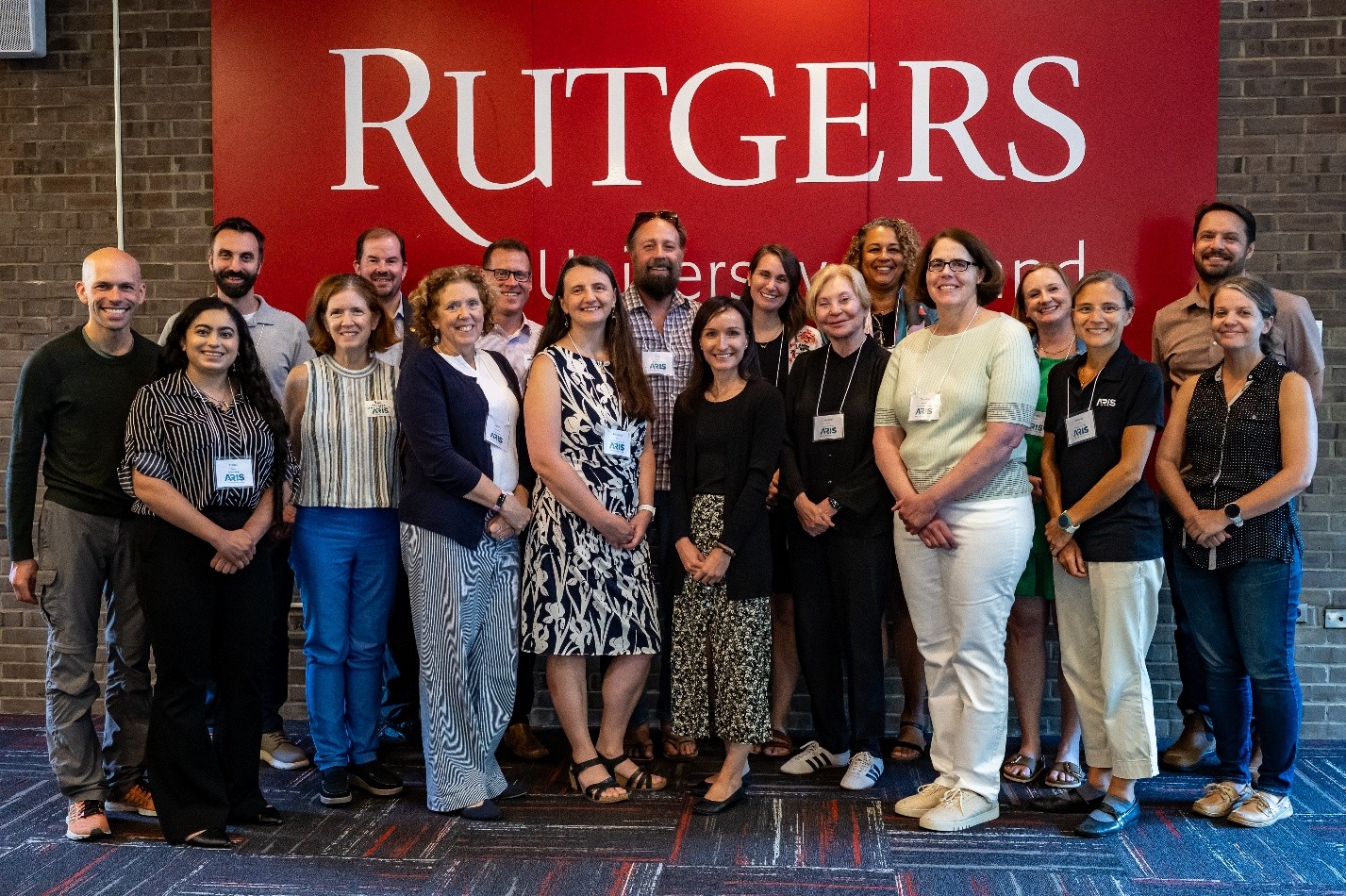
In early August, Rutgers School of Environmental and Biological Sciences (SEBS) hosted the Center for Advancing Research Impact in Society (ARIS) 2026 Research Fellowship Kickoff at the Rutgers University Inn and Conference Center. Organized by SEBS Associate Dean of Research Impact and RCEI affiliate Janice McDonnell and ARIS Executive Director Susan Renoe, associate vice chancellor for research, extension and engagement at the University of Missouri, the kickoff brought together the 2025 and 2026 ARIS Research Fellows for professional development and science storytelling training.
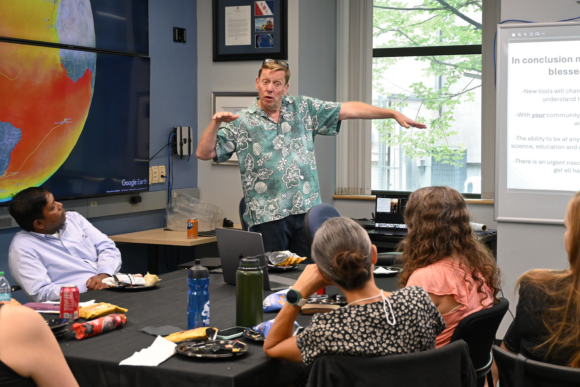
The ARIS Research Fellowship supports researchers in creating a coherent, leadership-driven strategy that centers why research matters, how it can drive change, and how it can continue to improve society. The 2026 fellows include RCEI affiliate Nicole Fahrenfeld, Rutgers University professor and Environmental Engineering Undergraduate Director; Mónica Bugallo (Stony Brook University); Casey Canfield (Missouri University of Science & Technology, attended virtually); Erin James (University of Idaho); Christine Kirchhoff (Pennsylvania State University); and Divya Sitaraman (California State University, East Bay, who was unable to attend).
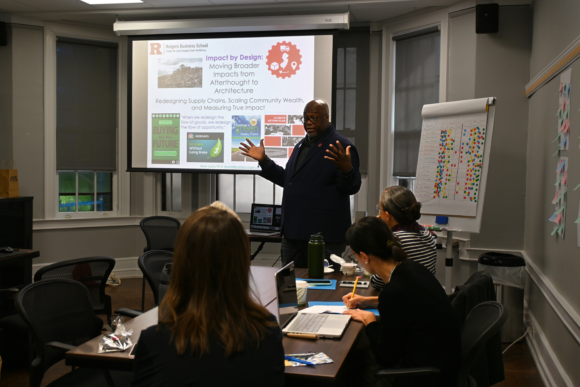
During the kickoff, fellows were guided through their own leadership journeys by Margaret Duffy, executive director of the Novak Leadership Institute at the University of Missouri, who spoke about the power of personal branding and impact mapping. They also explored a Rutgers case study on building a culture of research impact. Department Chair and RCEI affiliate Oscar Schofield led a tour of the Department of Marine and Coastal Sciences and discussed how the department has cultivated its impact culture, as well as its role within the Rutgers University Center for Ocean Observing Leadership (RUCOOL). Fellows also heard case studies highlighting partnerships among communities, universities, and industry from Kevin Lyons, director of the Rutgers Business School Public Private Community Partnership Program.
Fellows also received science storytelling training from Ari Daniel, an independent radio producer whose work has appeared on media platforms including NPR and The New York Times. James reflected on the importance of storytelling through her unique perspective as a professor of English.
“Training in narrative and emotional literacy makes scientists better tellers and receivers of information,” she said.
“You can’t do science without narrative,” she added. “Even a hypothesis is asking, ‘What if?’”
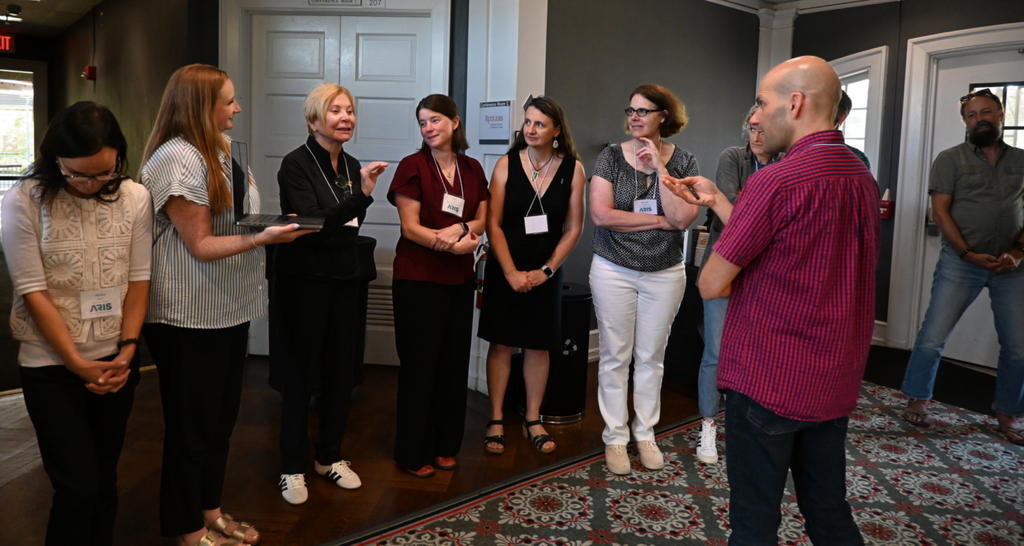
The 2026 fellows were joined by last year’s inaugural cohort, which included RCEI affiliate Kay Bidle (Rutgers University), Melissa Libertus (Case Western Reserve University), Roger Narayan (University of North Carolina and North Carolina State University), Petronela Radu (University of Nebraska–Lincoln), and Rachel Thibodeau-Nielsen (University of Missouri). Having visited Rutgers for their own kickoff last year, they shared insights into the value of the fellowship with this year’s participants.
“ARIS is a state of mind,” said Radu, chair of the Department of Mathematics at the University of Nebraska–Lincoln.
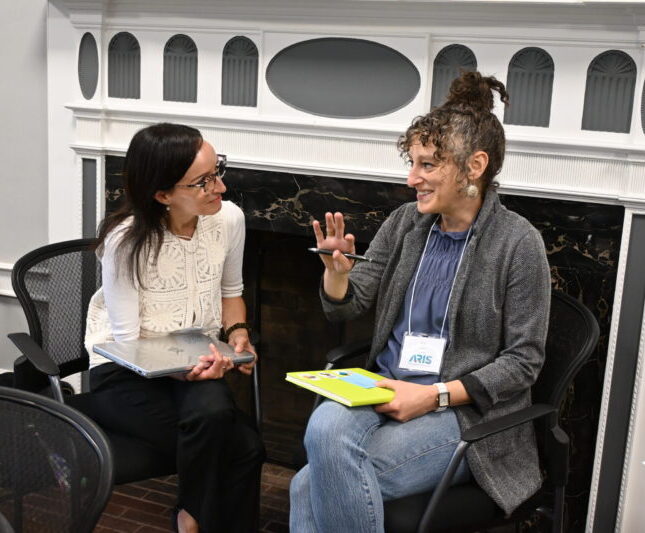
As part of her fellowship, she collaborated with more than a dozen units across campus through activities that promoted interdisciplinary thinking, including research roundtables, science movie screenings, and experiential learning initiatives. Along the way, she gained an appreciation for the leadership and communication skills required to shift institutional culture.
Libertus also reflected on how the fellowship’s emphasis on leadership development influenced her own career trajectory. Within the past year, she transitioned from professor of psychology at the University of Pittsburgh to chair of the Department of Psychology at Case Western Reserve University.
“After the success of the first kickoff at Rutgers, we were so pleased to welcome these fellows again,” said Janice McDonnell, SEBS associate dean of research impact and a member of the ARIS leadership team. “It is heartening to see them grow and embrace new opportunities to change the research impact culture within their disciplines and universities.”
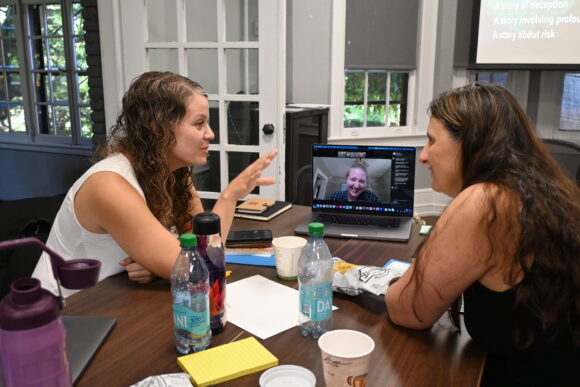
Bugallo, interim vice president for research and innovation at Stony Brook University, reflected that gathering at Rutgers gave the fellows an opportunity to consider what they hoped to accomplish during the fellowship and beyond.
“It is a space without judgment, where we can reflect openly on the opportunities ahead,” she said. “The power in this room is our shared passion for the broader impact of research and for making a meaningful difference in society.”
By the close of the kickoff, both fellow cohorts returned home with plans to remain connected and collaborate throughout the coming year. Their training will continue over the next year, culminating in presentations of their fellowship projects at the upcoming ARIS Summit.
About ARIS
The Center for Advancing Research Impact in Society (ARIS), formerly the National Alliance for Broader Impacts, was founded in 2014 and is the largest societal impact community organization in the United States. ARIS supports practitioners, researchers, and communities in achieving positive societal impact. With more than 1,800 members worldwide, ARIS offers resources, certifications, and programs that build capacity, strengthen partnerships, and advance scholarship. Visit researchinsociety.org.
Editor’s note: This article was written by Mitaali Taskar, Research Project Coordinator II with Rutgers Department of Marine and Coastal Sciences.
This article was originally published by SEBS/NJAES Newsroom.
Related posts:
 ARIS Research Fellowship Convenes at Rutgers for Kick-off of Yearlong Program
 Rutgers Professor Kay Bidle Selected as an ARIS Inaugural 2025 Research Fellow
 New Journal Spotlights Rutgers-created Broader Impacts Toolkit
 Department of Marine and Coastal Sciences Faculty Recognized at the ARIS 2026 Summit