








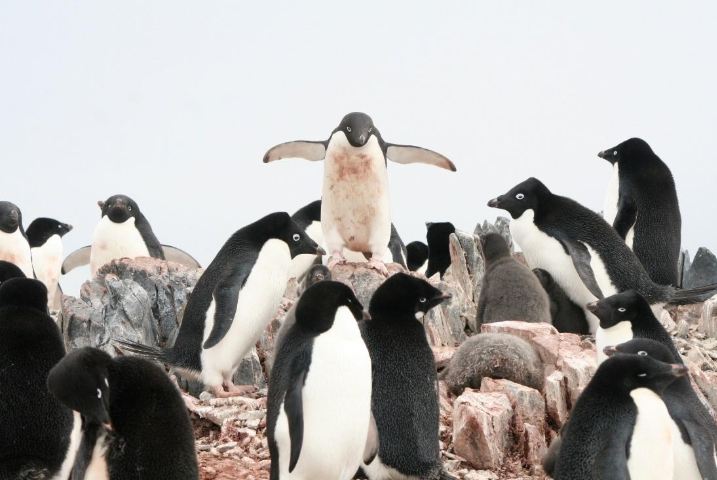
Penguins waddling across Antarctic ice might seem far removed from a classroom in New Jersey, but a new study shows that these charismatic birds can be a powerful hook for teaching young people about climate change — and inspiring them to see themselves as future scientists.
The study was led by researchers at Rutgers University, including Janice McDonnell, RCEI Affiliate, Associate Dean of Research Impact at the School of Environmental and Biological Sciences, and Oscar Schofield, RCEI Affiliate, Distinguished Professor in the Department of Marine and Coastal Sciences at Rutgers University. In addition, the lead author, Marissa Staffen, and co-author Matthew Newman are both County Agents from the Department of 4-H Youth Development at Rutgers University.
Published in the Journal of Geoscience Education, the study evaluates a program called Data to the Rescue: Penguins Need Our Help! — an eight-session after-school club designed for middle schoolers in grades 5 through 8. The program invites students to join a virtual research team studying real penguin population data from Antarctica, collected by the National Science Foundation’s Long-Term Ecological Research (LTER) program at Palmer Station.
Students work with actual scientific data using an online tool called CODAP to graph and analyze how Adélie, Gentoo, and Chinstrap penguin populations have changed over time — and why. The program ends with a creative “Data Jam,” where students turn their findings into poems, art, videos, or other projects to share with their communities.
The program directly connects climate change in the polar regions — where warming is happening much faster than the global average — to real consequences like sea ice loss and shrinking penguin populations. It also draws lines from those distant changes to local impacts like sea level rise and extreme weather, helping students understand that what happens in Antarctica doesn’t stay in Antarctica.
“This program shows that when you give young people real scientific data and a compelling story — in this case, penguins — they don’t just learn facts, they start to see themselves as part of the solution. Building that sense of identity and agency in students, especially for young people that don’t see themselves represented in STEM, is one of the most important things we can do for both STEM education and climate action,” said Staffen.
Over three years and across 46 program sites in the U.S., 1,571 youth took part. The study found that after completing the program, students showed a statistically significant increase in ‘science identity’ — meaning students felt more like they belonged in science. This was especially meaningful given that the program intentionally reached out to groups underrepresented in STEM, including girls, Black and Hispanic youth, and students from low-income communities.
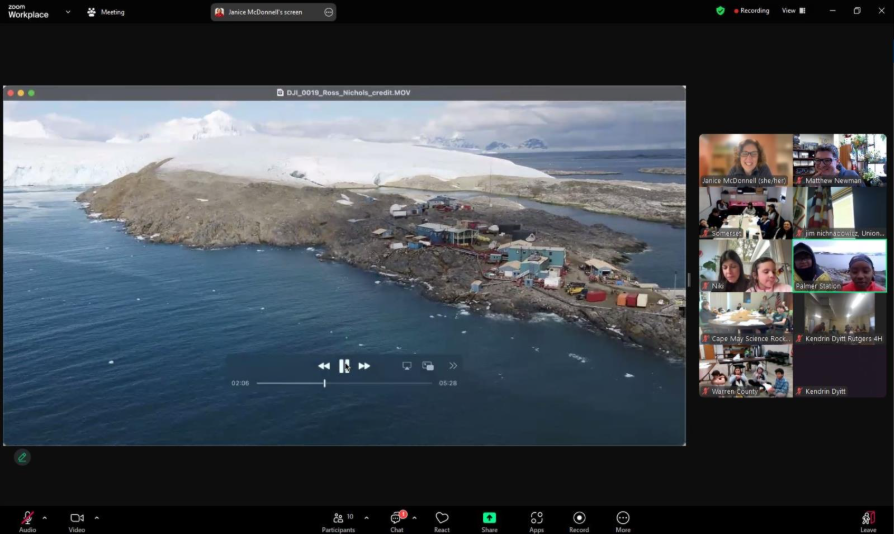
Students who started with little knowledge of polar science showed the biggest gains in learning. Many who began by answering “I don’t know” to questions about the Arctic and Antarctic finished the program with real, substantive answers.
Interestingly, overall fascination with science dipped slightly by the end of the program — but the authors suggest this may reflect a more realistic understanding of what science actually involves, including the hard work and challenges, rather than a loss of interest. Students with lower initial fascination actually showed gains.
The implications of this research go beyond penguins. The program offers a replicable, low-cost model for informal science education that can be run in after-school clubs, community centers, summer camps, libraries, or 4-H programs — and all materials are available for free in both English and Spanish. The authors argue that building climate literacy and data skills in young people, particularly those from underserved communities, is essential for developing an informed public and a diverse STEM workforce capable of tackling global challenges like climate change.
Explore Data to the Rescue resources here: https://polar-ice.org/data-to-the-rescue-club/.
You can read the full study here.
This article was written with assistance from Artificial Intelligence, was reviewed and edited by Oliver Stringham, and was reviewed by Marissa Staffen, Janice McDonnell, Matthew Newman, and Oscar Schofield, co-authors on the study.