



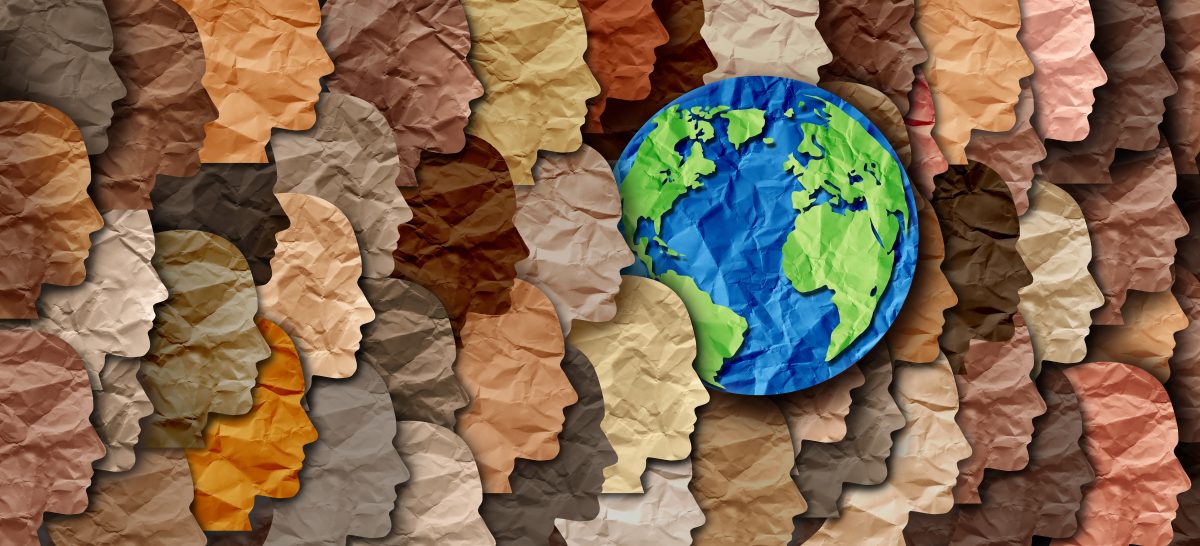
New research finds that news stories about who is most vulnerable to the impacts of climate change can have very different effects — depending on whether they focus on race or income.
Climate change doesn’t harm everyone equally. Flooding, heat waves, and other extreme weather events tend to hit lower-income communities and communities of color the hardest. But when news stories highlight those differences, do they actually help people understand the problem — or do they make things worse? A new study published in the journal Science Communication set out to answer that question, and the findings have important lessons for journalists, policymakers, and anyone trying to build public support for climate action.
One of the authors of this work is Lauren Feldman, RCEI Affiliate and Chair and Professor of the Department of Journalism and Media Studies at Rutgers University.
The study recruited more than 2,800 people across the United States to participate in an online survey experiment. Participants were asked to read a short news article that described how climate change is increasing the risk of either flooding or heat waves. One version of the article noted that Black communities face the greatest risk. Others pointed to poor or working-class communities. A final group read an article that didn’t single out any group at all. Afterward, participants were asked about their beliefs and whether they support policies and aid to help affected communities. An additional control group did not read a news article and only answered the survey questions.
What They Found
The results were striking. When the news story focused on the increased risk to Black communities, people — especially White participants and those who hold what researchers call “symbolic racism” beliefs — were less likely to believe that climate change impacts are unequal and less supportive of helping affected communities. In other words, framing climate change as a racial issue actually lowered support among certain groups.
Stories that focused on class — describing poor or working-class communities as most at risk — did not trigger the same pushback. In fact, in some cases, those stories increased belief in unequal impacts and boosted support for action.
Symbolic racism refers to a system of beliefs rooted in the ideas that racial discrimination is not a serious problem and that racial minorities do not face systemic discrimination and thus do not need specific help to deal with resulting disadvantages. The study found that people with higher levels of these beliefs responded most negatively to race-focused climate stories.
“These findings send a clear signal to communicators: how you talk about climate inequality really matters. Our work suggests that leading with class-based framing may build broader support for the communities who need it most; however, it is critical to not ignore the very real, race-linked vulnerabilities that also exist. The challenge now is finding ways to tell the full story without triggering the kind of backlash that leaves the most vulnerable communities without the support they deserve,” said Feldman.
The study also found consistent differences between Black and White participants overall. Black participants showed stronger beliefs in unequal climate impacts and more support for affected communities across both flooding and heat wave contexts — consistent with the idea that people who are personally connected to a risk are more likely to recognize and act on it.
Why It Matters
These findings carry real-world weight for how climate policy gets communicated and debated. Climate justice — the idea that climate action should prioritize those who are most vulnerable — is increasingly central to state and local policy conversations. But this study shows that some messaging strategies meant to build support for climate justice could actually reduce it among key audiences.
For journalists, advocates, and public officials, the takeaway is nuanced: class-based framing may be a more effective way to build broad coalitions, but ignoring racial disparities means leaving out a crucial part of the story. The authors call for future research into communication strategies that can present the full picture — including race — without triggering bias-driven backlash.
The study used a one-time exposure to news articles, so it’s not yet clear whether repeated exposure over time would change the results. And while the findings held across both flooding and heat wave scenarios, the strength of the effects varied between the two, suggesting that the type of climate risk matters too.
You can read the full study here.
This article was written with assistance from Artificial Intelligence, was reviewed and edited by Oliver Stringham, and was reviewed and edited by Lauren Feldman, a co-author on the study.
Related posts:
 Analyzing Impact of Climate Flooding Images and Political Cues in News Coverage
 Immersive Learning Through Science Storytelling Lab Wins “2025 Broader Vision Award” by the Garden State Film Festival
 Rutgers Students Share STEM Learning through Science-in-Action Storytelling at Environmental Conference
 Scientists Recommend Steps to Strengthen Transparency of Climate Risk Research