









RCEI has awarded six Groundwork Grants to faculty affiliates to support development of research proposals that advance scholarship at the intersection of climate, energy, and sustainability governance.
Today’s sustainability challenges are defined by intertwined ecological and socio-economic systems, uncertainty, and the possibility of irreversible tipping points. Existing institutional frameworks, policy responses, and research agendas often struggle to keep pace with problems that cut across scales — from local communities to global treaties — and that involve diverse actors across government, market, and civil society. Sustainability governance — the structures, processes, and actions through which people organize collective responses to these complex, interconnected challenges — is therefore a critical lens for confronting today’s planetary crises. The six funded projects each take up that challenge in a distinct arena, from agrivoltaics in New Jersey to UN climate negotiations, from private climate finance to critical mineral extraction in Greenland, and from the visual culture of nuclear power to community-led adaptation planning in metro NY/NJ.
Below are descriptions of each of the winning proposals.
Farmer-Developer Dynamics in Agrivoltaics Project Development
Principal Investigator: Ethan Schoolman, Department of Human Ecology, School of Environmental and Biological Sciences (SEBS). Co-Principal Investigators: Rebeca Mata Barboza, Rutgers Agrivoltaics Program / Rutgers EcoComplex, SEBS; Dave Specca, Rutgers EcoComplex / Rutgers Agrivoltaics Program, SEBS
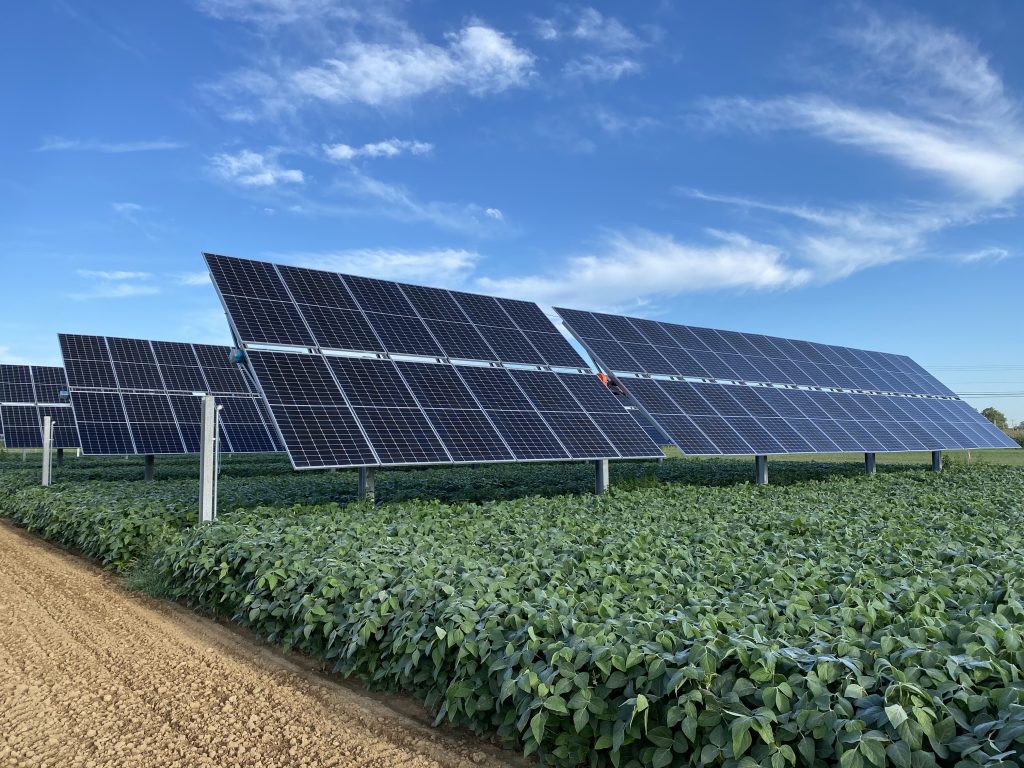
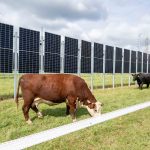
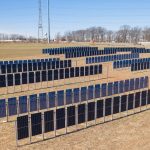
Agrivoltaics is a renewable-energy technology whose climate value is straightforward: solar electricity displaces fossil fuels, and dual-use systems allow solar to expand without removing land from agricultural production. Whether agrivoltaics actually delivers on this promise, however, is a question of sustainability governance. Can agrivoltaics strike the right balance, protecting working farmland while generating sufficient amounts of carbon-free energy? How will policymakers, farmers and everyday people respond to the potential—and the unknowns—of dual-use solar? Our project examines these questions through an examination of projects submitted for consideration to the New Jersey Dual-Use Solar Energy Pilot Program. Specifically, we will collect in-depth, qualitative data on the project development process in which developers, landowners, and farmers engaged together, and combine this original data set with existing data on the parameters of proposed projects. Analysis of these data will shed light on how future agrivoltaics programs can be designed to bring diverse parties together to achieve overlapping goals for green energy, farm viability, and farmland conservation. Findings will be shared with RCEI, the State of New Jersey, and academic audiences, and project outputs will position the project team to propose further research to USDA-NIFA or similar external funders.
Private Climate Finance as Part of Private Sector Climate Governance
Principal Investigator: Steven R. Brechin, Department of Sociology, School of Arts and Sciences (SAS)

Addressing climate change globally will require an estimated $7.5–$10 trillion per year by 2050, but current investment sits at roughly $1.55–$1.9 trillion annually — and public funds are unlikely to close that gap on their own. Private capital, particularly from the financial services industry, is expected to provide as much as 90% of future climate finance flows. That shift carries real promise but also real risks: private investors gravitate toward revenue-generating mitigation projects in stronger economies, often bypassing the adaptation needs of poorer communities and contributing to deepening financialization of the global economy. This project will organize and expand the emerging literature on private climate finance, develop a typology of private-sector activities (from COP-linked international finance to private foundations to private-to-private green investment), identify the inequalities they generate, and build an international network of scholars and practitioners. Outputs will include a literature review, an international online workshop, an edited volume under the RCEI banner, and external funding proposals to extend the work — with significant student involvement throughout.
Climate Governance in Crisis: Evaluating the Persistence and Breakdown of Institutional Legitimacy in the United Nations Framework Convention on Climate Change
Principal Investigator: Danielle Falzon, Department of Sociology, School of Arts and Sciences (SAS)
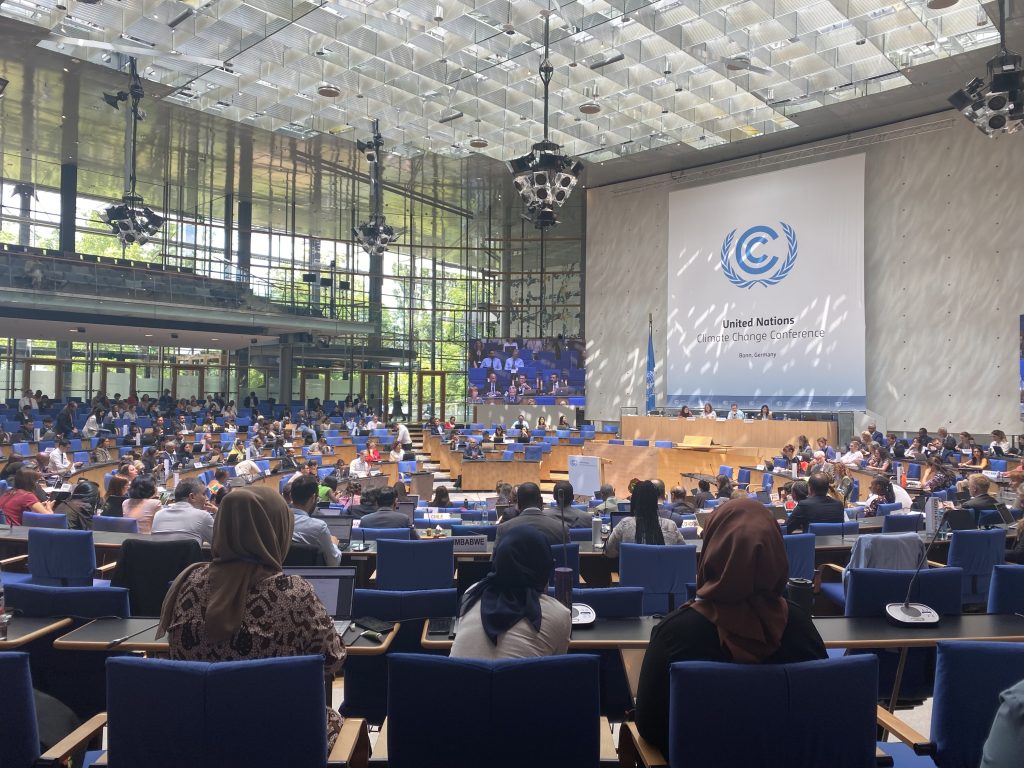
This project will lay the foundation for a book-length study of institutional legitimacy in international climate governance. More than 30 years after the signing of the United Nations Framework Convention on Climate Change (UNFCCC) and ten years into governance under the Paris Agreement, national governments and civil society alike are calling into question whether the UN climate negotiations are a suitable venue for implementing effective climate action. Nonetheless, delegations from more than 190 national governments and tens of thousands of civil society members participate in the annual climate negotiations meetings. Falzon’s project will work to understand the current moment of legitimacy crisis, as well as what keeps actors engaged in the institution despite this crisis. The Groundwork Grant will fund travel to UN climate negotiations meetings and research assistant support, as well as a social science workshop on climate governance to be held at Rutgers in Spring 2027. Together, this work will contribute to growing public and scholarly conversations on the urgent need for effective climate governance and will chart a course for understanding whether and how there is cause for hope in existing international institutions.
Contested Transitions: Critical Minerals, Climate Change, and Sustainability Governance in Greenland
Principal Investigator: Andrea Marston, Department of Geography, School of Arts and Sciences (SAS). Co- Principal Investigator: Åsa Rennermalm, Department of Geography, School of Arts and Sciences (SAS).

This project examines how critical mineral governance is being reconfigured in Greenland, a place that dramatically illustrates tensions between efforts to confront climate change and the mineral intensity of proposed low-carbon energy technologies. The retreating Greenland ice sheet is proof of the current climate crisis, but it has also exposed new economic opportunities in the form of rare earth minerals considered crucial for renewable energy technologies. The questions of whether and how to exploit these deposits are complicated by the ecological and environmental risks associated with Greenland’s uranium-laced rare earth deposits; divided perspectives on Greenlandic and Inuit self-determination; and heightened geopolitical competition for Arctic resources. Bringing together researchers from Rutgers University and Ilisimatusarfik (University of Greenland), this project seeks to examine how decisions about critical mineral development are made under such complex circumstances. By examining how societies negotiate the tensions between climate action, resource extraction, Indigenous self-determination, and geopolitical competition, this project seeks to contribute to broader conversations about sustainability governance and just energy transitions.
Socializing Atomic Legacies in the Age of Nuclear Evangelism
Principal Investigator: Trinidad Rico, Department of Art History, School of Arts and Sciences (SAS). Co- Principal Investigator: Atif Akın, Art and Design, Mason Gross School of the Arts

From its earliest days, nuclear technology has depended not only on societal engineering and carefully crafted policies, but also on public persuasion: the public needed to imagine atomic power as progress, security, modernity, or salvation in the aftermath of events such as Hiroshima, Castle Bravo, Chernobyl, and Fukushima. The artistic and representational cultures surrounding nuclear energy, therefore, are not secondary to its political history; they are central to how nuclear futures are made socially imaginable. In this working group, Trinidad Rico (Art History, SAS) and Atif Akın (Mason Gross), propose to explore the socialization of atomic pasts and presents- and the emergent technological futures- through the lens of visual languages as these mobilize and interpret sites, infrastructure, archives, landscapes, and memories- expanding relationships between art, heritage, and nuclear culture.
Beyond Tables: Co-producing Community-Led Adaptation Governance in Greater New York City
Principal Investigator: Bernadette Baird-Zars, Urban Planning and Policy Development, Edward J. Bloustein School of Planning and Public Policy. Co- Principal Investigator: Paul Gallay, Resilient Coastal Communities Project, School of Sustainable Development, Columbia University.
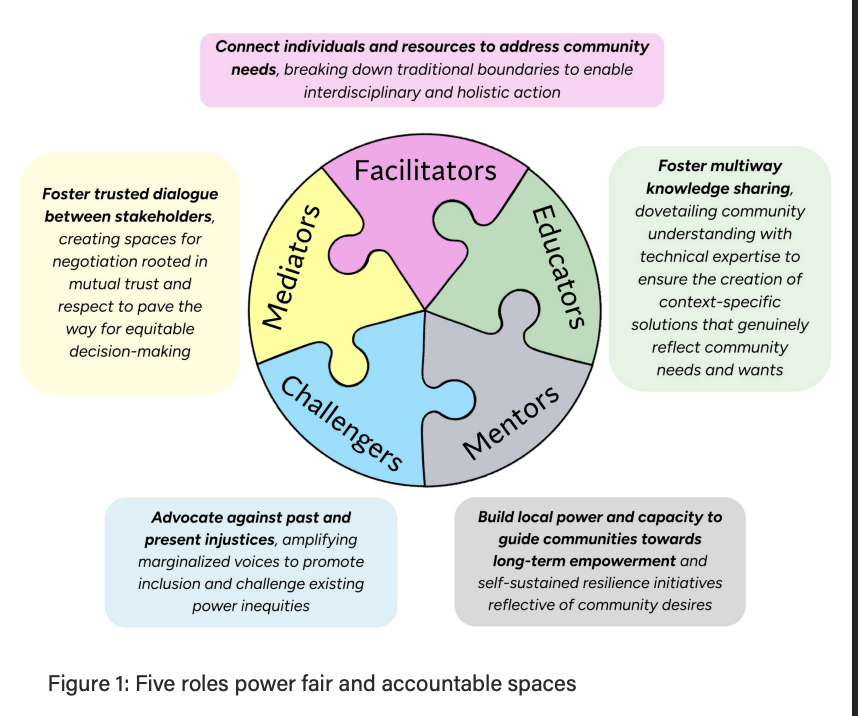
To be effective and fair, climate adaptation requires the energy and knowledge of everyone — yet “everyday” adaptation governance routinely overlooks frontline and environmental justice communities, and adaptation spending continues to follow visible signals that reinforce existing biases. Working with the Resilient Coastal Communities Project, this initiative advances two concrete action areas in the New York/New Jersey metro region: (1) co-producing community-led guidelines for fair planning processes within the NY/NJ Harbor and Tributary Study and related flood planning, and (2) integrating community-based knowledge about social cohesion and resilience capacity into the New York City Office of Management and Budget’s Climate Budgeting Initiative — for which the NYC OMB has formally requested the working group’s ongoing assistance in developing new cohesion- and capacity-related indicators. The Groundwork Grant will fund Rutgers student researchers, support NYC-EJA to convene a day-long workshop in November 2026, and engage community partners as co-producers of findings. Outputs include white papers, peer-reviewed articles articulating replicable principles for fair adaptation governance, and will provide the basis for proposals for larger-scale funders.
Related posts:
 Cows and Solar Panels? In a New Jersey First, Project Melds Farming With Electricity Generation
 RCEI Groundwork Grants to Address AI, Climate and Energy
 Rutgers Tests Renewable Energy System for Agrivoltaics Project on Cook Campus
 Rutgers Agrivoltaics Program Wins North American Agrivoltaics “Solar Farm of 2025″ Award