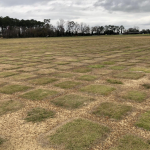



Droughts are the world’s most widespread natural disaster, and climate change is making them longer, more intense, and possibly more frequent. But how much do droughts actually hurt local economies and can water storage help cushion that blow? A new study tackles these questions on a global scale.
Hilary Sigman, RCEI Affiliate and Professor of Economics at Rutgers University, is a co-author of the study along with Sheila Olmstead, Professor at Cornell University. The study is published in the Journal of the Association of Environmental and Resource Economists. The research looked at whether having access to dams or underground water — called groundwater — helps communities stay economically stable during droughts.
The authors measured economic activity using satellite images of nighttime lights. Brighter lights generally mean more economic activity. They found that moderate or worse droughts dim those lights by about 2%, which works out to roughly a 0.6% drop in GDP. Even mild droughts showed measurable negative effects.
But here’s where it gets hopeful: the presence of dams and accessible groundwater significantly reduced drought’s economic damage. Areas with a local dam — as long as it wasn’t a hydroelectric dam — nearly cancelled out the economic harm from moderate droughts. Groundwater also helped, especially in areas sitting above the most accessible types of underground water reserves.
Hydroelectric dams, which rely on water flow to generate electricity, were a notable exception. Nighttime lights fell more in areas with these dams than with other types of dams perhaps because droughts reduced hydroelectric power output.
Importantly, the study found that upstream dams did not hurt the drought resilience of downstream communities, even though previous research has raised concerns about downstream harms from dams.
“We found that dams and groundwater help insure communities against economic losses from all but the most extreme drought. Thus, communities may want to invest in dams and improve groundwater management to help them withstand climate change,” said Sigman.
As climate change pushes more regions toward water stress, these findings highlight that policymakers may use water storage infrastructure as a tool for climate change adaptation. Protecting and improving access to groundwater, and building or maintaining non-hydroelectric dams, could help shield local economies from the growing threat of drought.
You can read the full study here.
This article was written with assistance from Artificial Intelligence, was reviewed and edited by Oliver Stringham, and was reviewed and edited by Hilary Sigman, a co-author on the study.