


An article from CBS News examines how a major winter storm forecast across much of the United States has been misused by President Trump to cast doubt on climate change—and why scientists say that argument doesn’t hold up.
The story explains that President Trump pointed to an incoming “record cold wave” affecting roughly two-thirds of the country as supposed proof that global warming isn’t real. Climate scientists interviewed in the piece emphasize that this claim confuses weather, which refers to short-term conditions like a single storm, with climate, which describes long-term global temperature trends measured over decades. Understanding this distinction matters because isolated cold events do not negate the overwhelming evidence that the planet is warming overall.
Steven Decker, RCEI Affiliate and director of Rutgers University’s Meteorology Undergraduate Program, helps clarify this core misunderstanding. Decker explains that the cold air outbreak is an example of weather, while climate reflects long-term global averages that clearly show warming trends. His perspective grounds the article in scientific context, reinforcing why a single winter storm cannot disprove climate change. By highlighting how warm regions worldwide continue to outweigh cold ones over time, Decker’s contribution directly addresses the logic behind Trump’s claim and why it is misleading.
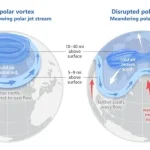
The article also places the storm within a broader scientific framework, noting data from NOAA that ranks 2025 as the third-warmest year on record and shows that the 10 warmest years have all occurred since 2015. Other experts quoted explain how warming in the Arctic can weaken the polar vortex, occasionally allowing cold air to spill south—even as global temperatures continue to rise. This helps readers understand how extreme cold events can still occur in a warming climate.
Together, the reporting and expert commentary underscore why accurate communication about climate science is critical, especially when public figures frame short-term weather events as evidence against long-term climate change.
Read the full article here.