










RCEI Affiliate Focus on Cristina Marte, Assistant Professor of Professional Practice
By Jacqueline Stromberg
Cristina Marte has always known that movement holds power, and she has spent her life sharing that power with others. As a dancer, educator, curriculum designer, and advocate, she has built a career around the belief that dance is not only performative, but also emotional, educational, and transformative. She has been able to make these connections with environmental issues, including climate change. This belief in the power of movement deeply informs her approach to education. To Marte, an Assistant Professor of Professional Practice at the Mason Gross School of the Arts, dance is both an art and a critical learning tool. Her desire to reach students led her to pursue a master’s degree in education, enabling her to design programs that integrate literal movement and bodily expression into curated teaching strategies. Marte’s work not only teaches students from kindergarten to university level but also empowers educators. As a mother of a son on the autism spectrum, she brings a personal lens to inclusive education, saying, “Every child with autism is different and presents differently and has different needs.” Her goal is to equip educators with a flexible toolbox that supports each child’s unique way of learning. This dedication reflects the figurative movement toward educational inclusivity.
This intersection between movement and meaning is especially evident in how students experience learning. Marte emphasizes that when students physically engage with education, this kind of embodied learning creates deeper, longer-lasting understanding. “If they don’t have access to a dance education, they’re not going to be able to embody and experience it in a bodied way,” she explains. She believes the impact of physical movement is often underestimated in traditional education, yet its effects are far-reaching. Integrating the arts, especially dance and theater, into K–12 school systems remain a challenge. Marte notes, “Not a lot of people tend to realize that they’re being impacted because movement is part of everyone’s life. They see dance and they think of dance, you know, in a certain form, but it’s not. It’s a form of expression within our body.” By teaching the value of movement as a form of language, Marte helps both students and educators discover new pathways for understanding and connection.
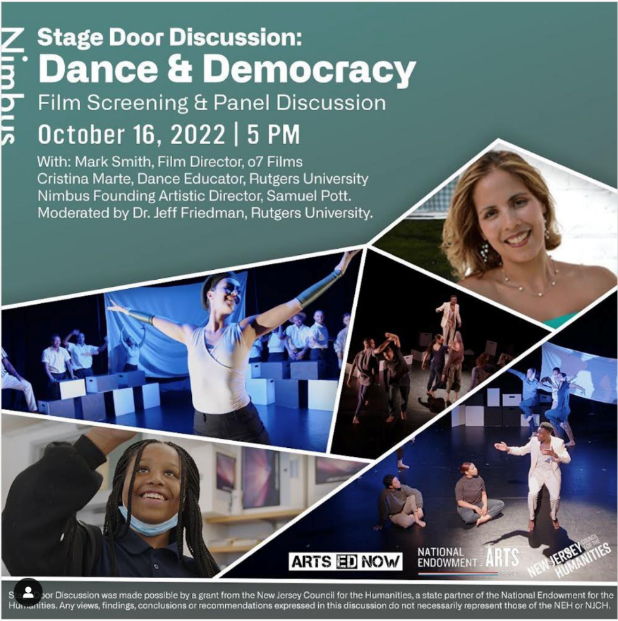
Her educational values are matched by an expansive professional journey. With a career spanning teaching dance in K–12 schools and at the college level, leading professional development workshops for dance educators, designing innovative dance curriculum, and collaborating with academic institutions and nonprofit organizations, Marte brings deep expertise to the field of dance education. Her work centers on using dance to not only inspire learning, but also to empower students, support educators, and spark social change. Her belief that “dance has always been a vehicle for societal issues and social change” led Marte to create Dance and Democracy, a curriculum designed to channel movement both literally and figuratively through physical expression and engagement for advocacy. That work eventually evolved into a dance workshop that focused on awareness of environmental justice issues.
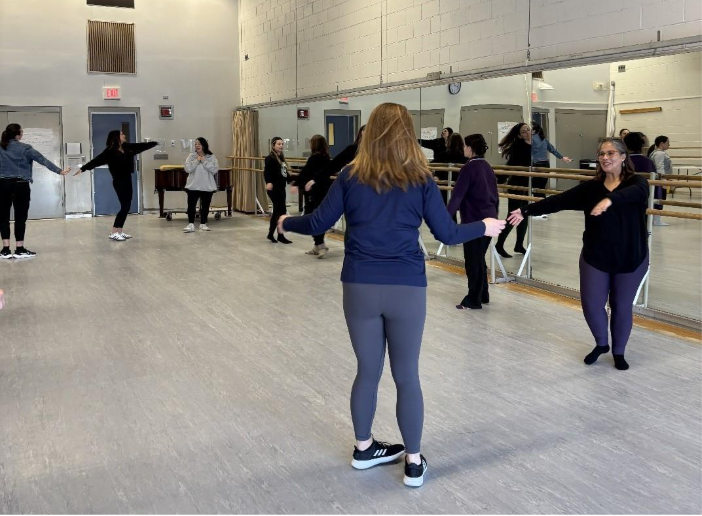
In collaboration with fellow educator Sara Martino, a Certified Dance Educator and Arts Integration Specialist, Marte designed a professional development workshop that explores environmental issues through artistic movement. One featured piece, Consider Water, by choreographer Davalois Fearon, addresses water injustice in Jamaica and cultural representation. Marte selected it for its powerful visual imagery and emotional call to action, in which dancers mimic throwing water toward the audience. One participant was deeply moved with this dance piece because it evoked personal memories of brush fires in their home country of Grenada in the West Indies. These visceral responses transform dance from a symbolic gesture into a tool for climate awareness. “Although they were there to learn about arts integration, they said, ‘I’m starting to wonder if I’m paying enough attention to climate change.’” Marte recalls. In these moments, dance moves beyond expression and becomes a catalyst for reflection.
Cristina Marte’s work reveals the full spectrum of what movement can achieve. Whether through nonprofits, curriculum development, or classroom teaching, she demonstrates that movement, both physical and ideological, can be an agent for transformation. Her work makes it clear that dance can teach, inspire, and advocate one embodied step at a time.
Jacqueline Stromberg is an Office of Climate Action Intern, majoring in Environmental Policy, Institutions, and Behavior, within the School of Environmental and Biological Sciences.
Related posts:
 A Rutgers Professor Brings Humanities to the Movement for Environmental Justice
 Rutgers Students Share STEM Learning through Science-in-Action Storytelling at Environmental Conference
 NJ Youth Share Solutions to Combat Climate Change Effects in Their Own Communities
 Rutgers Immersive Learning through Science Storytelling Lab Fosters Student Success and Interdisciplinary Partnerships