









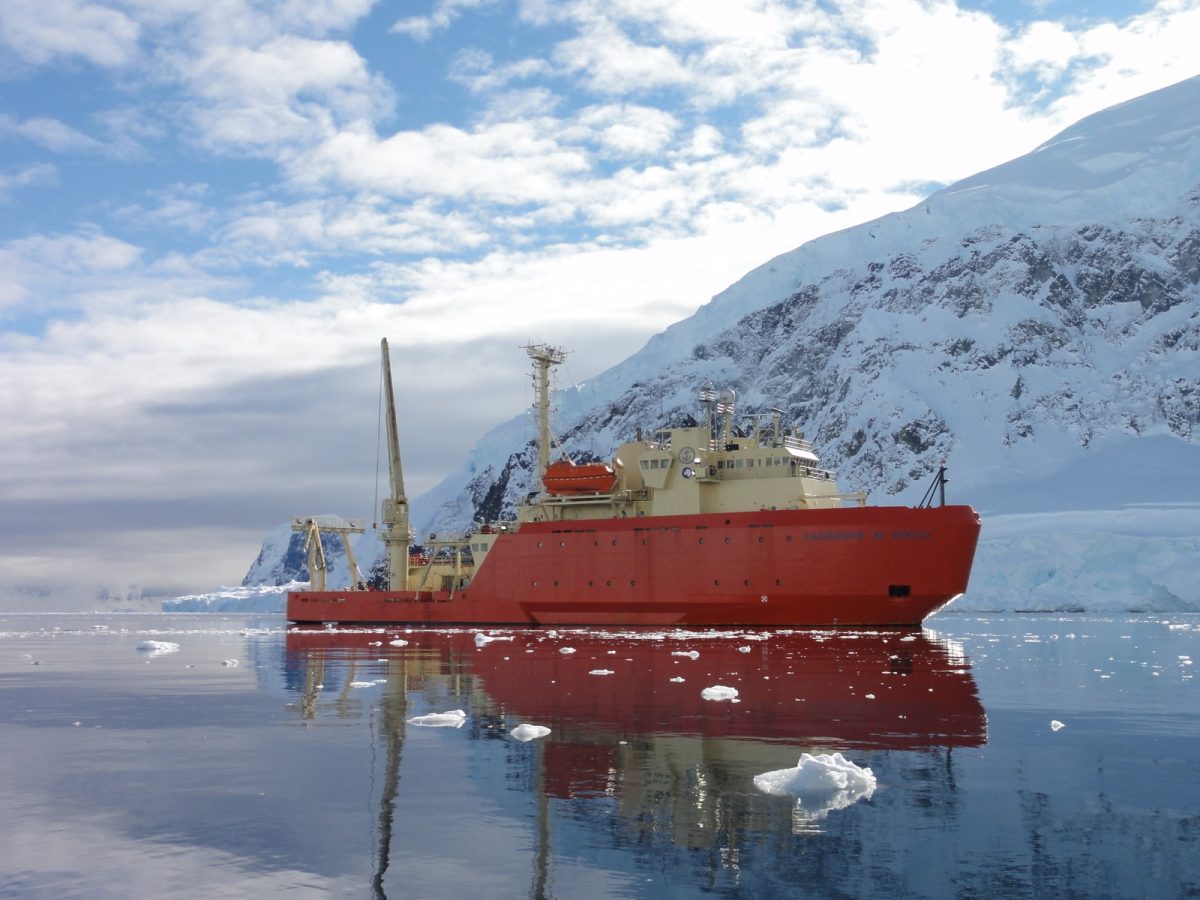
Image provided by Oscar Schofield.
Antarctic Plankton Are Adapting to a Brighter Ocean — And It’s Telling Us Something Important About Climate Change
Tiny plant-like organisms (phytoplankton) living in the ocean waters around Antarctica are changing the way they handle sunlight — and the reason why reveals just how much climate change is reshaping one of Earth’s most remote ecosystems.
A new study published in the journal Limnology and Oceanography found that over the past 27 years, microscopic plant-like organisms from the ocean called phytoplankton along the West Antarctic Peninsula have dramatically increased their production of “sunscreen” pigments — special protective compounds that shield the cells from too much light that can damage these cells. The cellular concentration of protective pigments roughly doubled between the 1990s and late 2010s.
Oscar Schofield, RCEI Affiliate, Professor in the Department of Marine and Coastal Sciences at Rutgers University, is a co-author on the study.
So, what’s driving this change? Phytoplankton live in the upper layers of the ocean called the mixed layer where there is sufficient light for these tiny plants to grow. When the mixed layer is deep then there is less light as deep mixing results in the cells spending time in dark waters. As the climate warms, the mixed layer has been getting shallower. When that layer shrinks, these tiny organisms spend more time exposed to brighter sunlight — so they adjust their biology to cope. Using the data collected from the Palmer Long Term Ecological Research program, the authors determined that increased production in “sunscreen” pigments is due to their changing ecosystem.
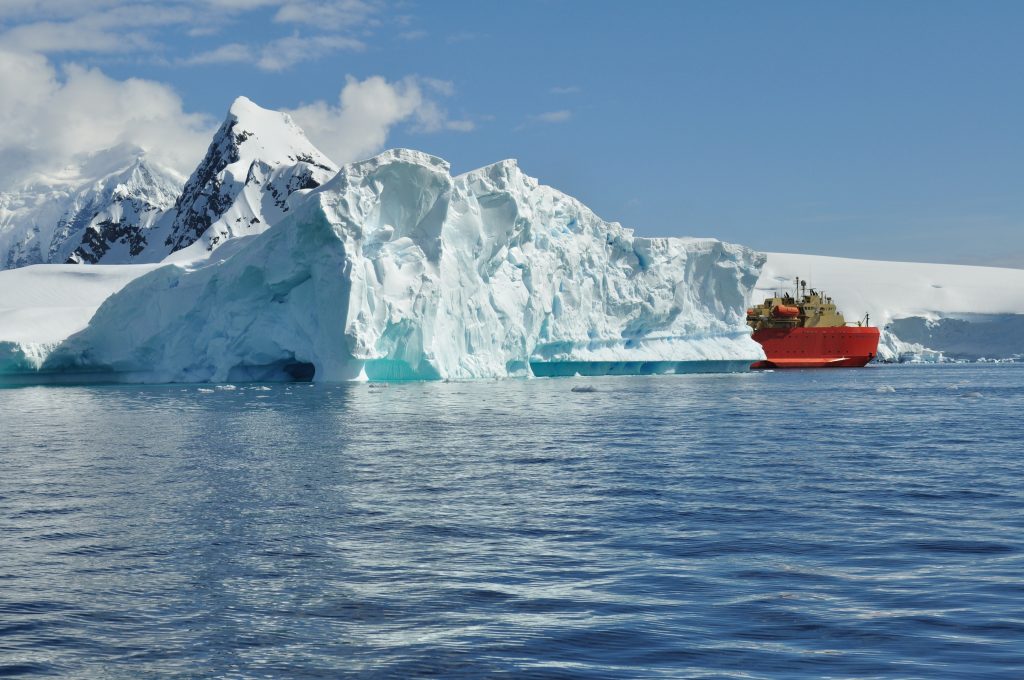
Image provided by Oscar Schofield.
“This biological shift in these plants reflects changes in the ocean in response to climate change that is warming this polar region. The changes being observed at the base of food web has significant implications for ecology for this productivity oceanic region.“
These findings have food web implications. Phytoplankton are the foundation of the Antarctic food chain, supporting krill, fish, penguins, and whales. Shifts in which types of phytoplankton thrive, and how productive they are, ripples upward through the entire ecosystem.
As phytoplankton received more light, they also became more productive — meaning they will increase in number. As a result, phytoplankton have been able to absorb more carbon from the atmosphere into the ocean due to their photosynthesis. That matters because the Southern Ocean plays an outsized role in soaking up the world’s carbon dioxide. Phytoplankton play a key role in this process and understanding how it’s changing is critical for predicting how the ocean will respond to continued warming.
The data, collected annually by the Palmer Long Term Ecological Research program, provides a rare >25-year window into how a warming climate is reshaping polar ocean life in real time — the kind of long-term record that is essential for informing science-based policy decisions about ocean and climate health.
You can read the full study here: https://doi.org/10.1002/lno.70324
This article was written with assistance from Artificial Intelligence, was reviewed and edited by Kenneth Tam, and was reviewed by Oscar Schofield, a co-author on the study.
Related posts:
 Live From Antarctica: Rutgers Opens a Portal to One of Earth’s Most Remote Places
 Rutgers Scientists Observe Unusual Ocean Conditions Possibly Linked to Mortality in Marine Life off New Jersey
 In a World First, Autonomous Robot Glider to Circle the Globe in Historic Ocean Mission
 Can Penguins Help Teach Kids About Climate Change? New Research Says Yes