









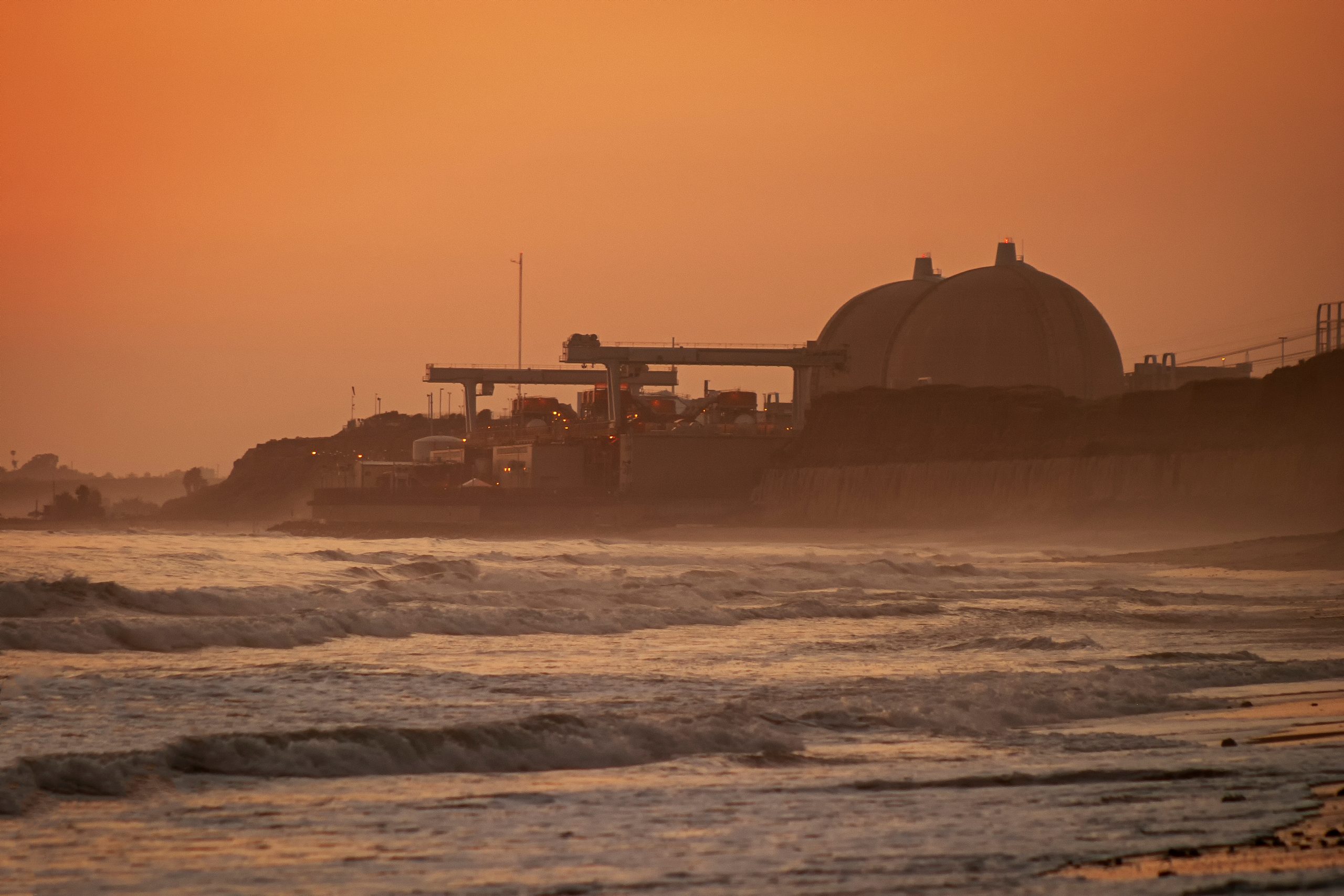
When the Oyster Creek Nuclear Generating Station in Forked River, New Jersey shut down in 2018, it wasn’t just an energy story — it was a rare opportunity for scientists to study how marine life responds when a major source of heat is suddenly removed from a coastal waterway.
RCEI affiliate Thomas Grothues, Research Scientist in the Department of Marine and Coastal Sciences at Rutgers University, is a co-author on a new study published in the Journal of Coastal Research that examined how tiny bottom-dwelling animals in Barnegat Bay responded to the plant’s closure.
For nearly 50 years, Oyster Creek pumped water from Barnegat Bay to cool its reactor, then returned that water about 6.1°C (11°F) warmer than when it left. When the plant closed, that heat source disappeared, and the bay began to cool. The researchers found the shutdown as an opportunity to explore how changes in water temperature — like those happening right now due to climate change — affect the communities of small invertebrates living in the mud and sediment of the estuary.
After examining nearly 300 species before, during, and after the closure of the plant, the results were revealing. Overall, the total number of animals declined after the plant closed. The mix of species also shifted — species that preferred warm temperatures were replaced by species that prefer colder temperatures. Interestingly, distance from the plant mattered: the composition of animal communities changed in ways tied to how close they were to the plant’s warm water discharge.
But the effects were smaller than expected. A likely reason could be the already-dynamic nature of mid-Atlantic estuaries — where temperatures, salinity, and water flow swing wildly with the tides and seasons. Species living there may already be tough enough to handle change.
“What we found in Barnegat Bay has real implications for how we think about coastal management as our climate continues to shift. Understanding which species are resilient and which are vulnerable helps us plan better — for our fisheries, our ecosystems, and our communities.” – Thomas M. Grothues
The mid-Atlantic Bight is one of the fastest-warming ocean regions on Earth, and studies like this one help policymakers and coastal managers understand what species and ecosystems might look like as temperatures continue to rise. The findings also highlight how nuclear energy infrastructure can shape local ecosystems — and what can happen when that influence is removed.
You can read the full study here.
This article was written with assistance from Artificial Intelligence, was reviewed and edited by Kenneth Tam, and was reviewed by Thomas Grothues, a co-author on the study.
Related posts:
 Willful Ignorance of the Global Impact of Nuclear War
 A Film Professor and His Students Film a Documentary on the University’s Marine Field Station
 How Ancient Red Algae Power Extreme Ecosystems – and Offer Clues to Life’s Evolution
 Concerned with growing threat of nuclear threat, the WHO to review health impacts of nuclear war