








Rutgers Climate Symposium 2025
- 2025-2026
- 2024-2025
- 2023-2024
- 2022-2023
- 2021-2022
- 2020-2021
- 2019-2020
- 2018-2019
- 2017-2018
- 2016-2017
- 2015-2016
- 2014-2015
- 2015 — Global Climate Change and Inequality Local to Global Perspectives
- 2015 — Climate Change and Agriculture in NJ
- 2014 Rutgers Climate Symposium — Climate Change and The Tropics: Implications and Adaptation
- 2014 — Why Our Brains are Wired to Ignore Climate Change with George Marshall
- 2014 — Framing Climate Change
- 2013-2014
- 2012-2013
- 2013 — Earth Day Events
- 2013 — Do The Math: Why Climate Change Matters and What You Can Do About it with Bill McKibben
- 2013 — The Pico Power Revolution: Off-Grid Energy Solutions for Low Income People in Africa, Asia, and Beyond
- 2012 Rutgers Climate Symposium
- 2012 — The Hockey Stick and Climate Wars: Dispatches from the Front Lines
- 2012 — The Island President Film Screening
- 2012-2013 Polar Speaker Series
- 2012-2013 Climate and Society Seminar Series
- 2011-2012
- 2011 & Older
On November 12, 2025, researchers, faculty, and student scholars from academic and research institutions across the Mid-Atlantic gathered for Rutgers' annual Climate Symposium, designed to foster collaboration among the climate change and energy research communities in our region.
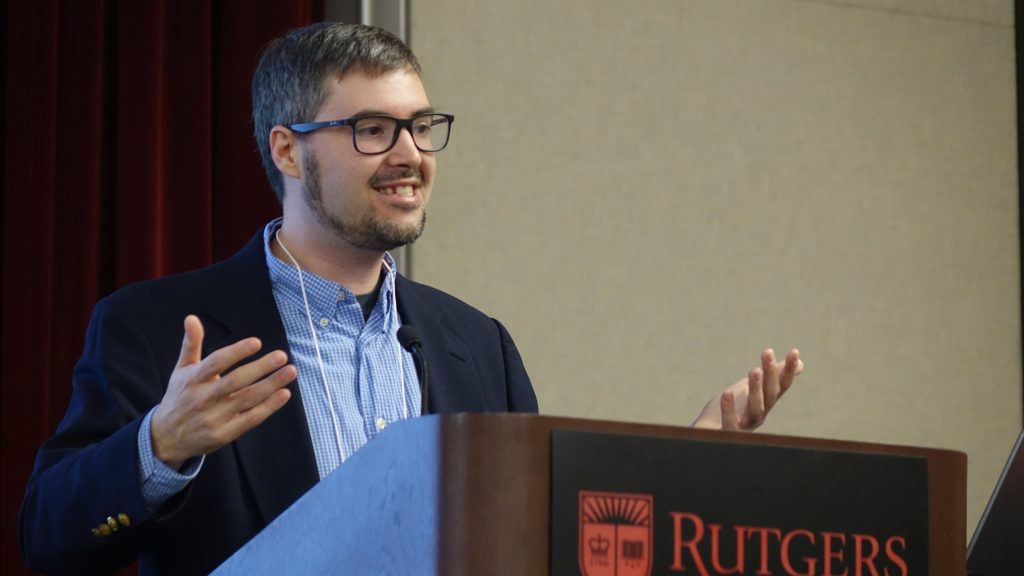
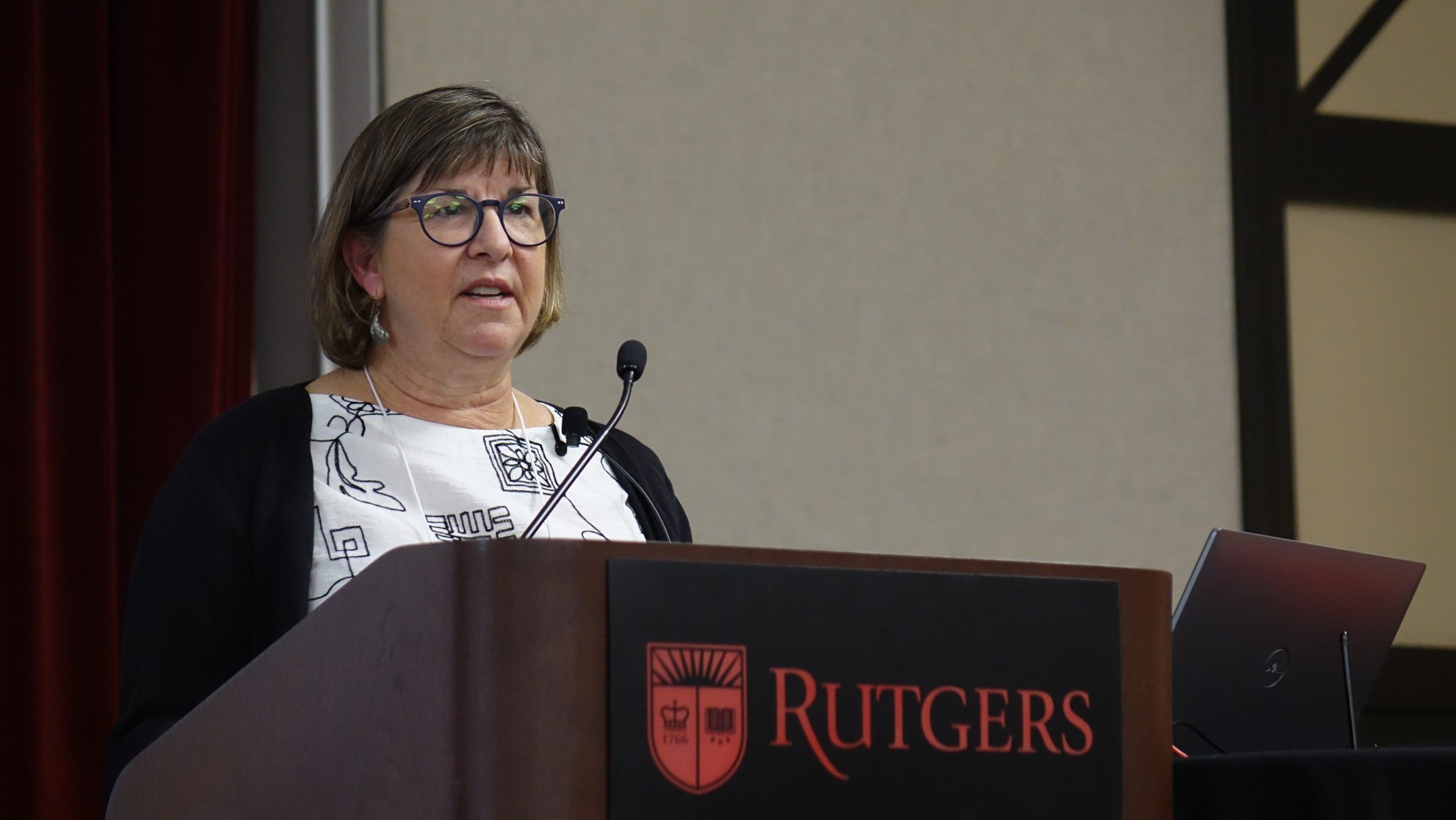
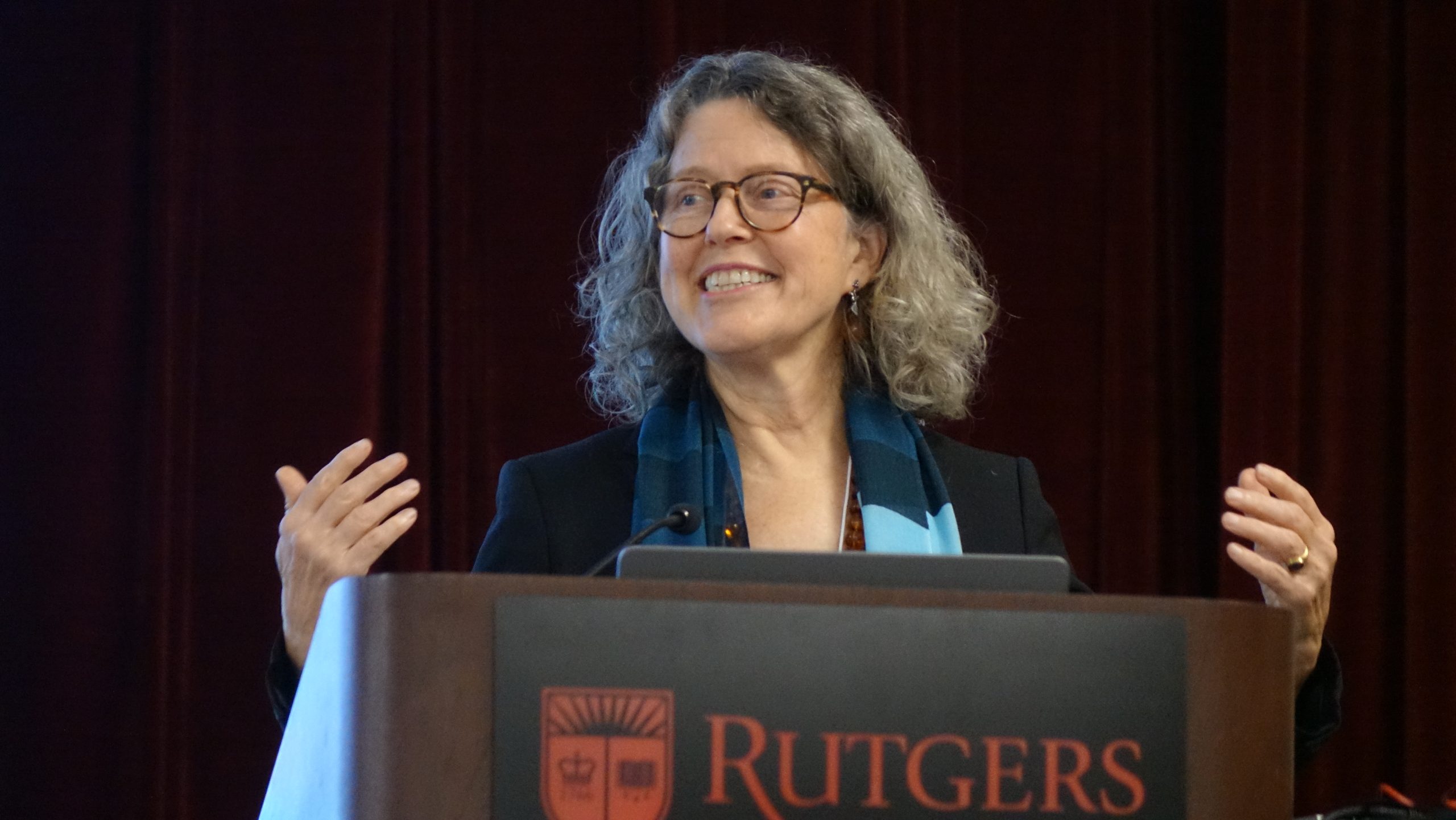
Rutgers-New Brunswick Provost and Executive Vice Chancellor for Academic Affairs Jason Geary welcomed the full house of in-person attendees as well as those watching the livestream, noting that the symposium, "celebrates the vital work that you do to understand climate change, develop solutions, and strengthen collaboration across disciplines and across our region."
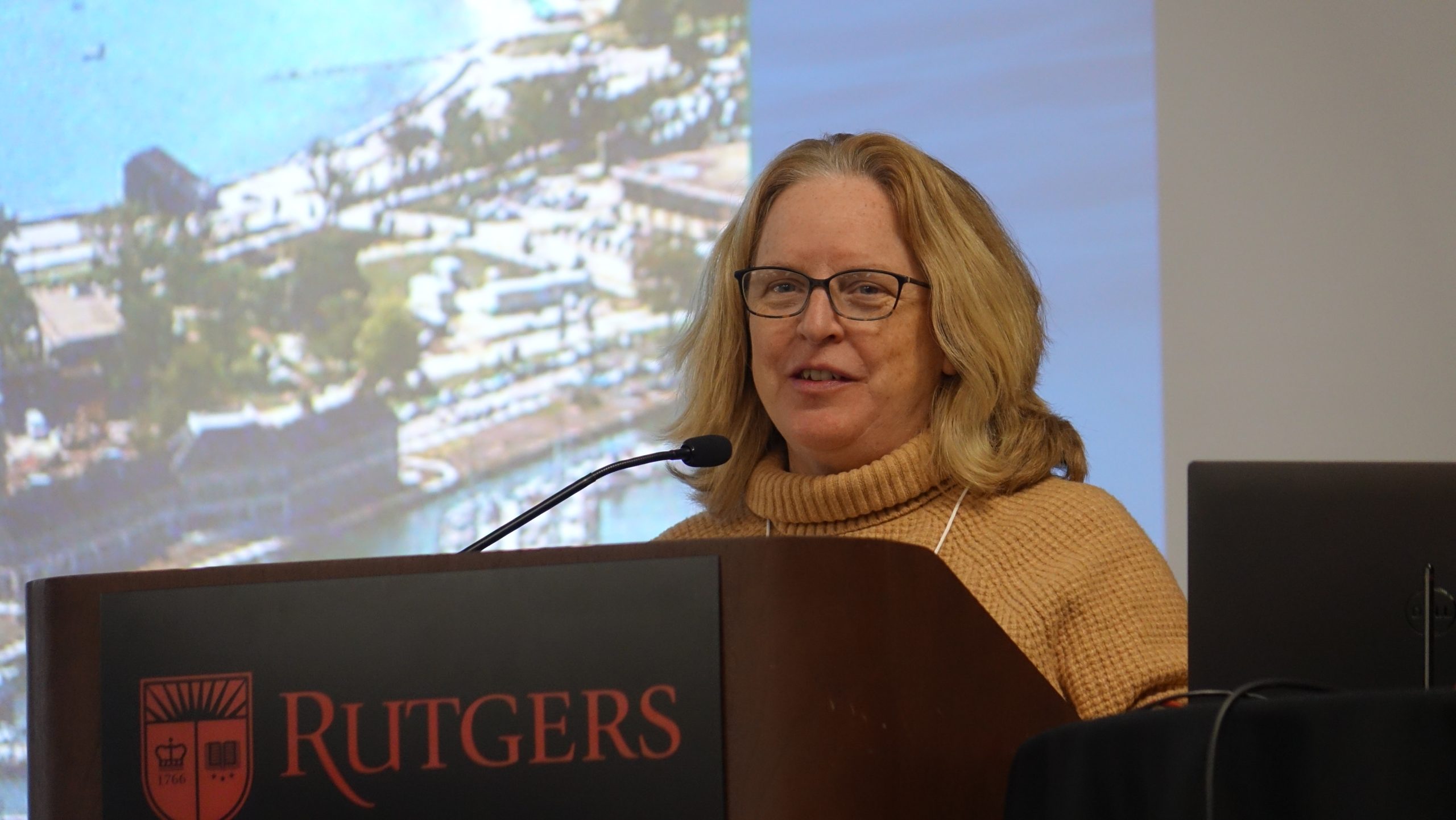
The 2025 theme, The Blue Planet, invited consideration of the role of the oceans in Earth's climate and the tightly connected ramifications of the climate crisis for the oceans. RCEI Director Julie Lockwood emphasized RCEI's commitment to perseverance in challenging times nothing that "Climate change and its impacts are obviously not going to go away. It doesn't matter what the political environment is. Physics doesn't change, right? We still have the pieces of climate change; we are experiencing those daily. So, we really need to work and continue that work fearlessly."
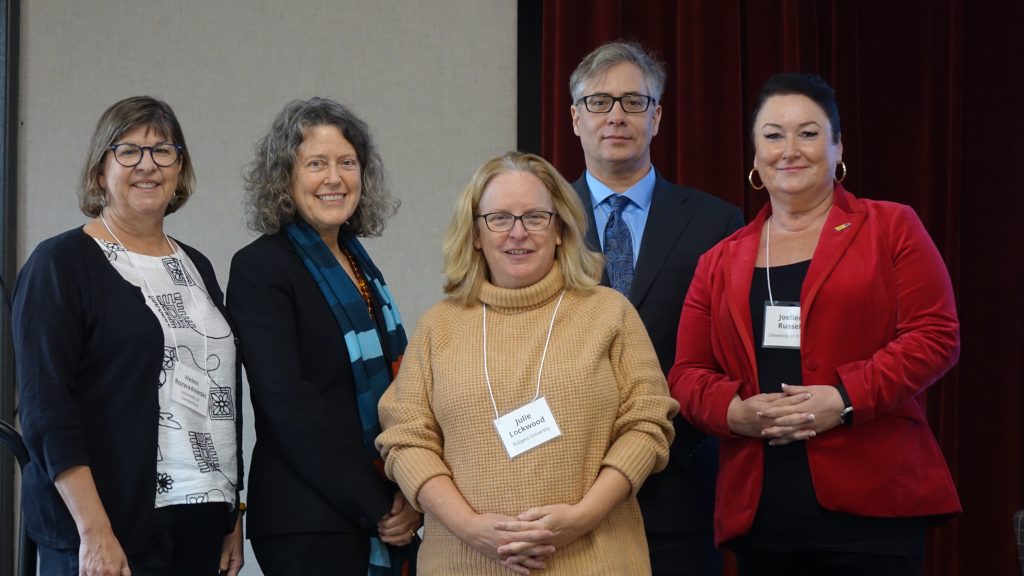
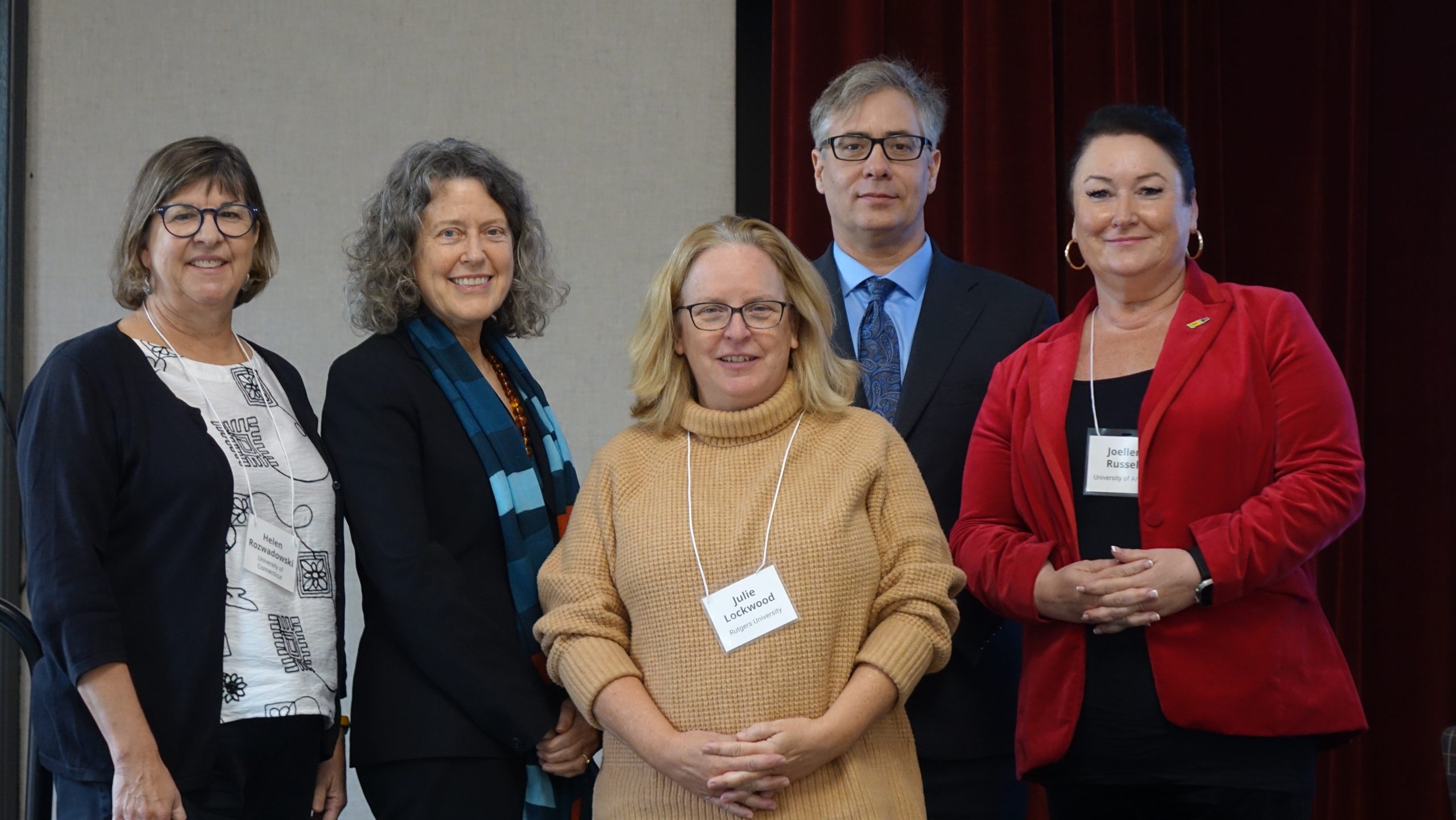
Experts featured during the morning plenary who spoke to ocean science, history, technology, and law included:
- Joellen Russell, Distinguished Professor, University of Arizona
- Helen Rozwadowski, Professor of History, University of Connecticut
- Jason Cotrell, Founder and CEO, Sperra
- Cymie Payne, Professor, Rutgers University and RCEI Affiliate
▸Read more
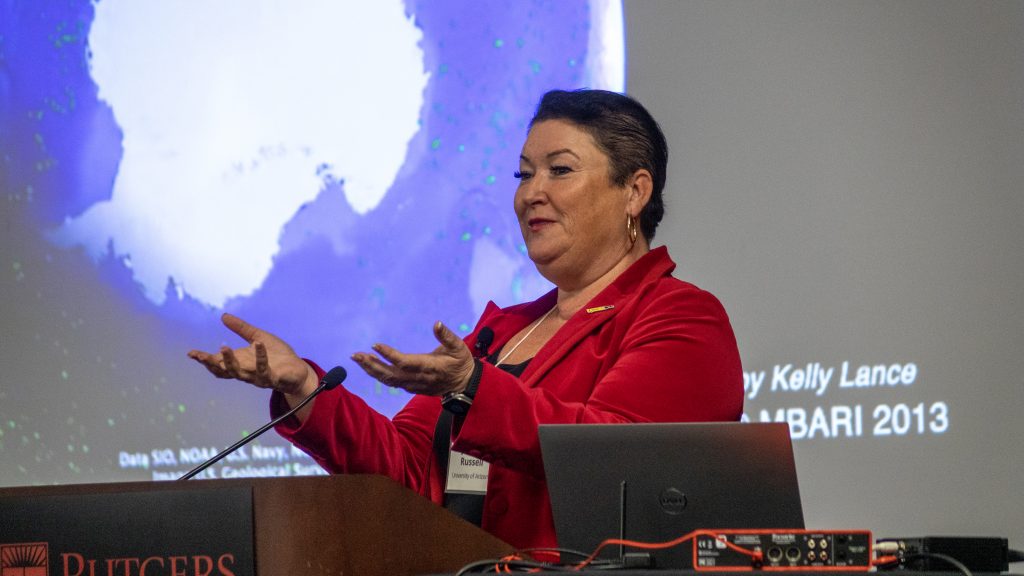
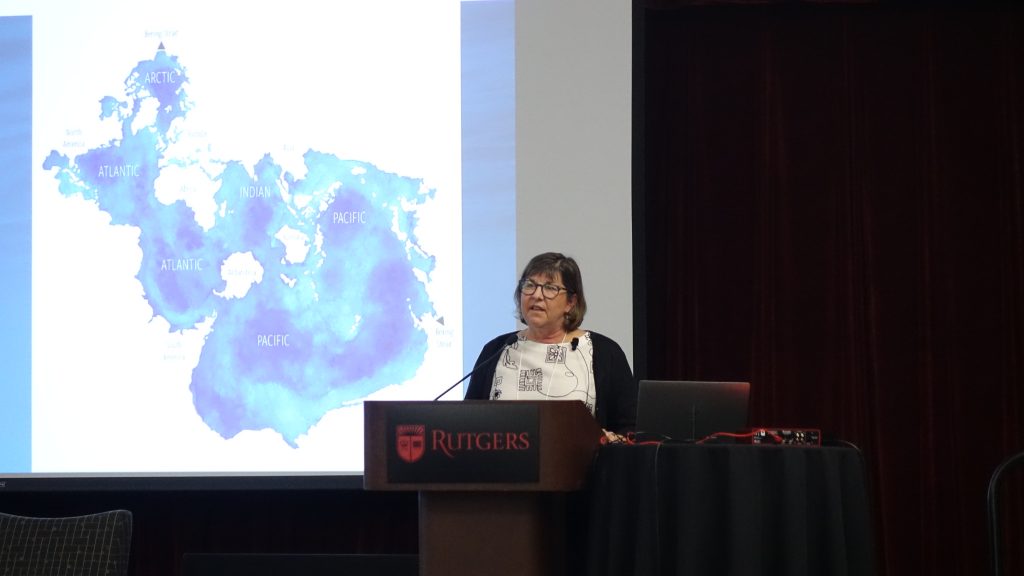
Joellen Russell: Ocean Innovation and the Southern Ocean's Critical Role
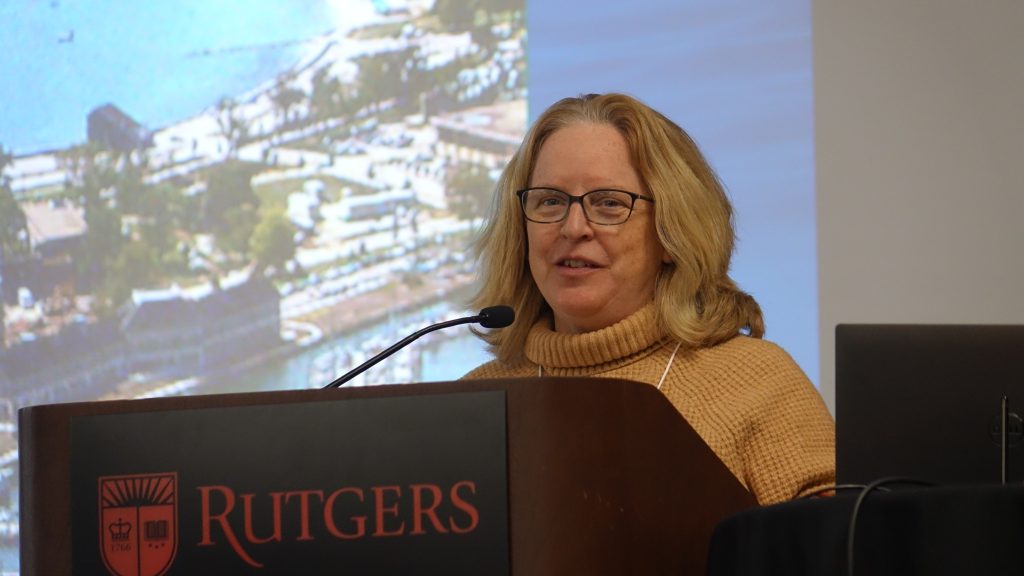
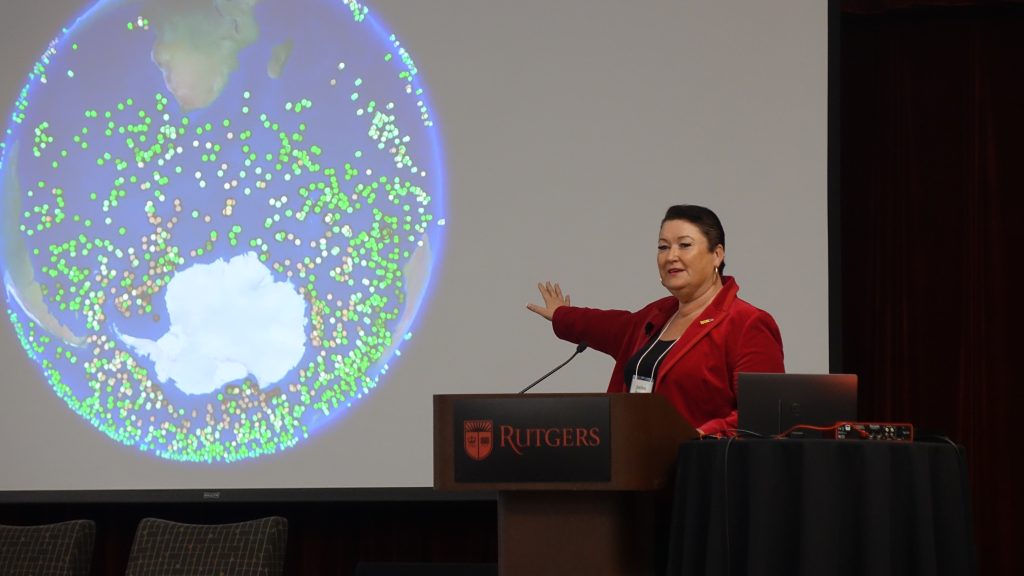
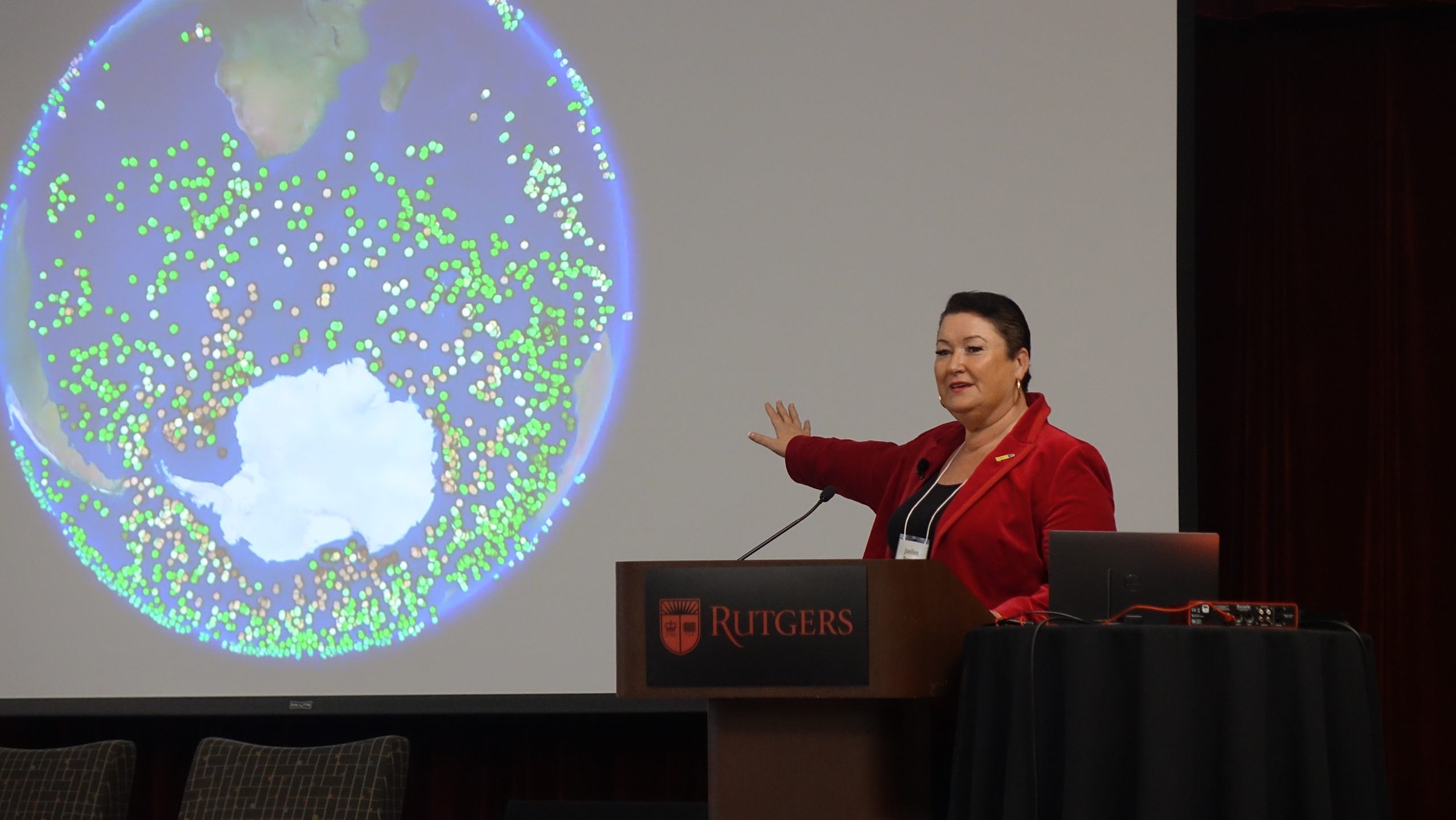
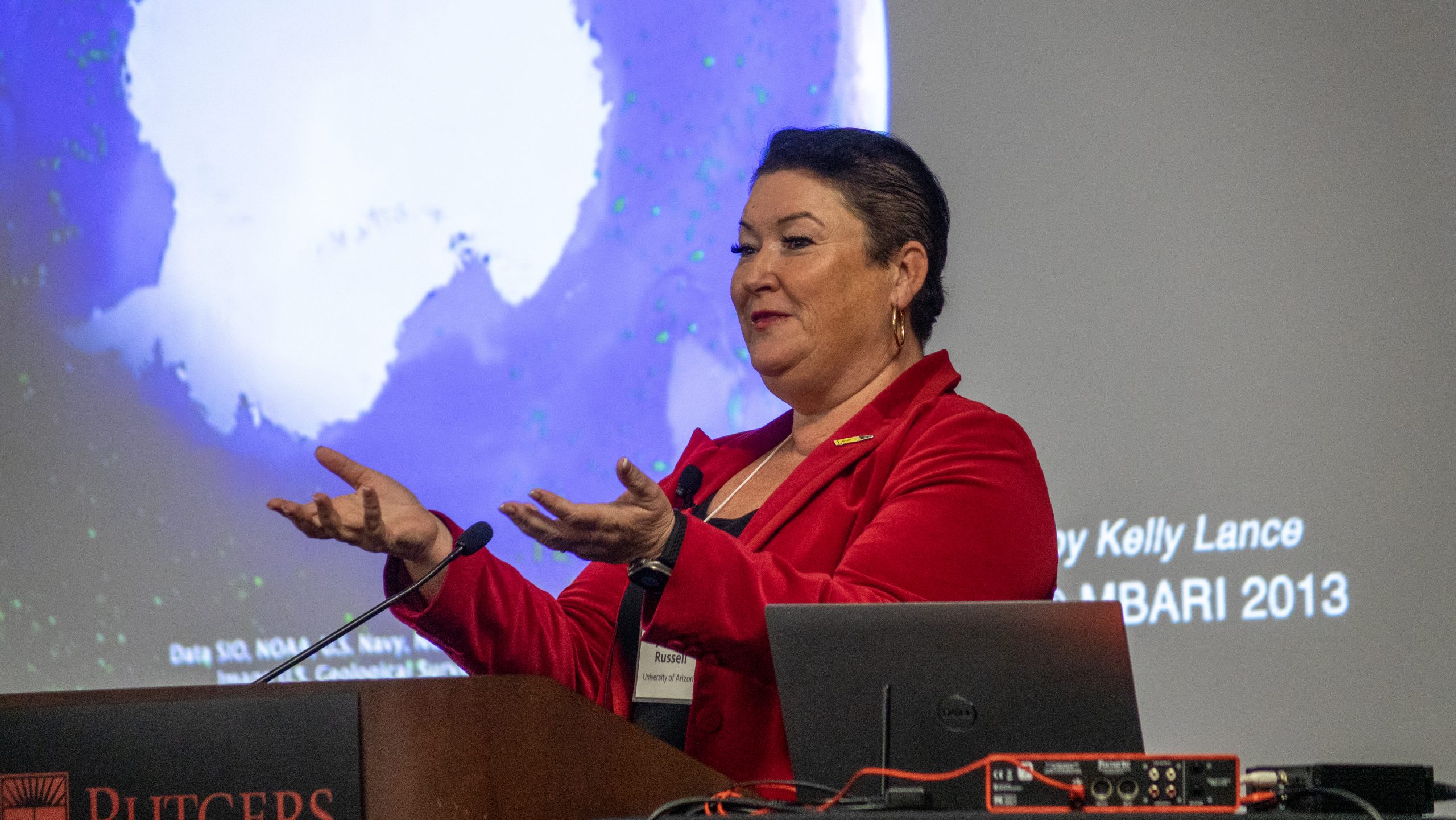
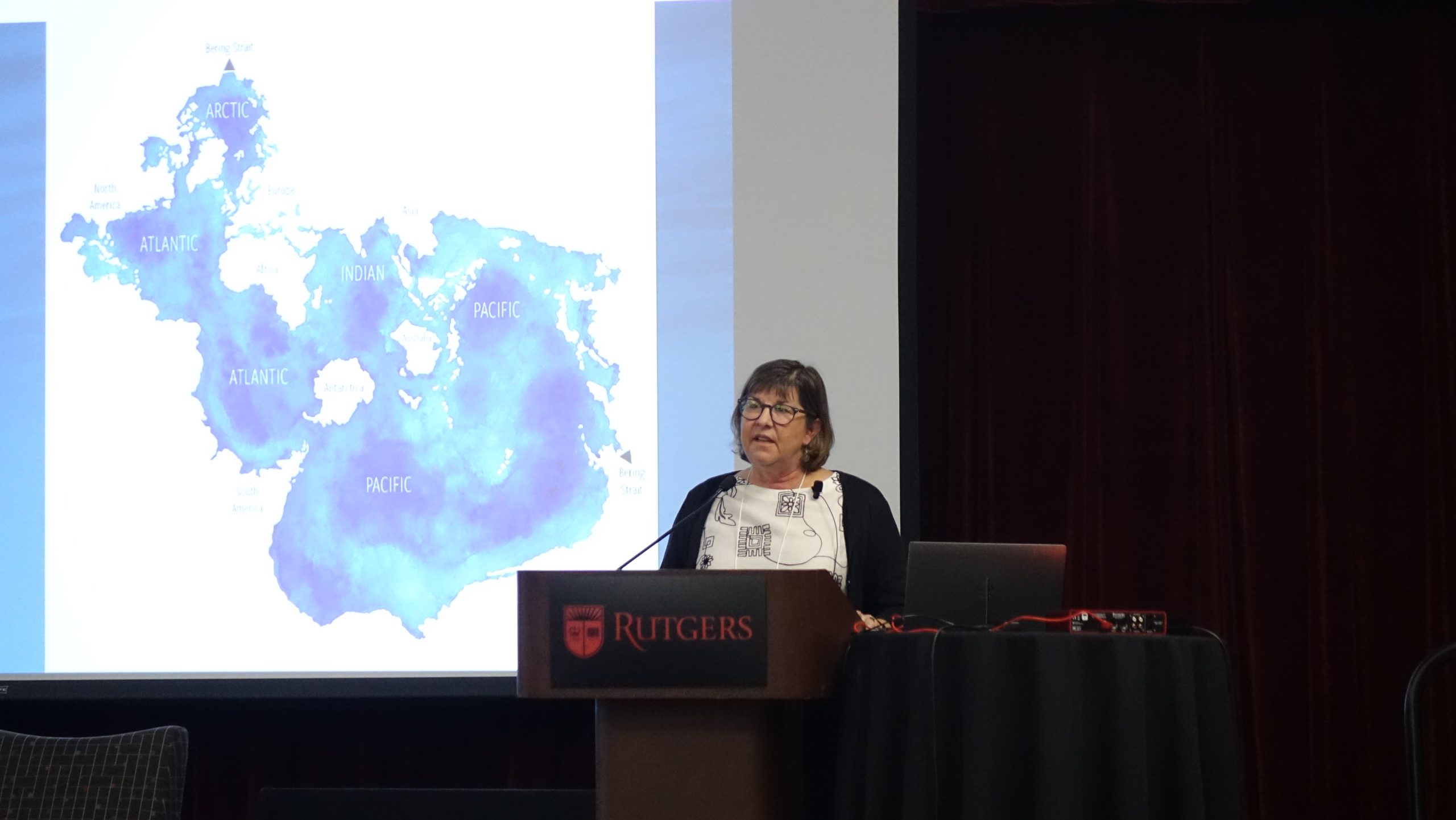
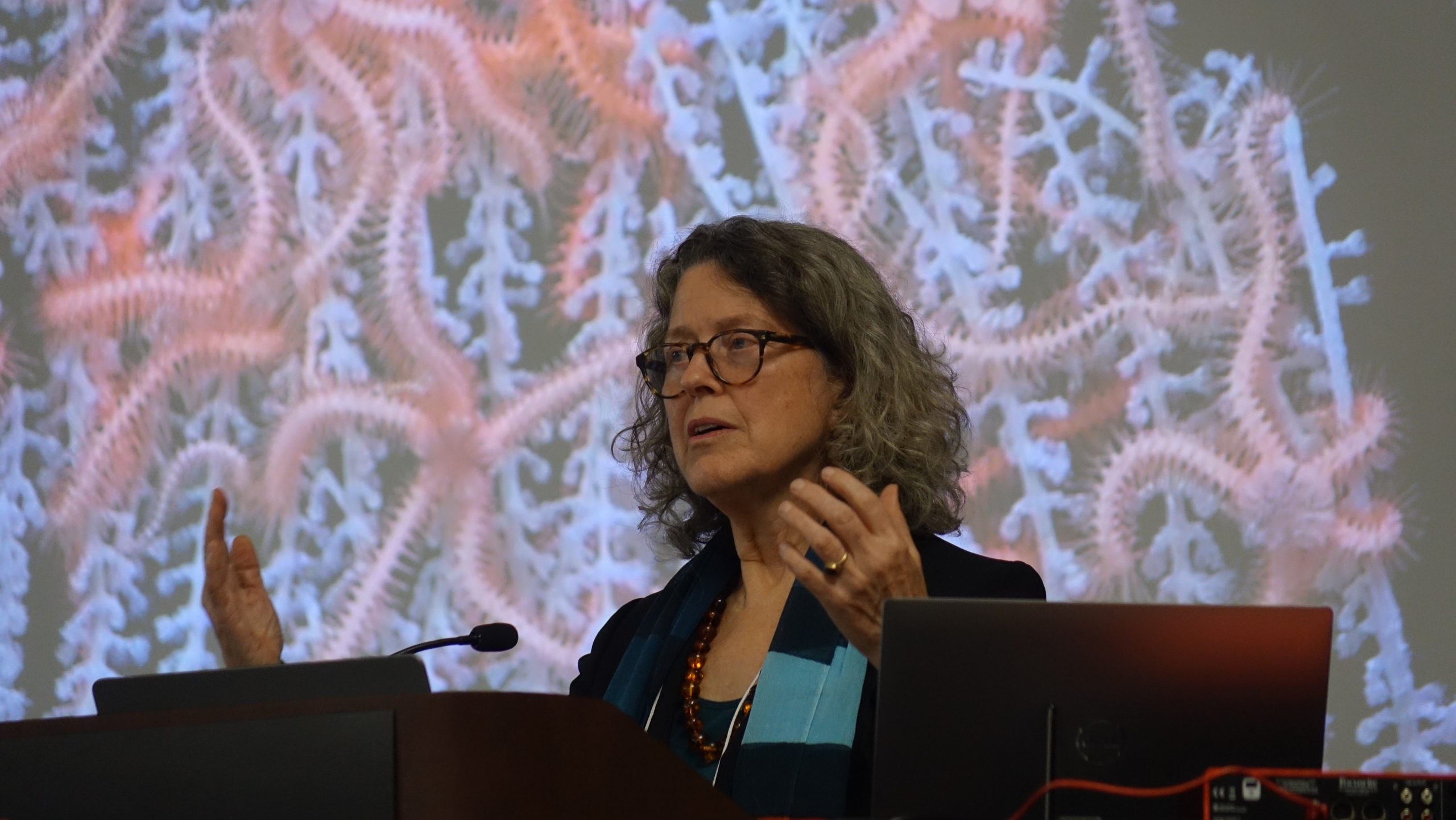
Joellen Russell opened the symposium with a compelling presentation on ocean observation technologies and climate prediction. Russell, who specializes in the Southern Ocean, emphasized the region's outsized importance in global climate regulation, "Fifty percent of all the carbon dioxide that the ocean has taken up went in around Antarctica. Seveny-five percent of all the heat … of the [global] energy budget … went in around Antarctica. That's why we study the Southern Ocean, because it's doing a heavy lift."
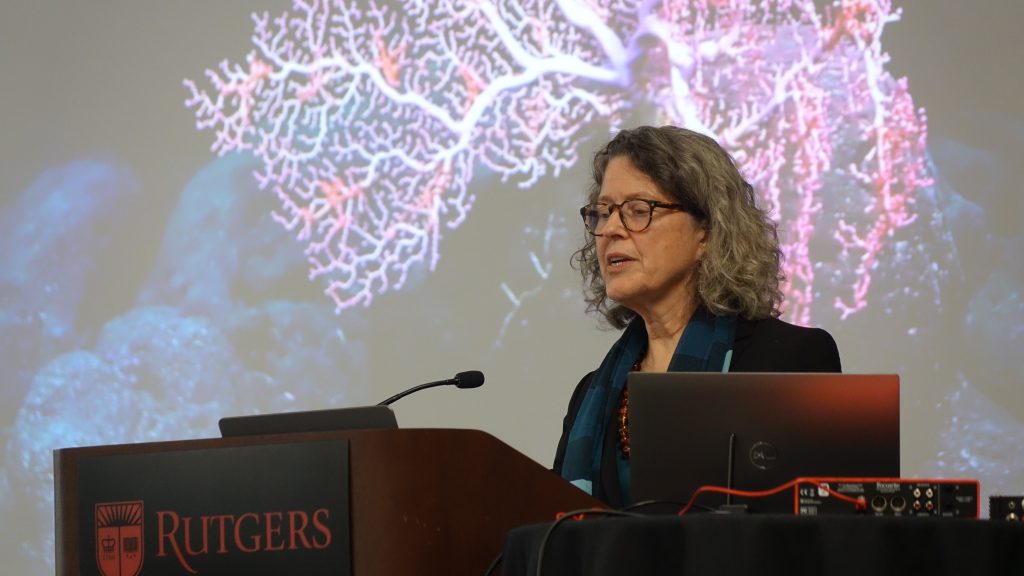
Russell highlighted the revolutionary impact of ‘Argo’ floats—autonomous ocean monitoring systems that have transformed oceanographic research. Starting from zero Argo floats in 2014, the program now has 846 active floats worldwide, conducting real-time data collection. Russell explained the technology's efficiency compared to traditional ship-based measurements, "Instead of the five profiles [from a ship], I will get 250 minimum and up to as many as 500 profiles for the same money."
Addressing the critical shortage of ocean scientists, Russell noted. "Roughly 6,000 PhD-level oceanographers are working in the world today, and roughly 60,000 meteorologists and 600,000 geologists … 6,000 people to take care of 72% of the Earth's surface and 93% of the energy budget! So come on in — the water's fine. We need your help."
Russell also discussed her public outreach work as a founding member of Science Moms, describing it as "a side hustle" aimed at communicating climate science more broadly. She explained that the initiative creates accessible content for busy parents, "We try to make a minute and a half clips like the level of Tik Tok or Instagram... that you should be able to watch while you're sitting in the line in your car waiting to pick up your kid." The group produced a Super Bowl ad that "was rated eighth in impact" by industry analysts, demonstrating the power of scientists engaging directly with public audiences.
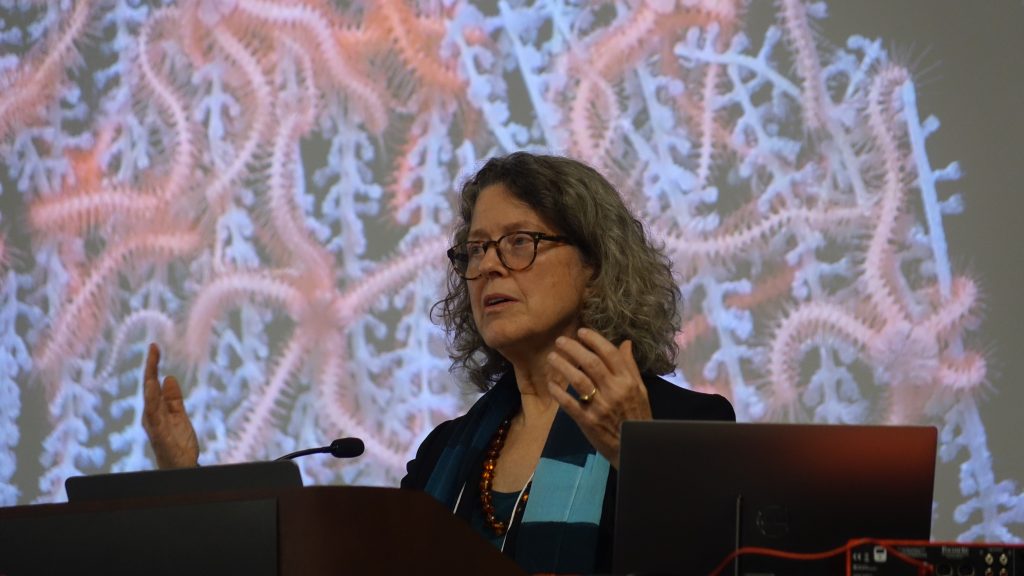
Helen Rozwadowski: Ocean Histories and Cultural Perspectives
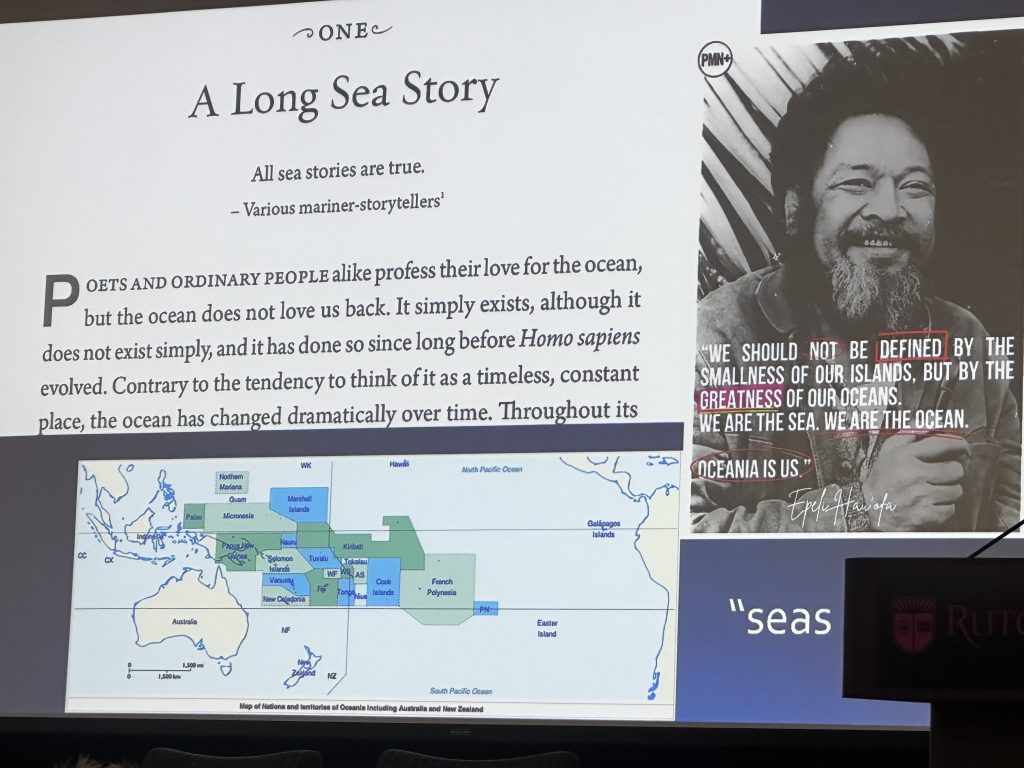
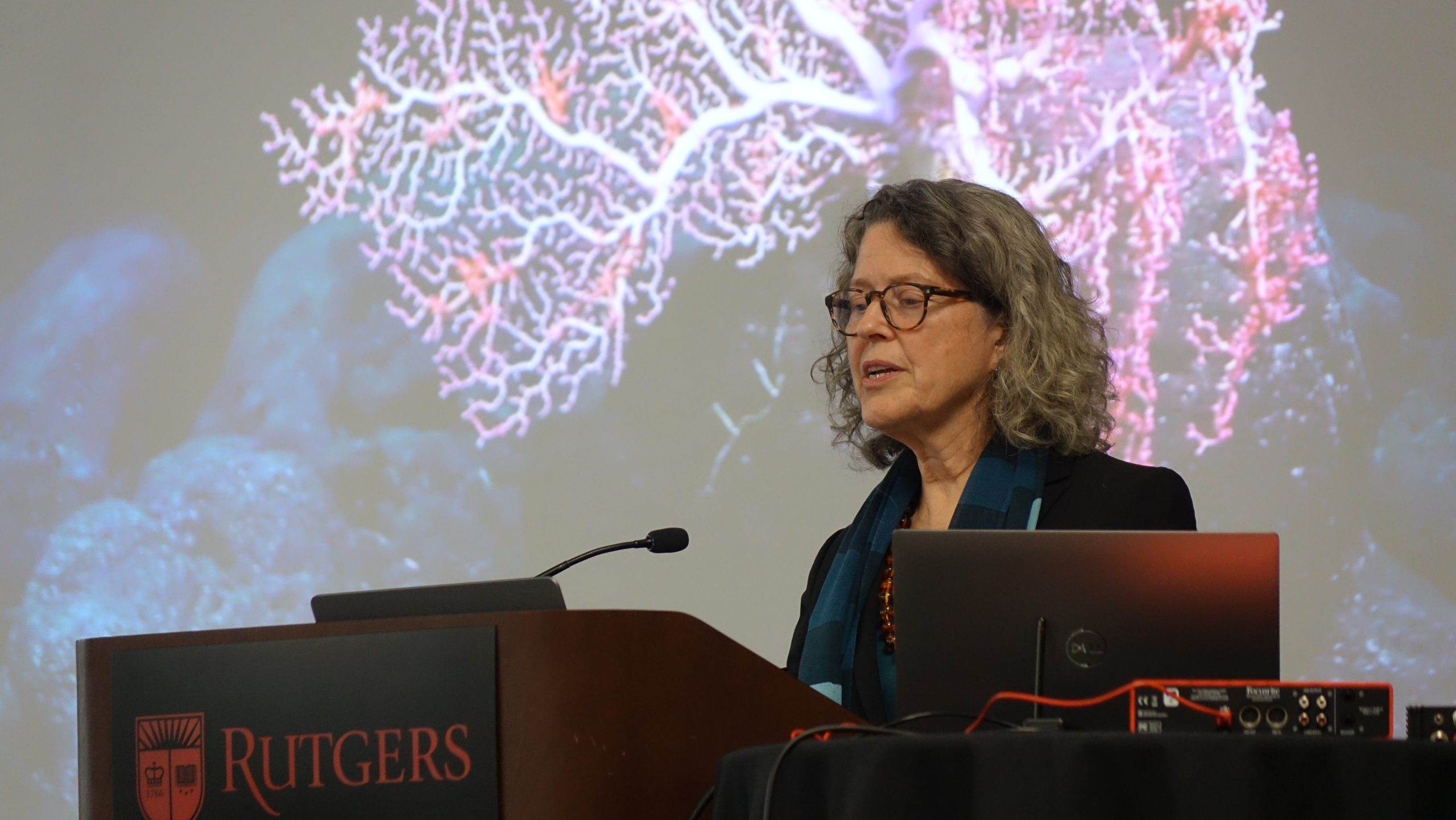
Helen Rozwadowski challenged the audience to reconsider historical perspectives on the ocean, arguing that Western culture has long viewed "oceans as outside of history. We think of them as eternal. We think of them as virtually endless. We think of them as most especially as a place apart from humanity. This perception has hindered ocean conservation efforts and must change if we are to address the climate crisis effectively.”
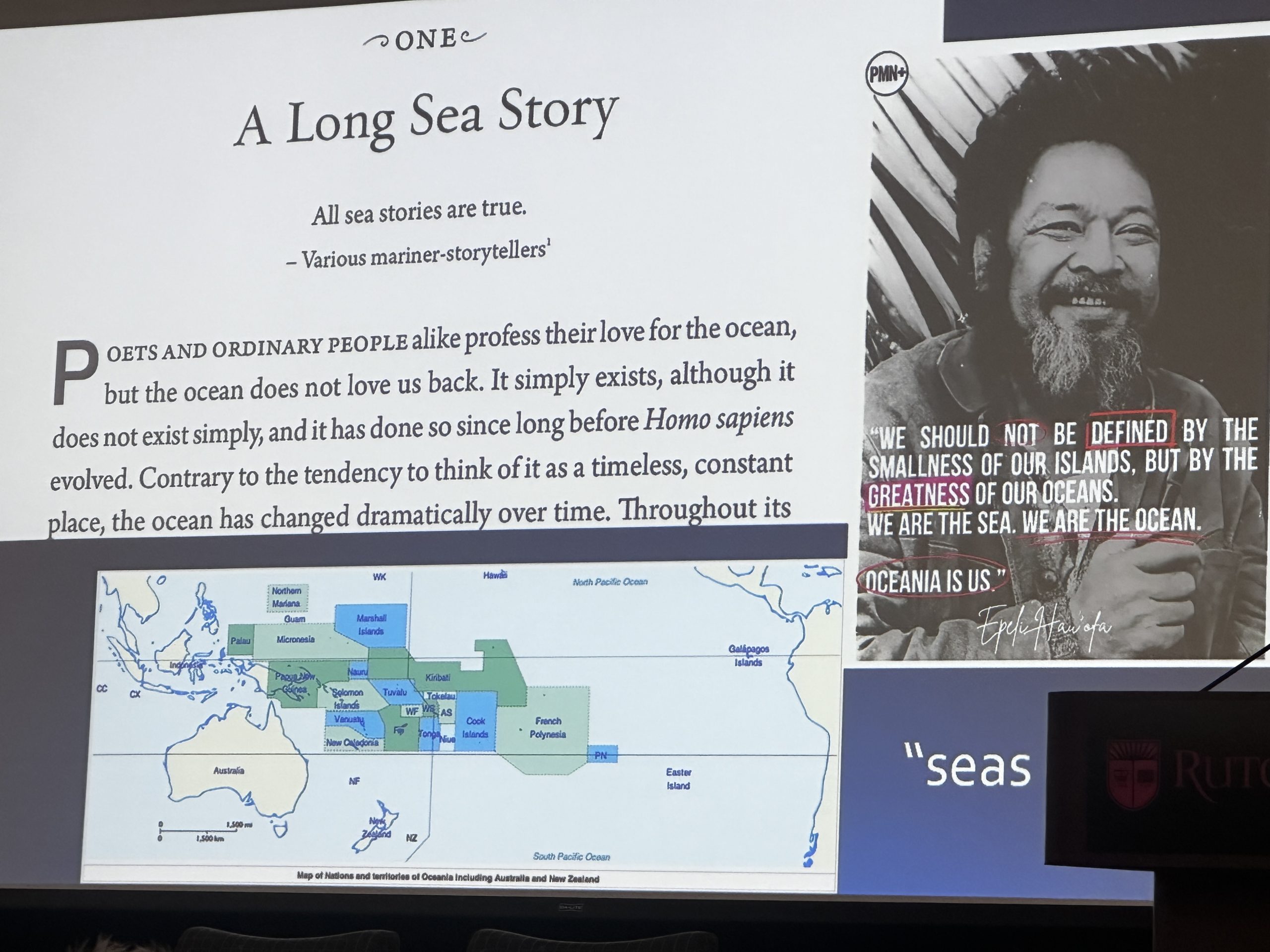
Rozwadowski emphasized the importance of recognizing diverse ocean relationships across cultures, particularly citing Tongan novelist and anthropologist Epeli Hau'ofa's concept of "seas of islands," which "emphasizes the decentering of land in Pacific Island cultures both past and present relative to their sense of home, oceans and the heavens."
She critiqued problematic ocean metaphors that have shaped policy, particularly the "ocean frontier" concept. This metaphor, she explained, "reinforced beliefs of the limitlessness of ocean resources, even extending the embrace of that myth in the face of mounting evidence to the contrary over the second half of the 20th century." The frontier metaphor also "implies the inevitability of development as the inexorable outcome of so-called progress,” which becomes particularly concerning in the context of deep-sea mining and the exploitation of natural resources.
Rozwadowski concluded by calling for new frameworks, "What we need from the young people in this audience are new metaphors that can help deliver and support new relationships with oceans that are ethical and just and sustainable."
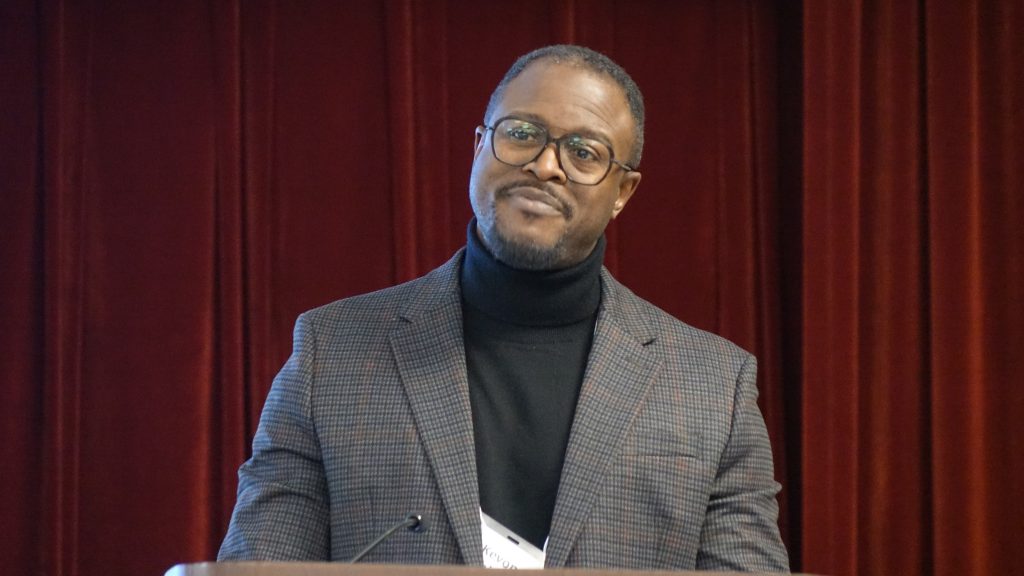
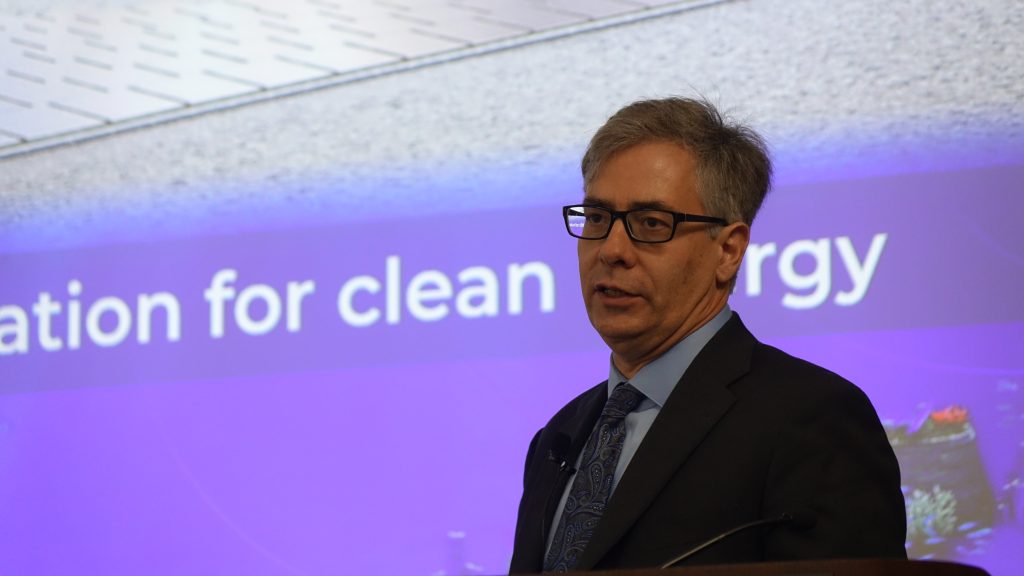
Jason Cotrell: Ocean Renewable Energy and Floating Data Centers
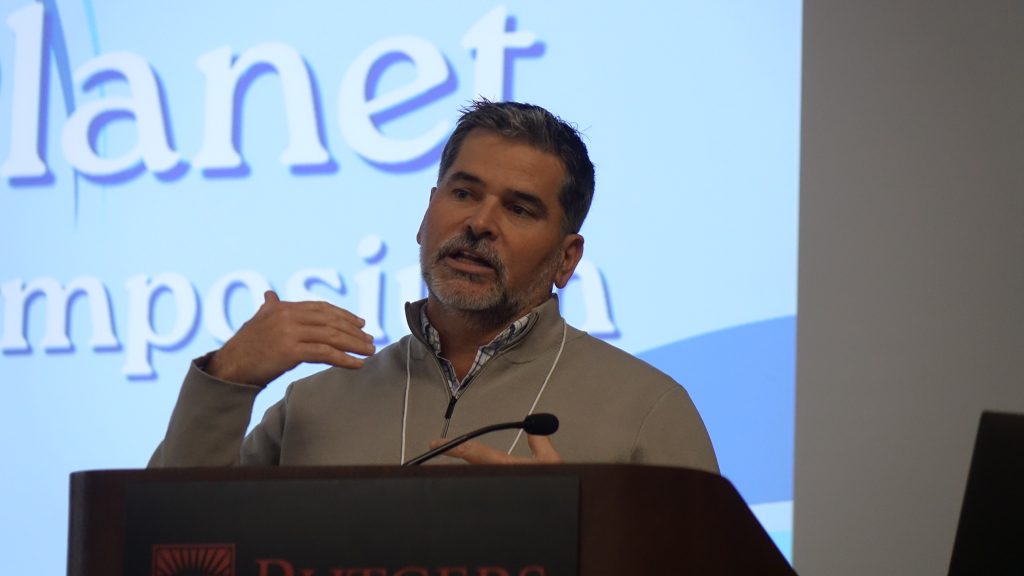
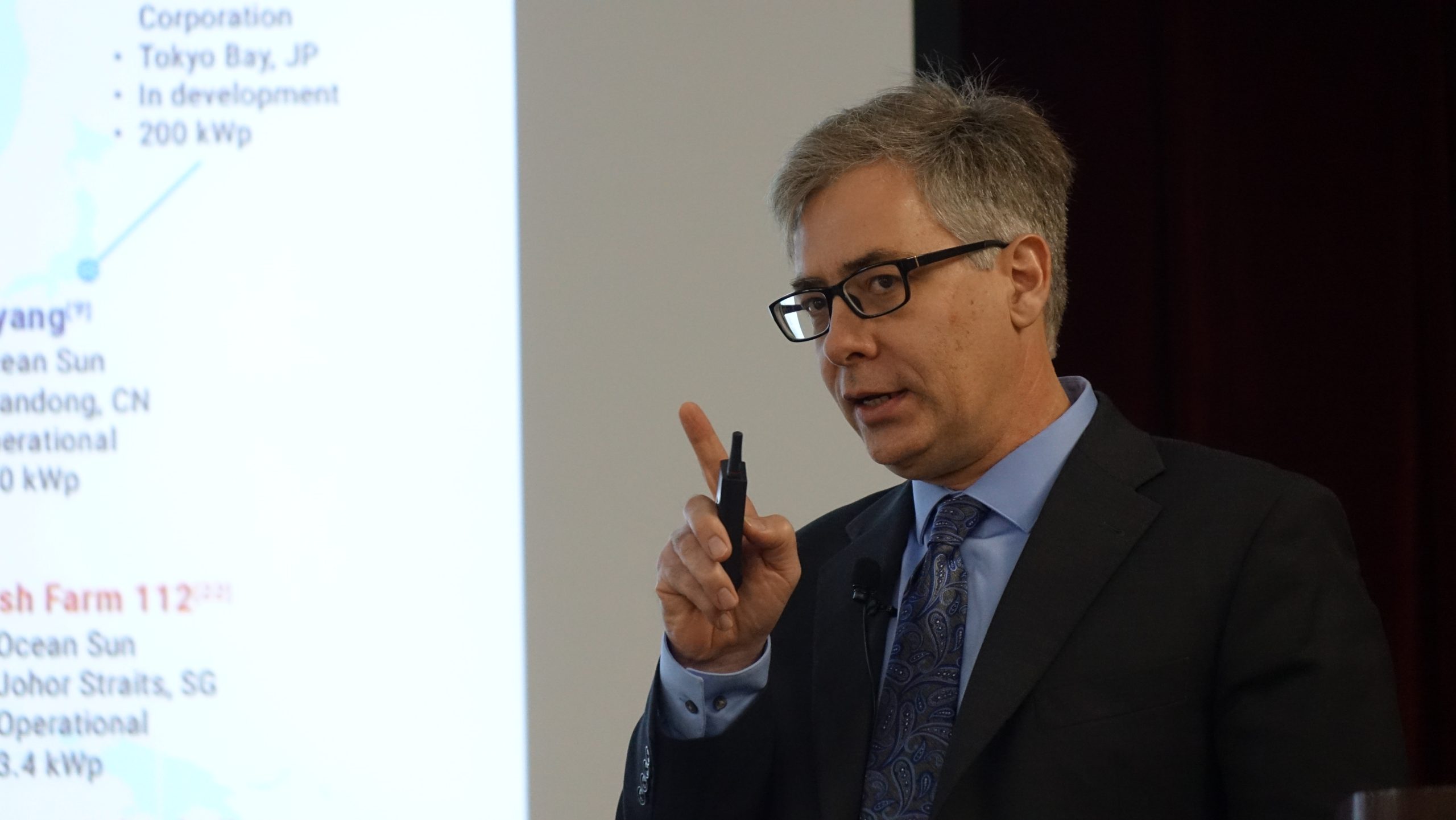
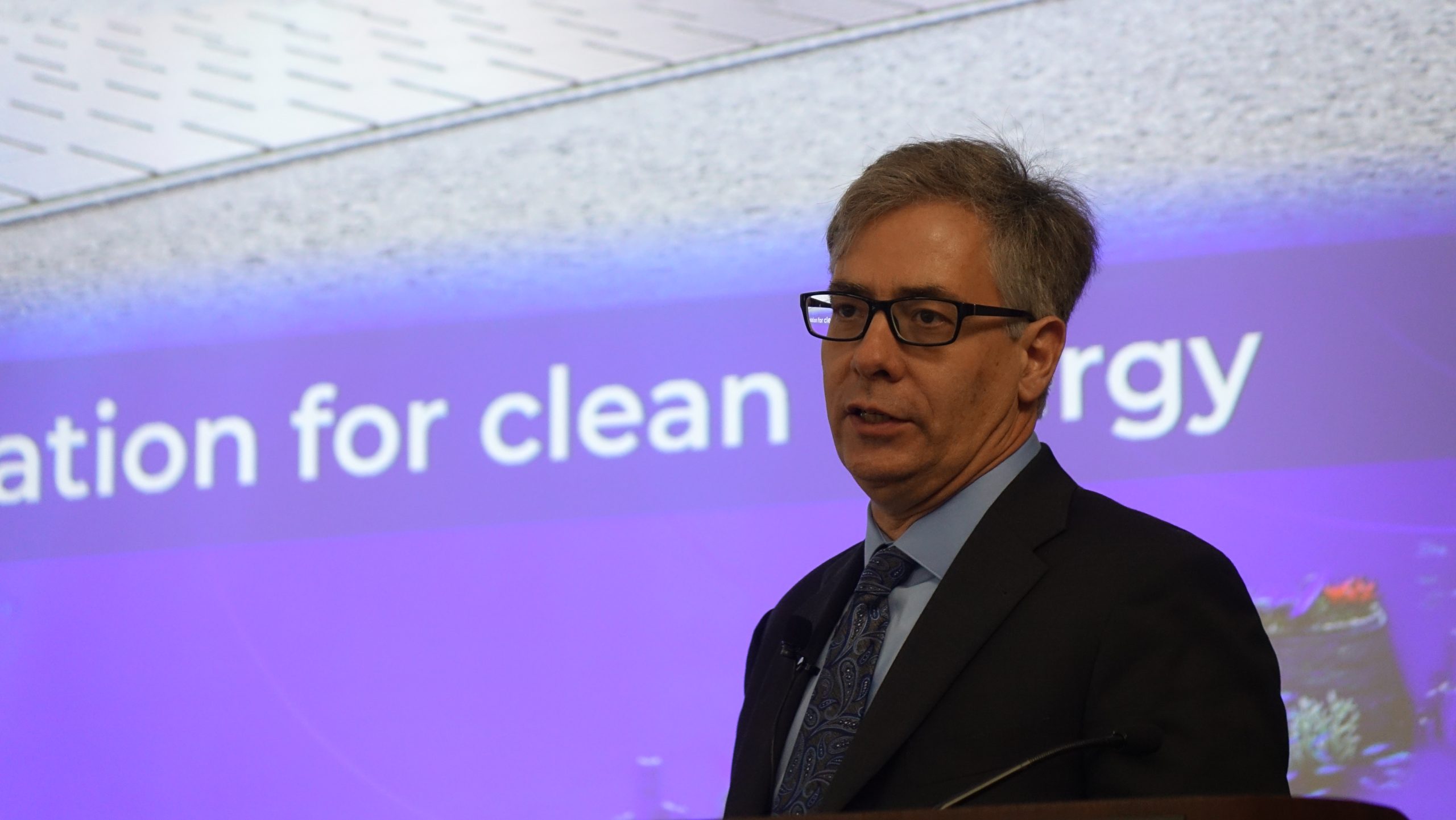
Jason Cotrell presented an innovative approach to powering data centers using ocean renewable energy. He explained that data centers face a massive infrastructure challenge, with global capacity expected to grow from 82 gigawatts in 2025 to 219 gigawatts by 2030—"about one quarter of the entire [global] electrical grid."
Cotrell's solution involves moving data centers offshore where renewable energy is abundant: "What we want to do is move the data center where the power is—or at least could be—that is in the ocean adjacent to some of these major population centers." His company, Sperra, uses 3D concrete printing to create marine infrastructure, including platforms for floating solar arrays and offshore wind integration.
On the critical importance of hybrid renewable systems, Cotrell emphasized: "You always want both... Our idea was to obviously use hybrid power systems, and that's a key technology to solving a lot of these renewable energy challenges." He explained that when combining solar and wind energy, "you can reduce the amount of long-term storage by 70% by combining energy sources."
Cotrell outlined his company's sustainability goals, "We seek a triple value proposition... [providing] the lowest cost ocean electricity at about $50 a megawatt hour... [the ability to] enhance coastal resiliency... and trying to nurture these marine species" through nature-positive artificial reef structures.
Cymie Payne: International Climate Law and Ocean Protection
Cymie Payne discussed three groundbreaking international court advisory opinions on climate change issued in 2024 and 2025 by the International Tribunal for the Law of the Sea, the International Court of Justice, and the Inter-American Court of Human Rights. She explained that these courts "forcefully stated that governments have binding legal obligations to take urgent and ambitious action on the climate crisis."
Payne highlighted the significance of the Law of the Sea Tribunal opinion, which "was the first time an international court has tied the 1.5 °C temperature to a legal obligation. Payne noted, "The tribunal found that "states must take all measures necessary... to prevent, reduce, and control pollution of the marine environment from any greenhouse gas emissions wherever they occur."
The International Court of Justice (ICJ) went even further, Payne explained, "The ICJ advisory opinion said that state conduct in fossil fuel production and consumption, including granting of fossil fuel exploration licenses and subsidies, may constitute an internationally wrongful act attributable to the state."
Payne acknowledged the critical role of scientists in these legal developments, "Scientists who publish in the peer-reviewed literature, who participate in the IPCC, have had really a tremendous influence on these opinions. And without your work, it is highly unlikely that the courts would have confidently reached these results."
She also highlighted the new Biodiversity Beyond National Jurisdiction Agreement (BBNJ), which will come into force on January 17, 2026, noting that it "is very much a science-driven process" and provides numerous pathways for scientists to engage in ocean protection and conservation.
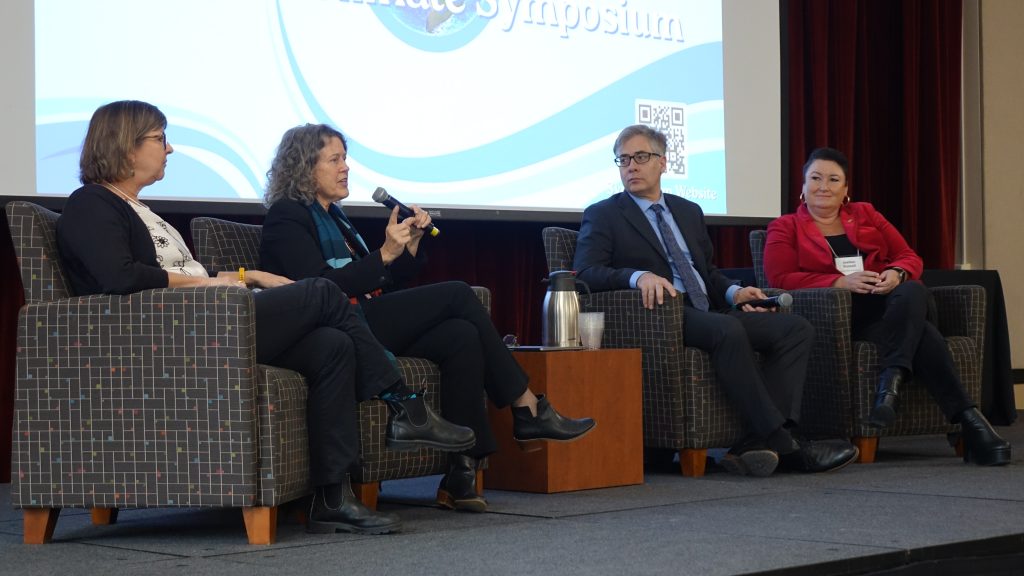
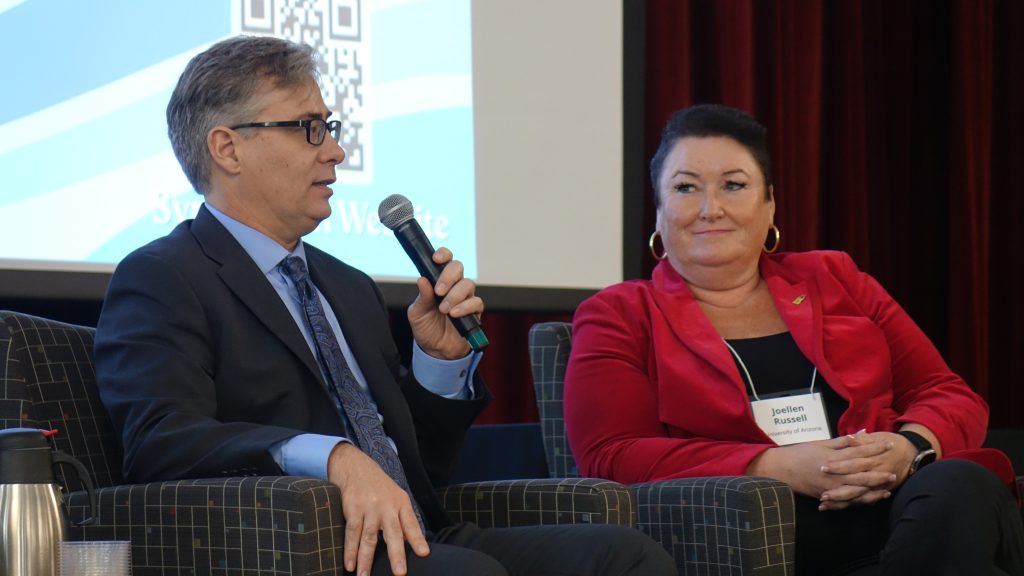
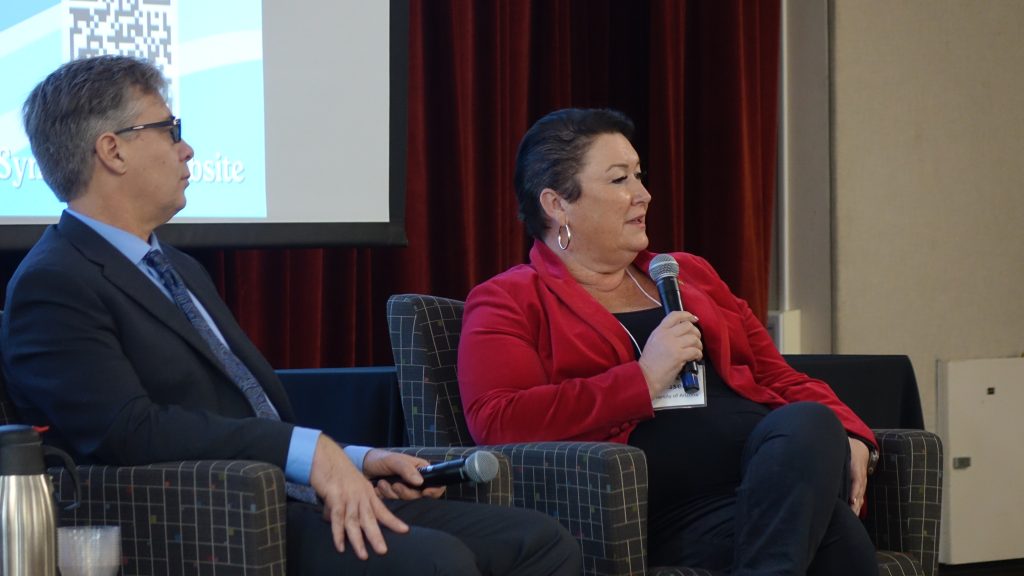
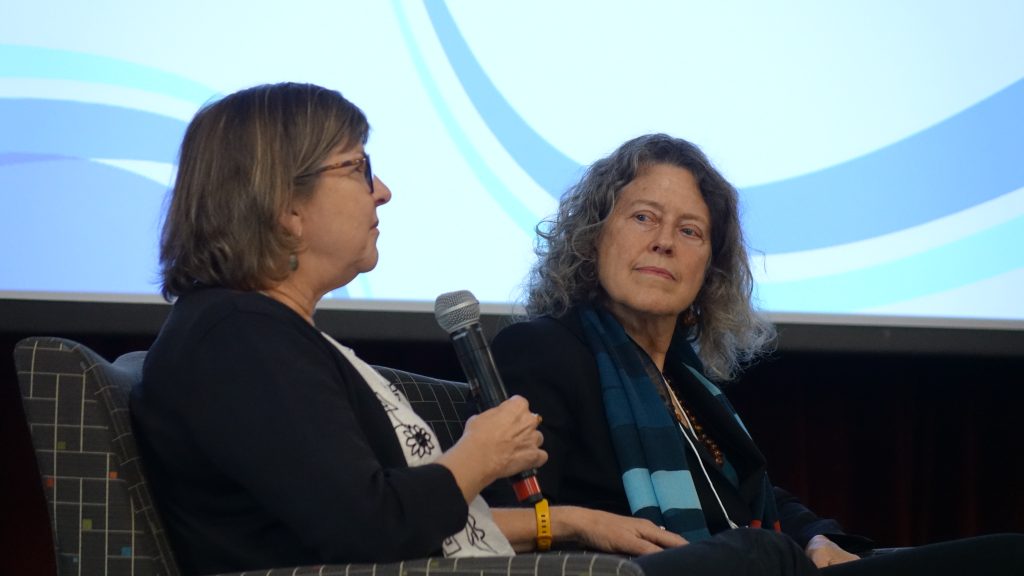
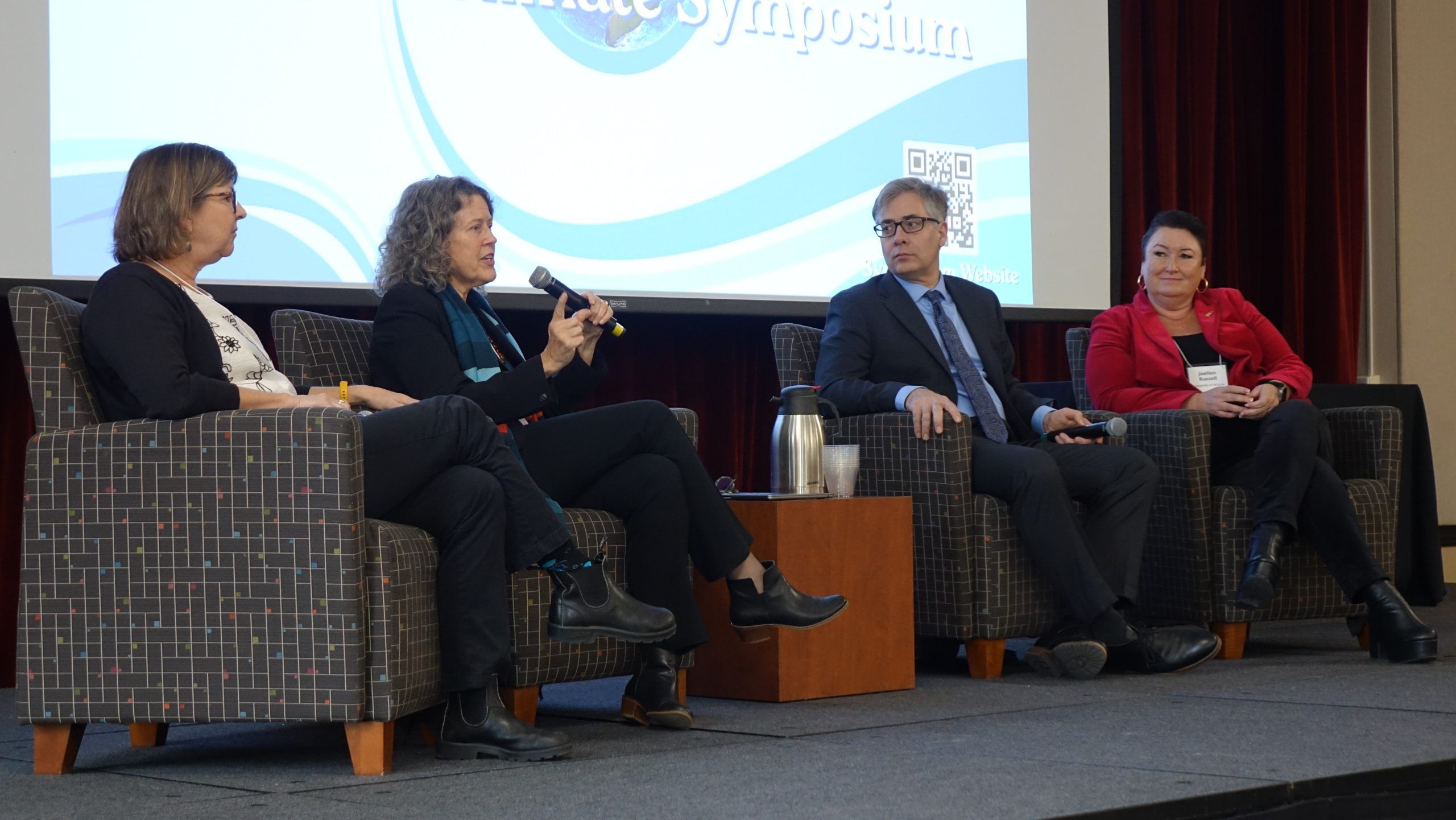
Panel Discussion: Inspiration, Communication, and Taking Action
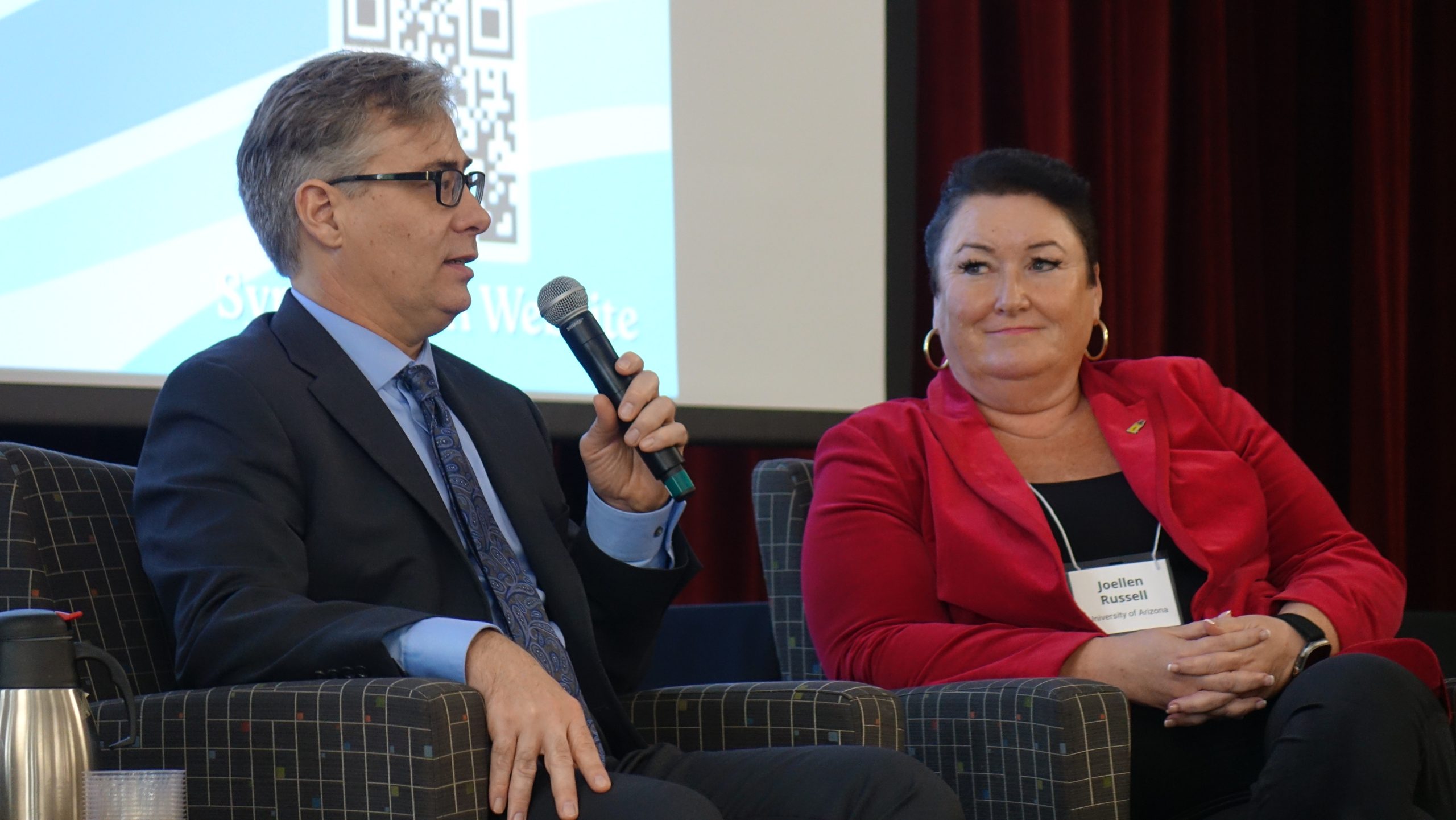
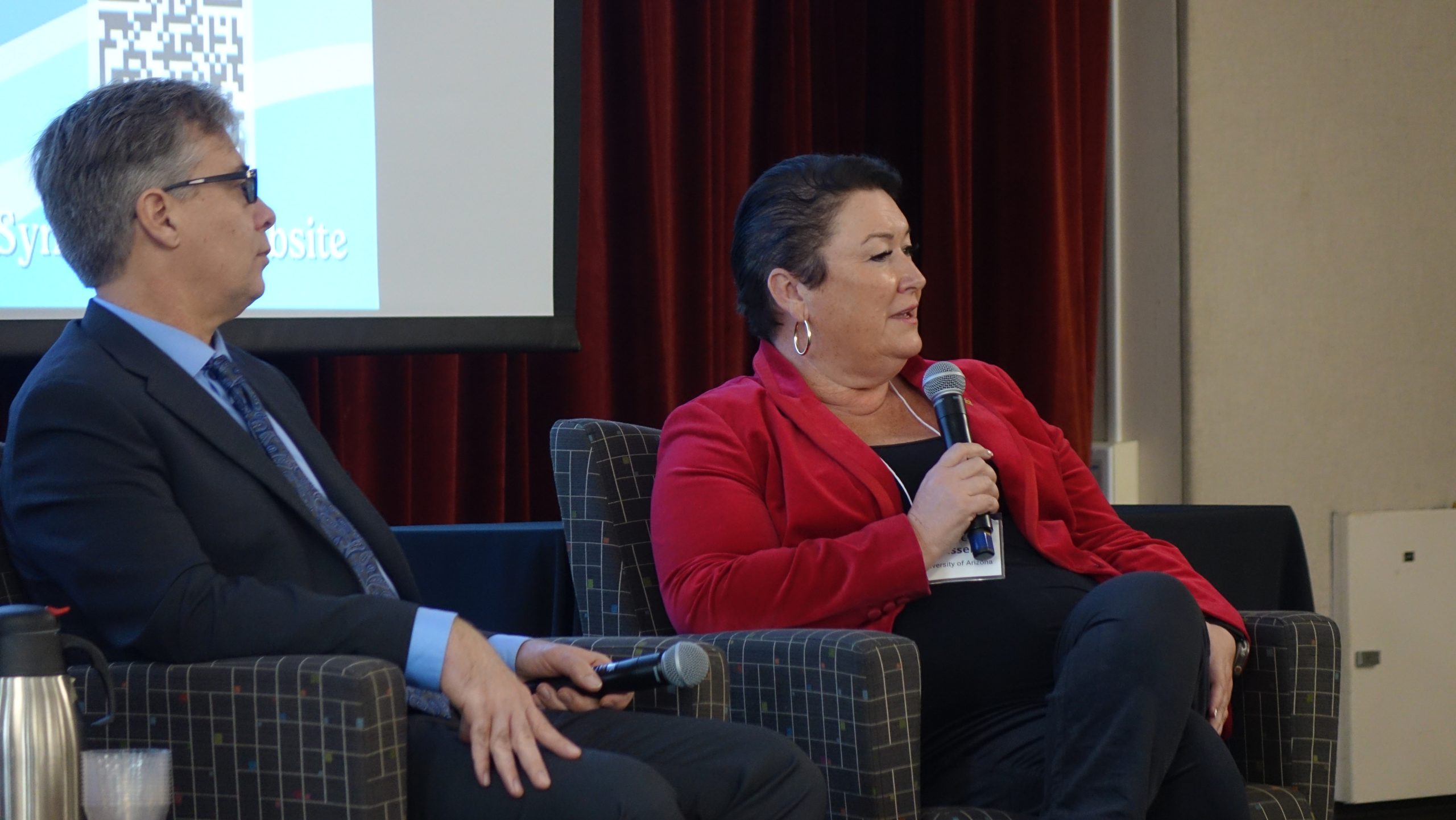
The morning plenary concluded with a lively panel discussion featuring all four speakers. When asked about finding inspiration in difficult times, the panelists offered diverse perspectives on perseverance and action.
Russell emphasized resilience and determination: "The requirements for working in this field are some combination of courage, integrity and endurance.” Part of the job of scientists is to “crawl out to the edge of what’s understood about our universe and we create new understanding.” Noting that scientists should expect to get critical reviews and that a career in science requires one to keep trying and keep getting up, it is “like being a boxer.” “I am planning to get in the ring and have somebody punch me in the head. That's my job … to try and punch them back, right?... And I'm training students who do that, too."
Payne highlighted that collectively, as a community, we can build and maintain institutions that last through rough times. “I keep going back to the IPCC thing, too. It's, you know, that community of scholars, the [Rutgers] response to the Department of Energy climate report this summer, that scientists came together and rebutted that report.”
Rozwadowski discussed how she teaches her students a story of hope. “One of the things that's amazing about ocean histories is that you can study so many different cultures and see [the] amazingly different ways that people and communities and cultures have interacted with oceans.” She points out to her students that these “histories really can help us learn things about the way people have done things in the past or are doing things now that we could adopt.”
Cotrell focused on mindset, "Believing that you can do it is the first thing because you know the flip side to that is if you don't believe, you can't innovate. If you can't solve these problems, you can't continue; well, that's a self-fulfilling prophecy. You're done. But if you tell yourself, ‘you can’… a lot can happen."
Russell concluded the symposium with an inspiring message to students and early-career researchers, "You are bright and capable. And you're here at this incredible public institution of higher education and knowledge... now is the time… Well, honestly, it's always the time. It is remarkable how far you can go... You lock arms with all of your friends in the trenches with you... You can do it, too... I know it looks bad, but [remember] grit! Dig! You can do it. We need all of you in the boat."
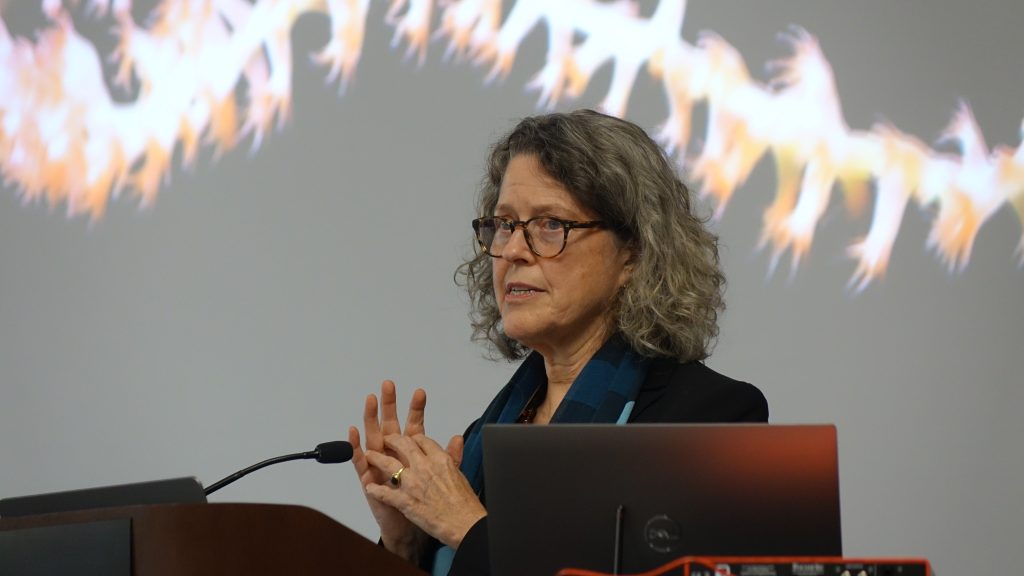
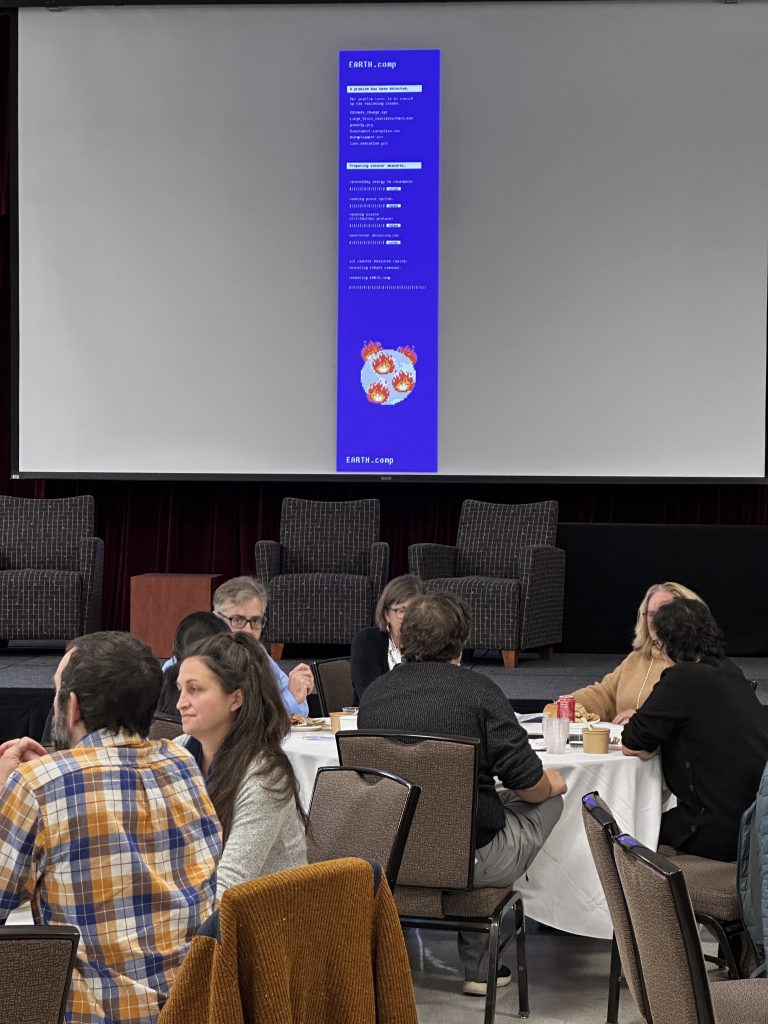
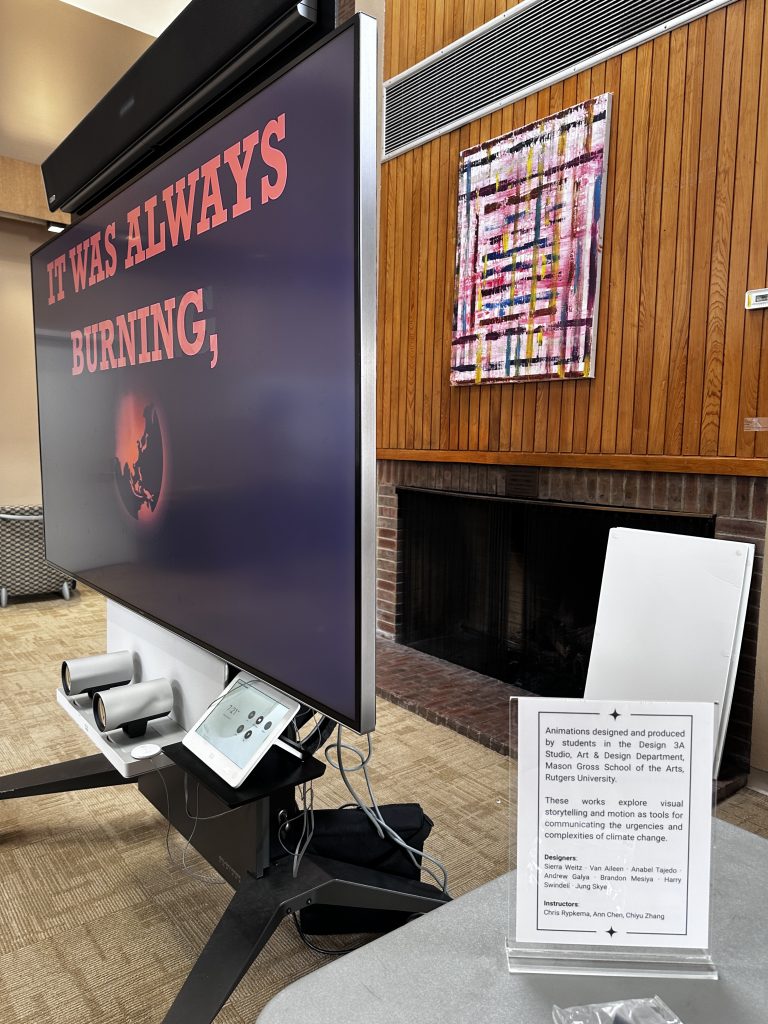
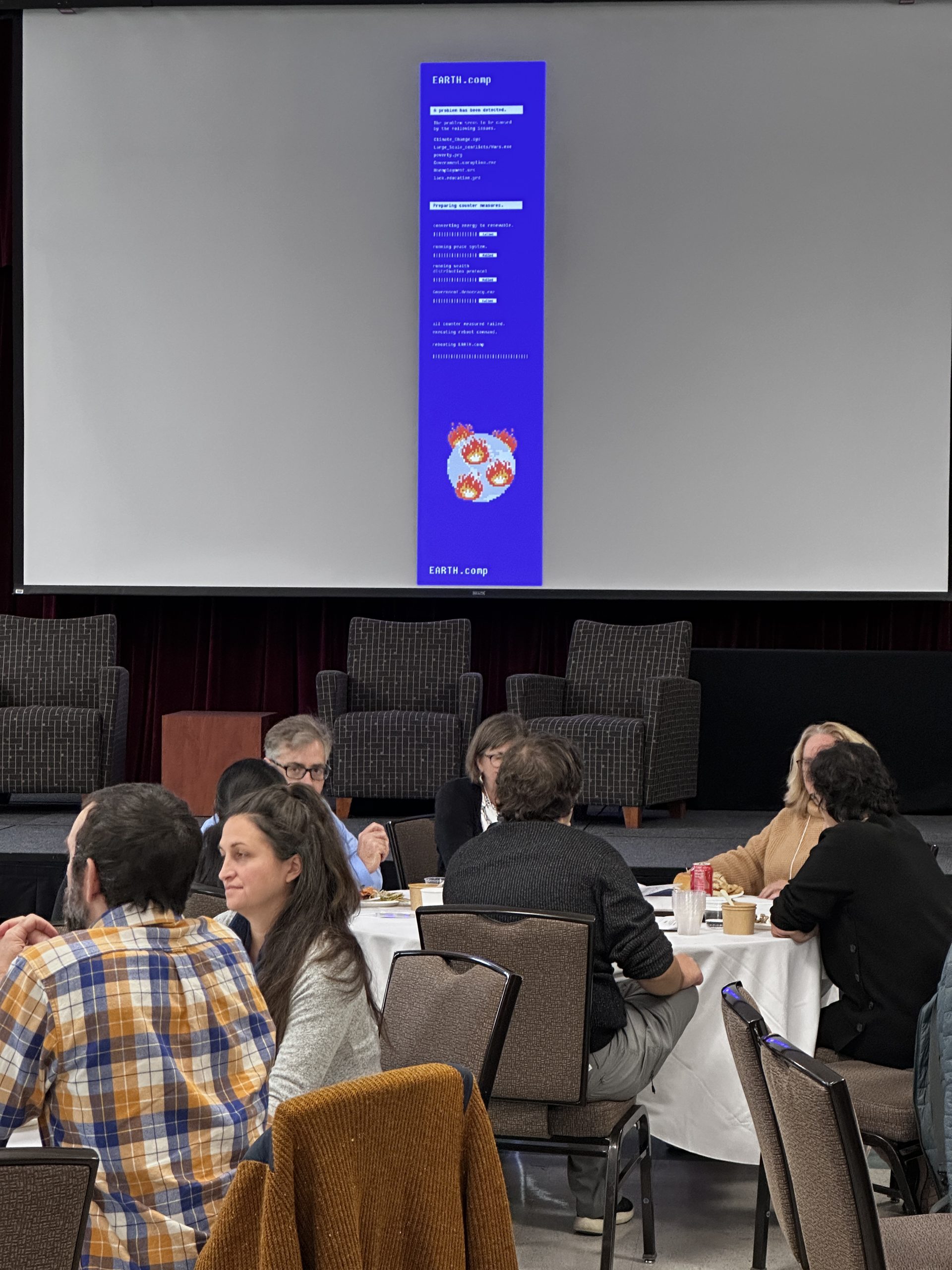
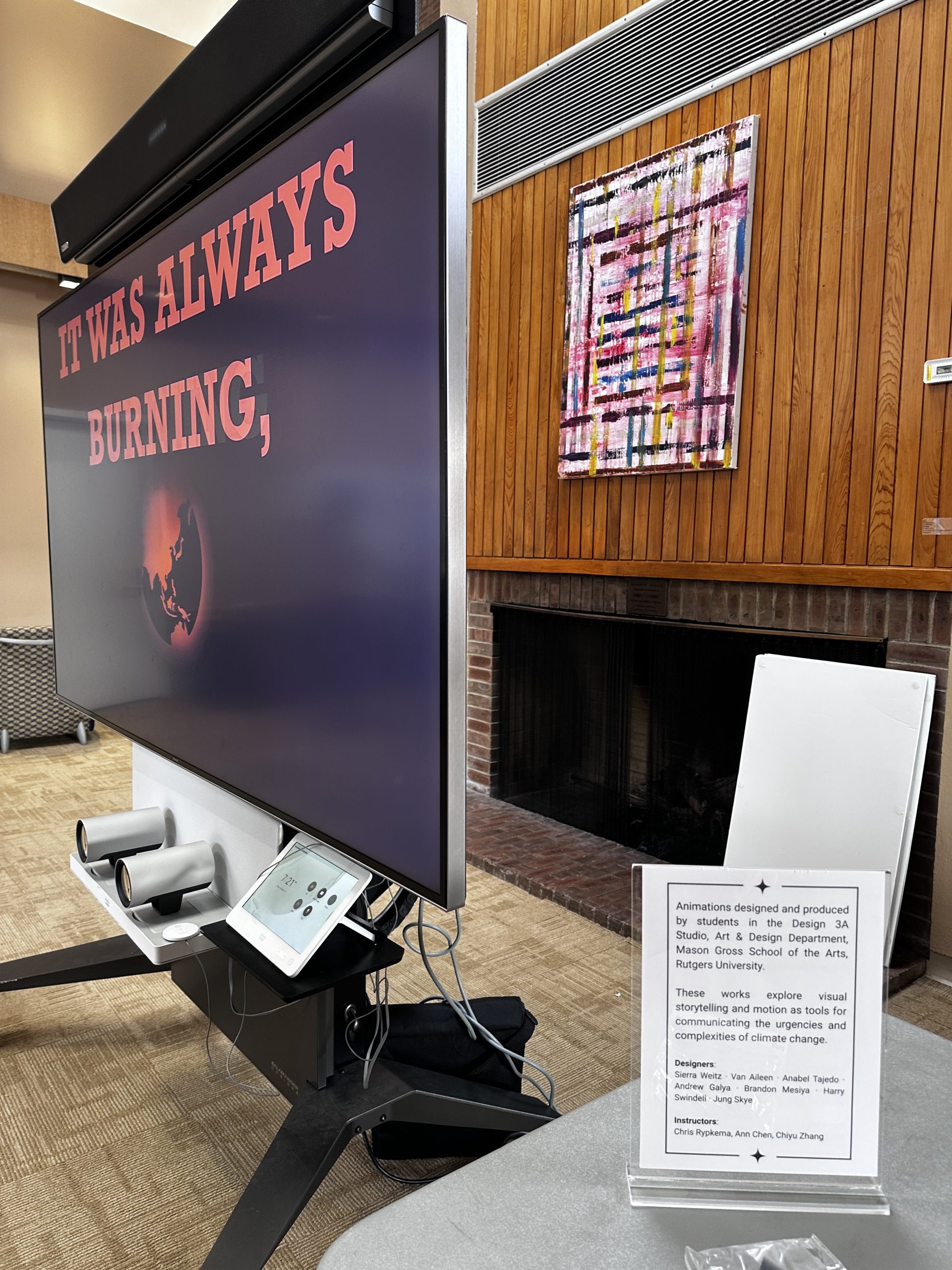
RCEI Area Lead, Professor Atif Akin of the Mason Gross School of the Arts shared student animations around themes of sustainability, nature and the effects of climate change that were projected during lunch.
Poster Session: Emerging Research and Regional Collaboration
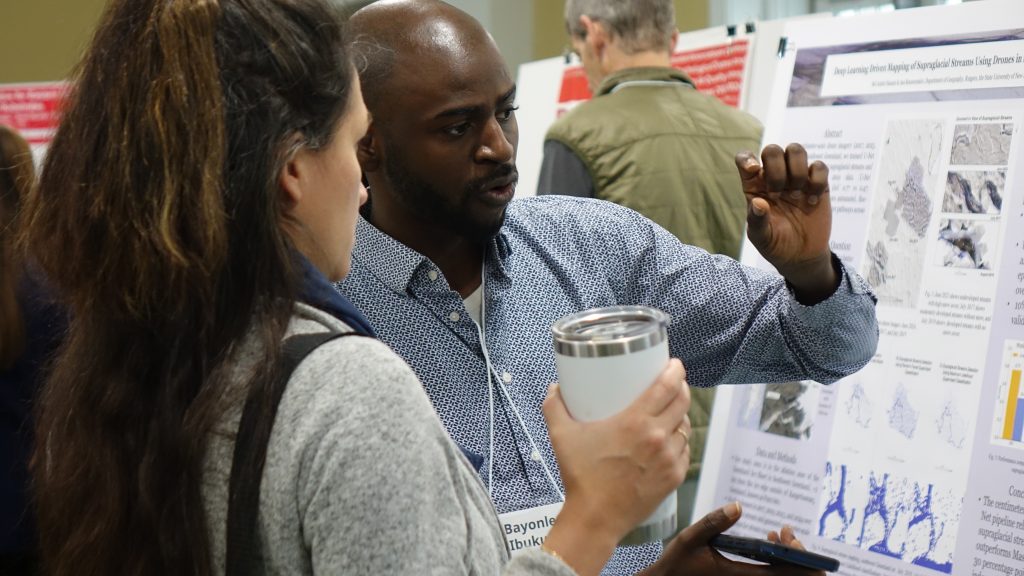
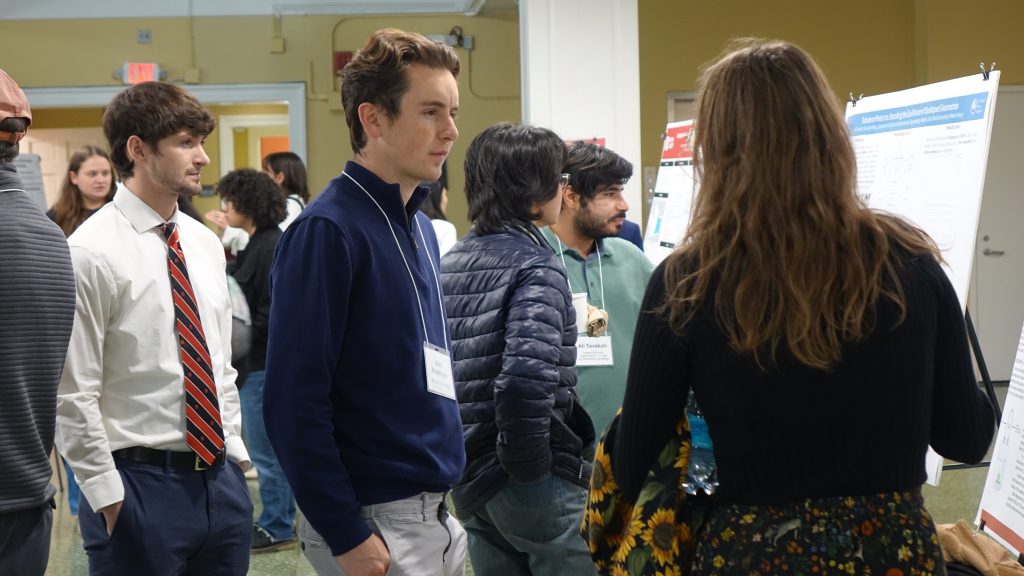
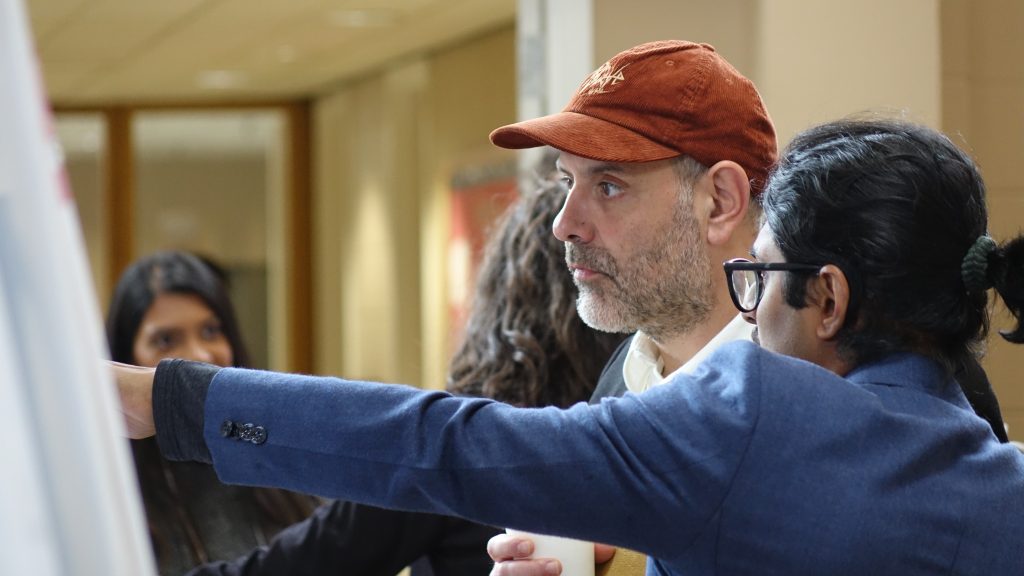
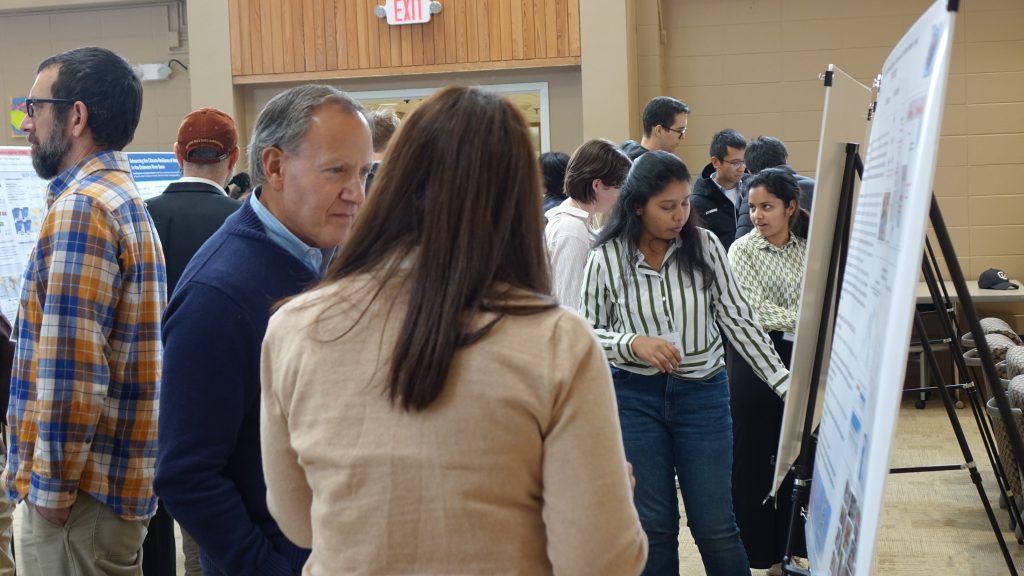
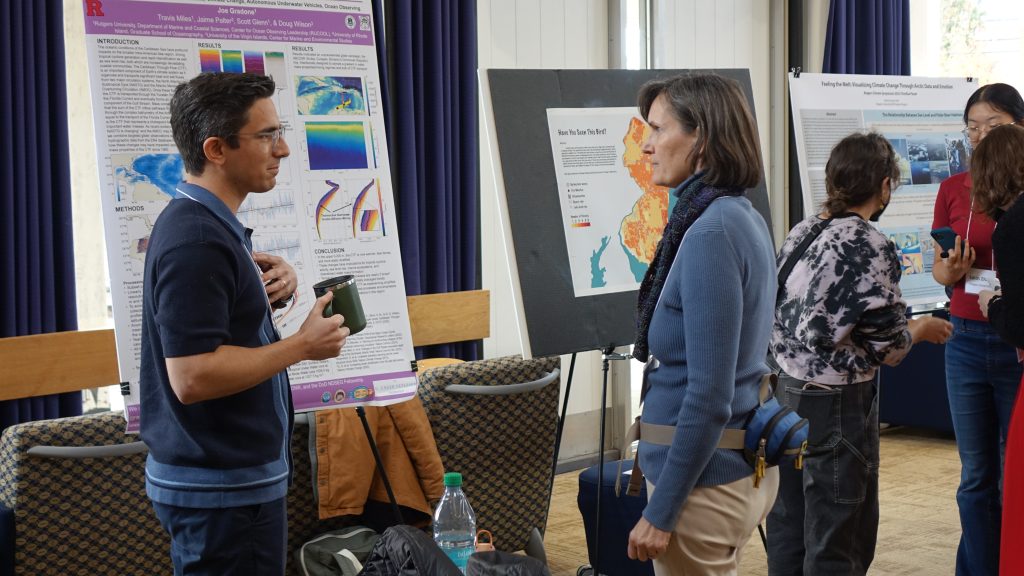
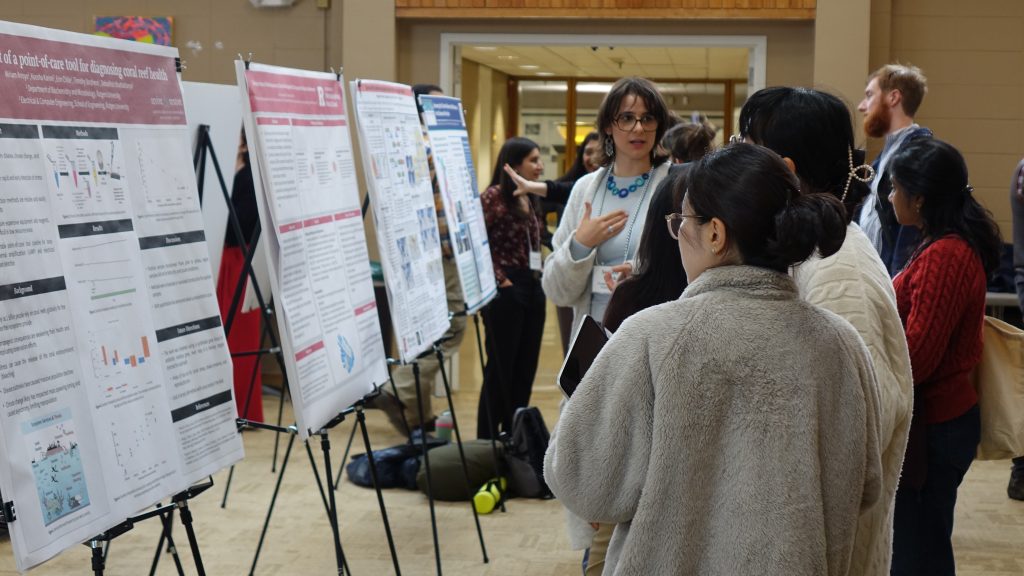
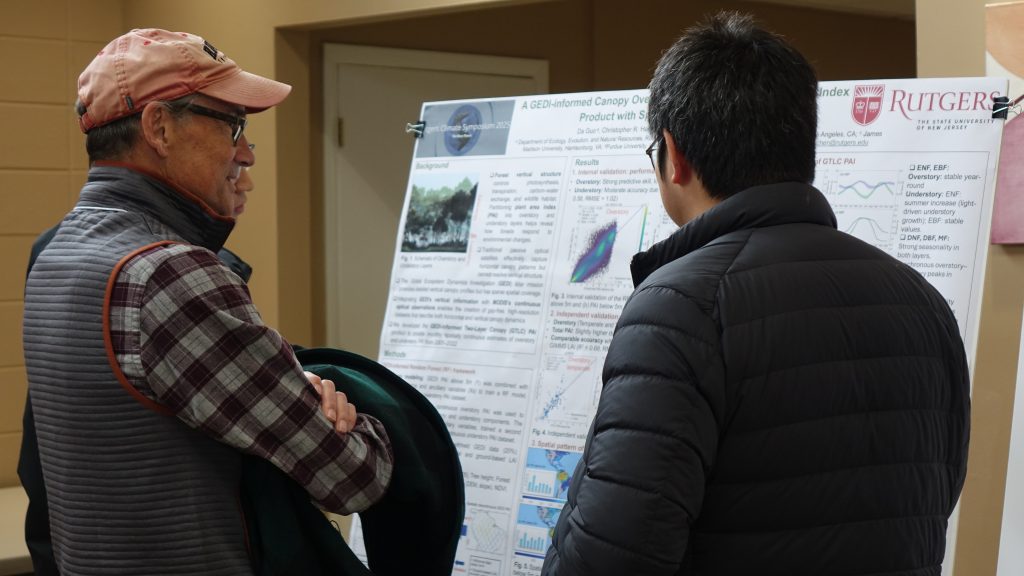
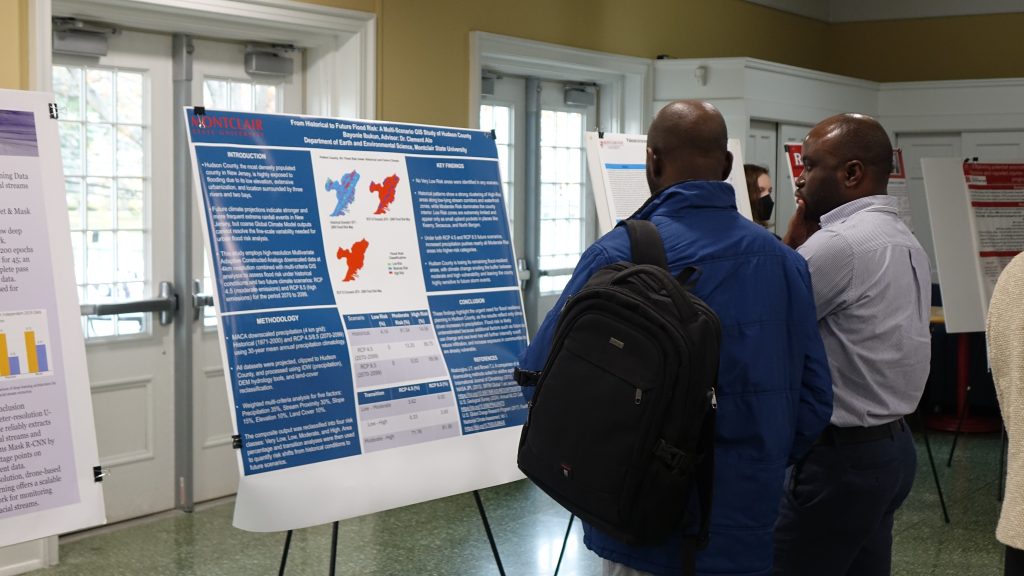
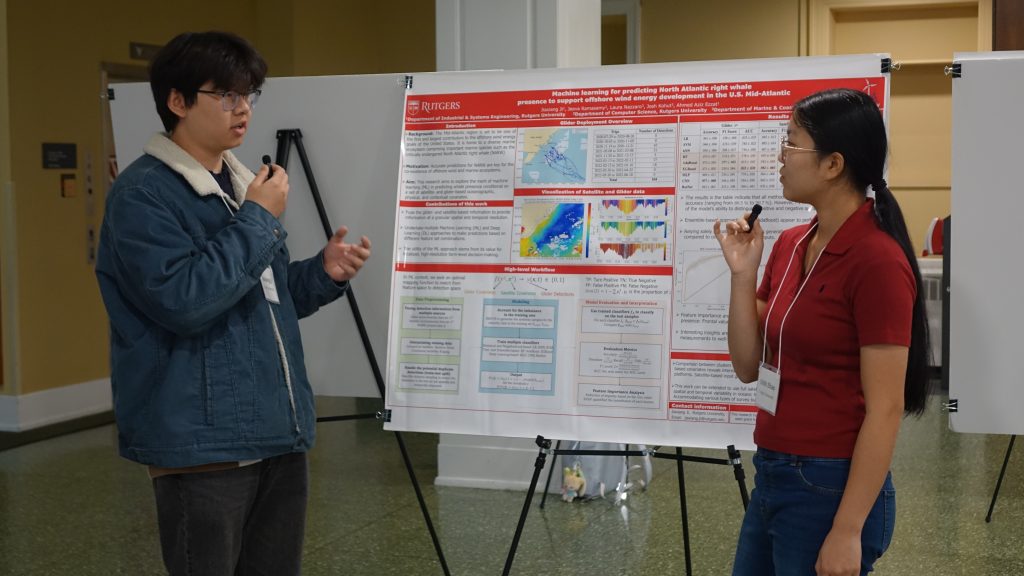
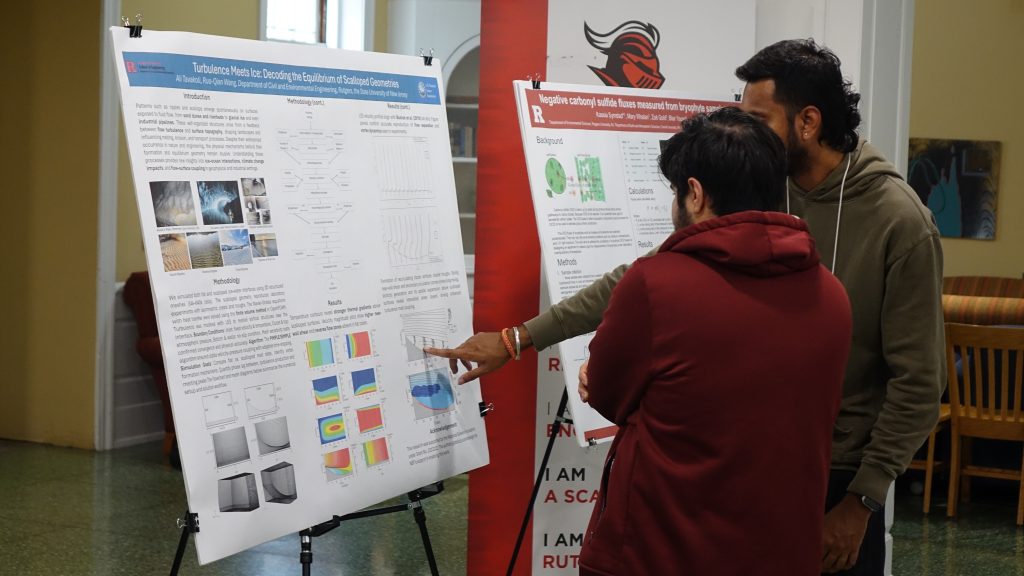
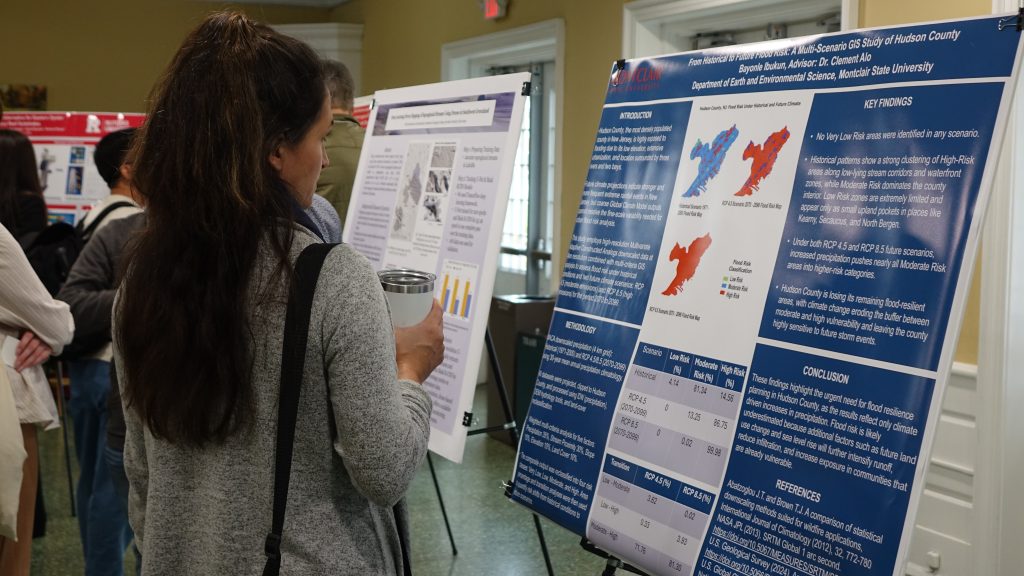
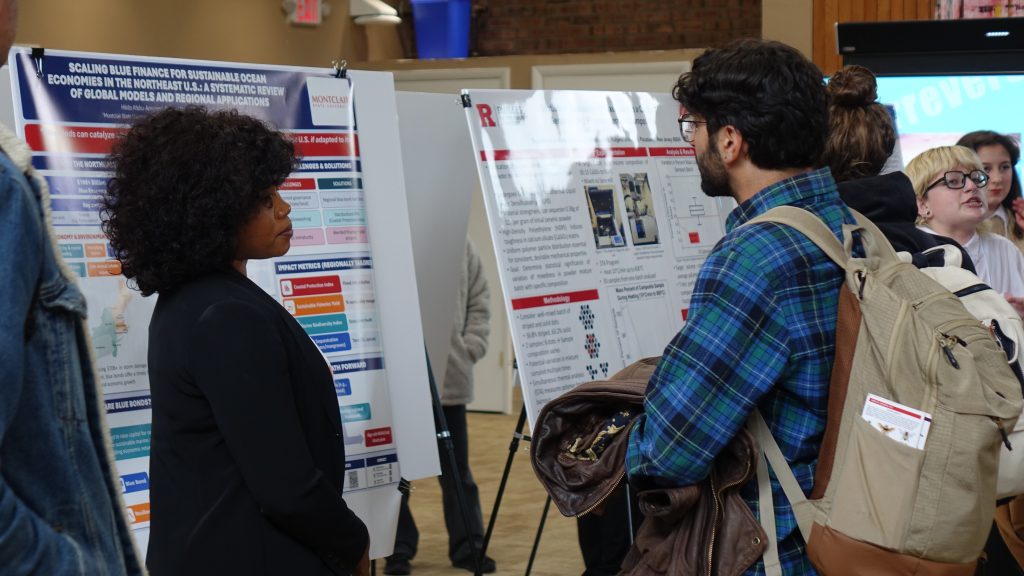
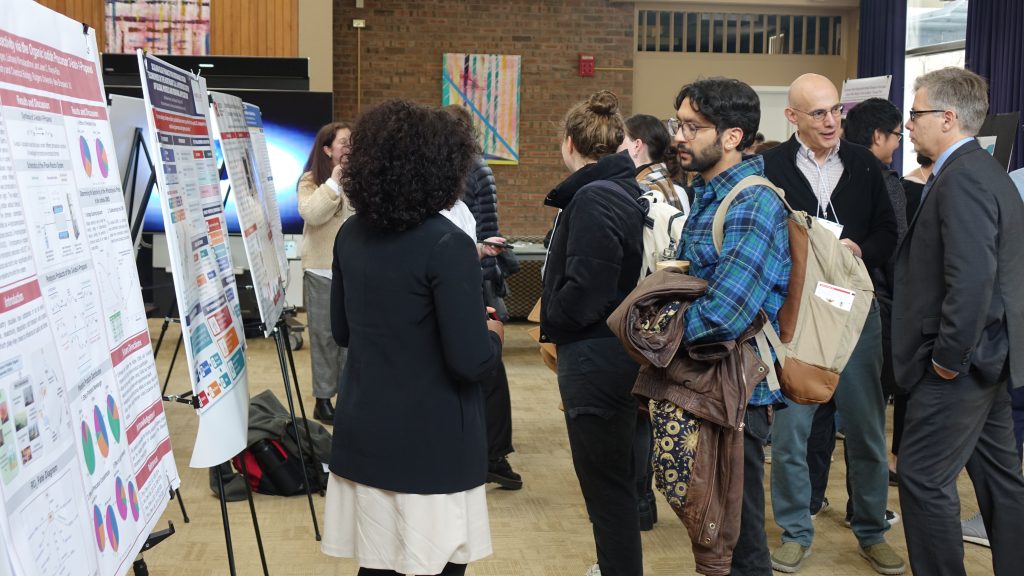
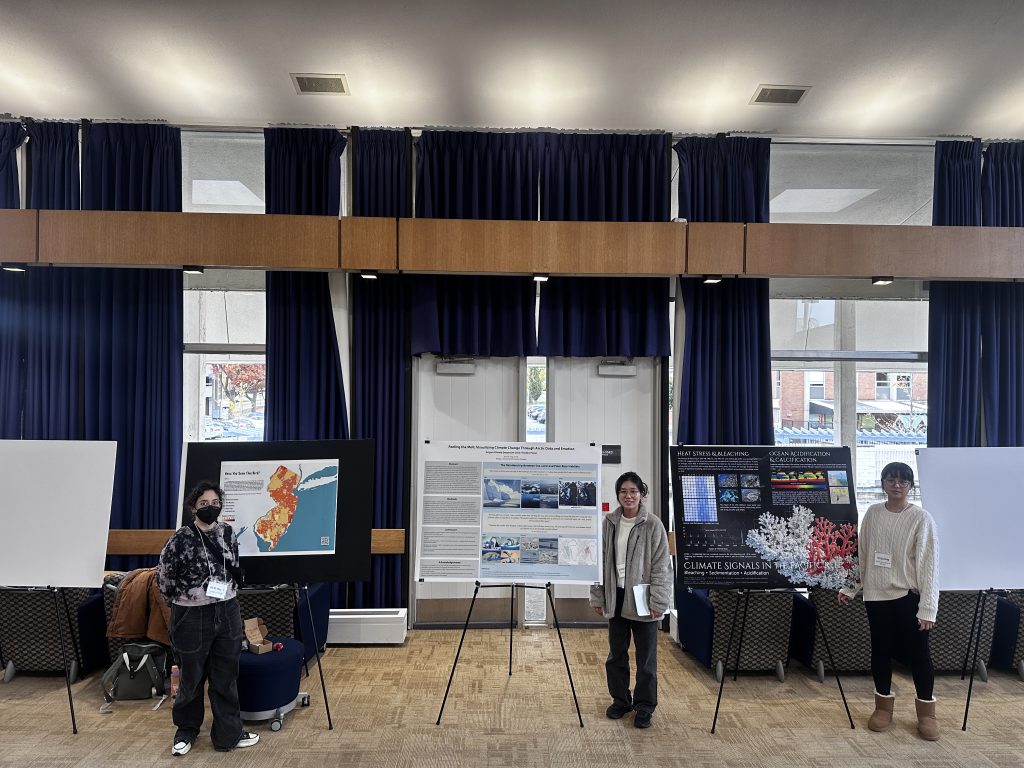
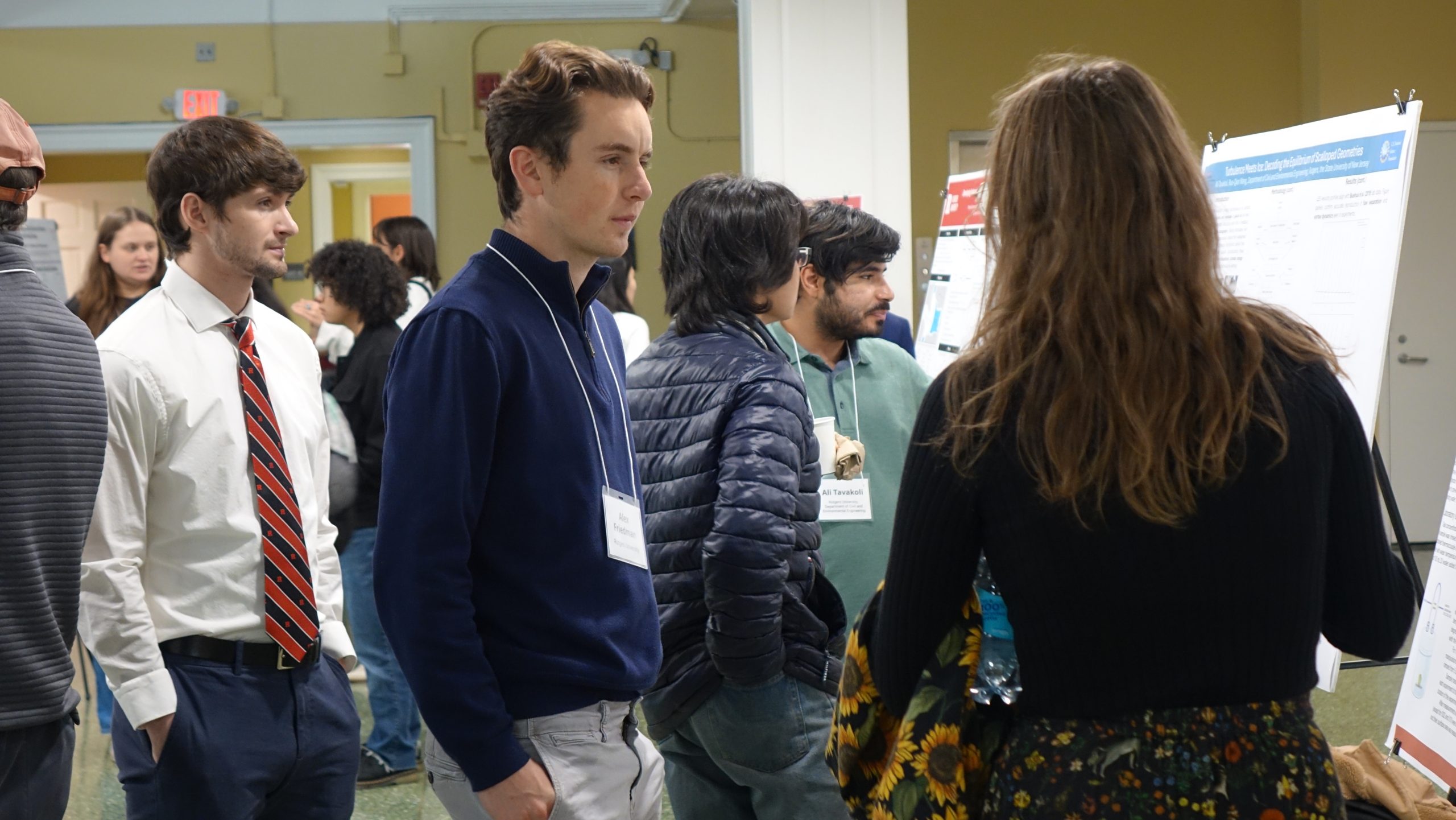
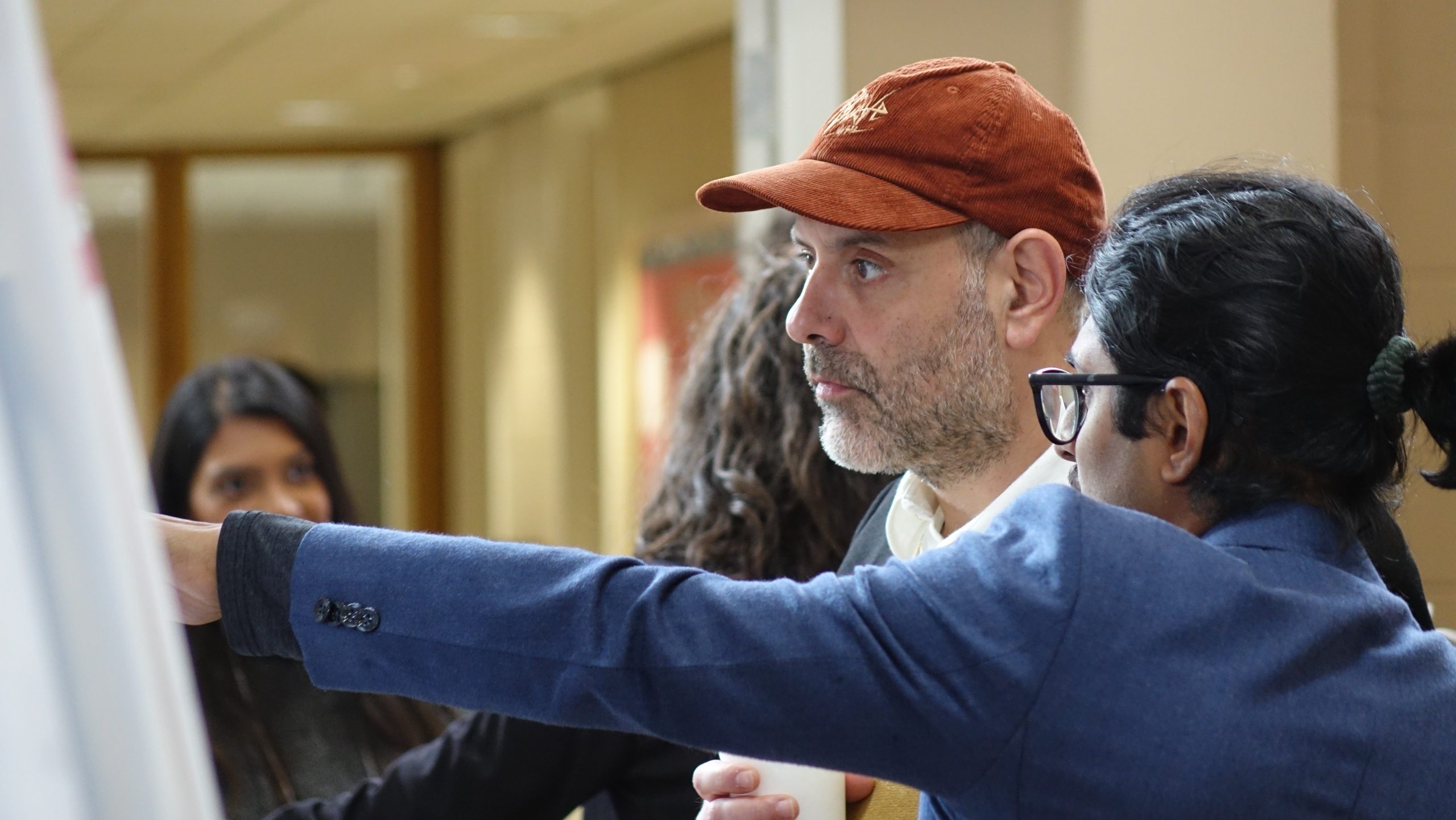
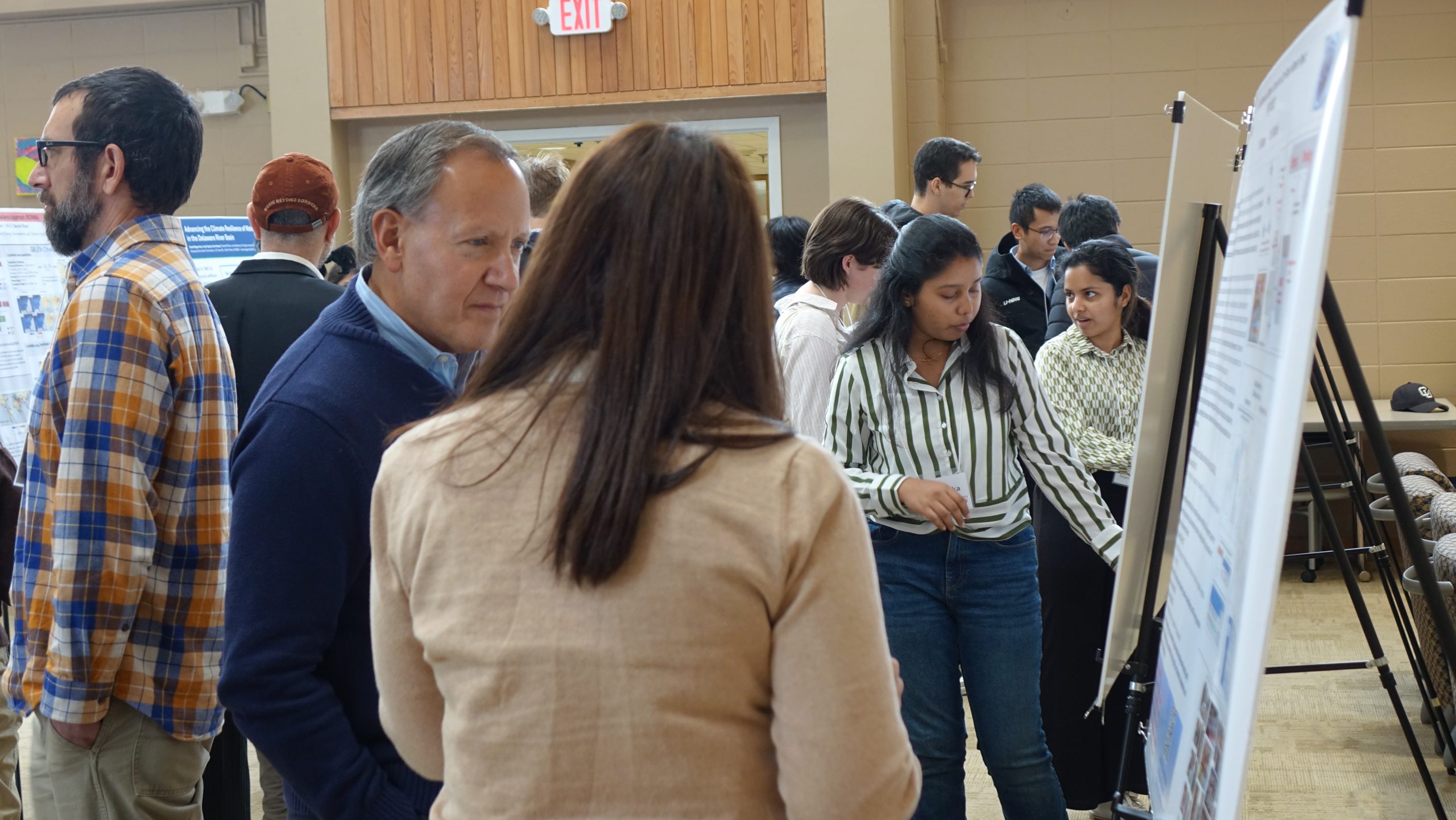
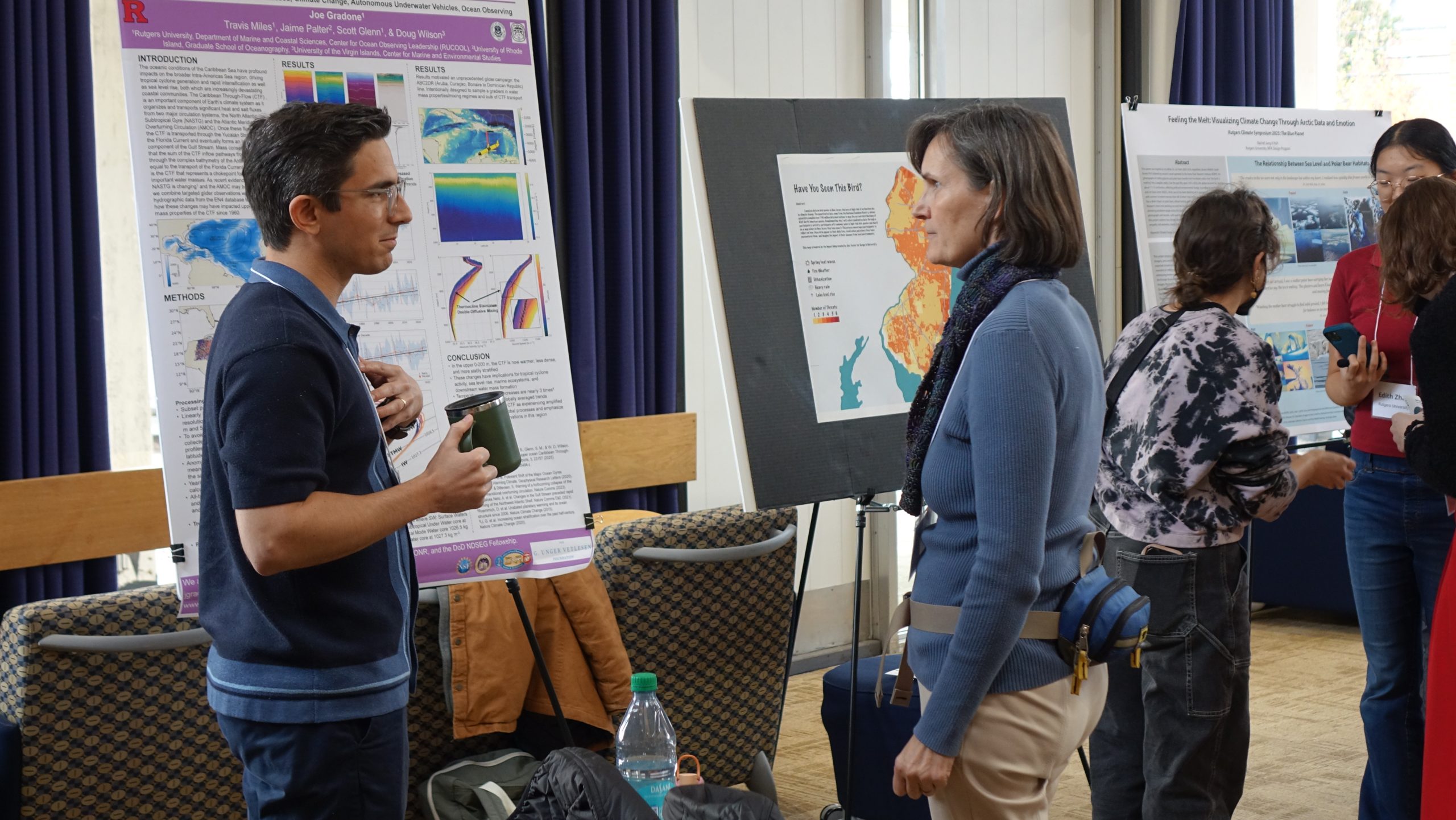
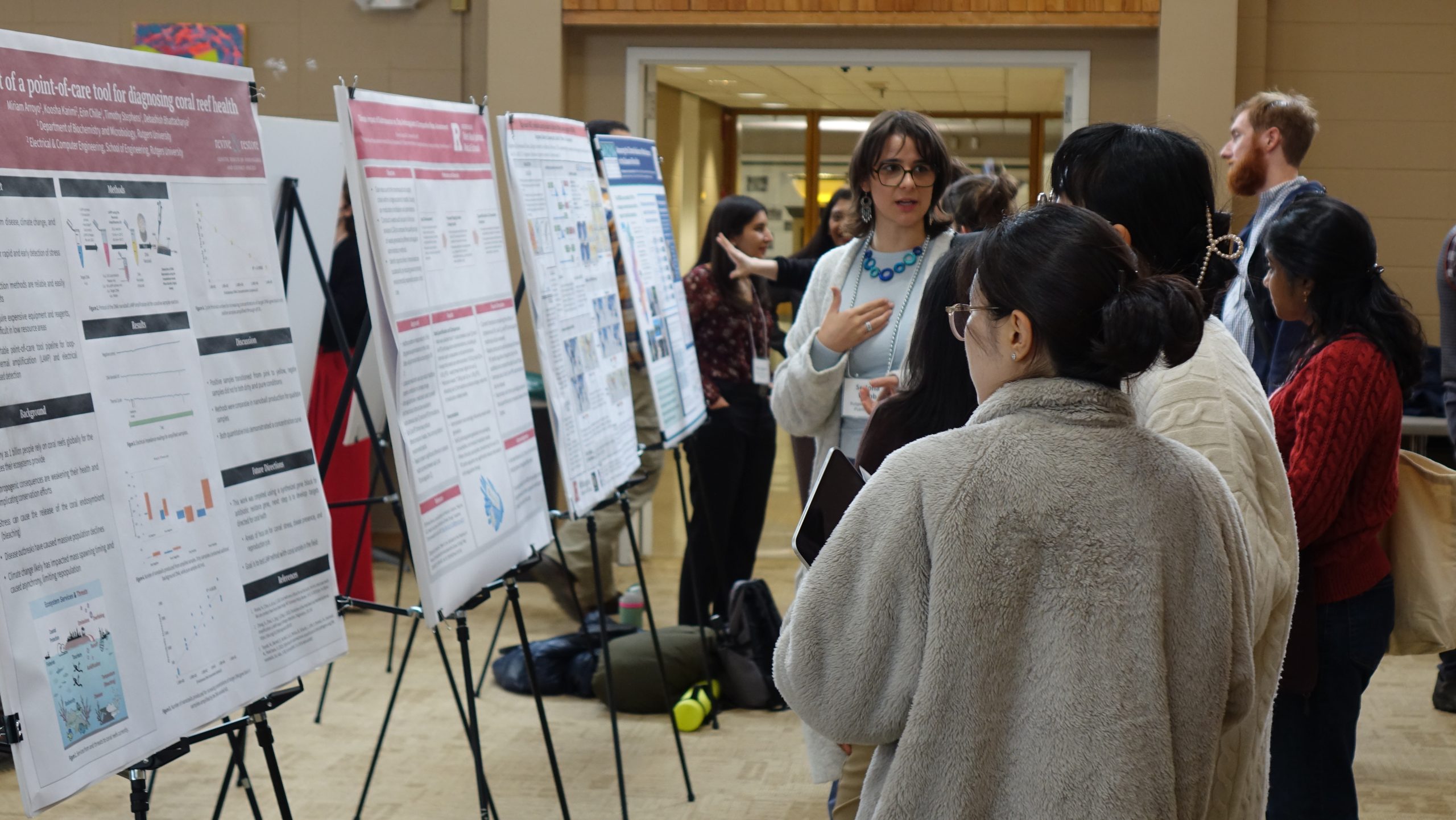
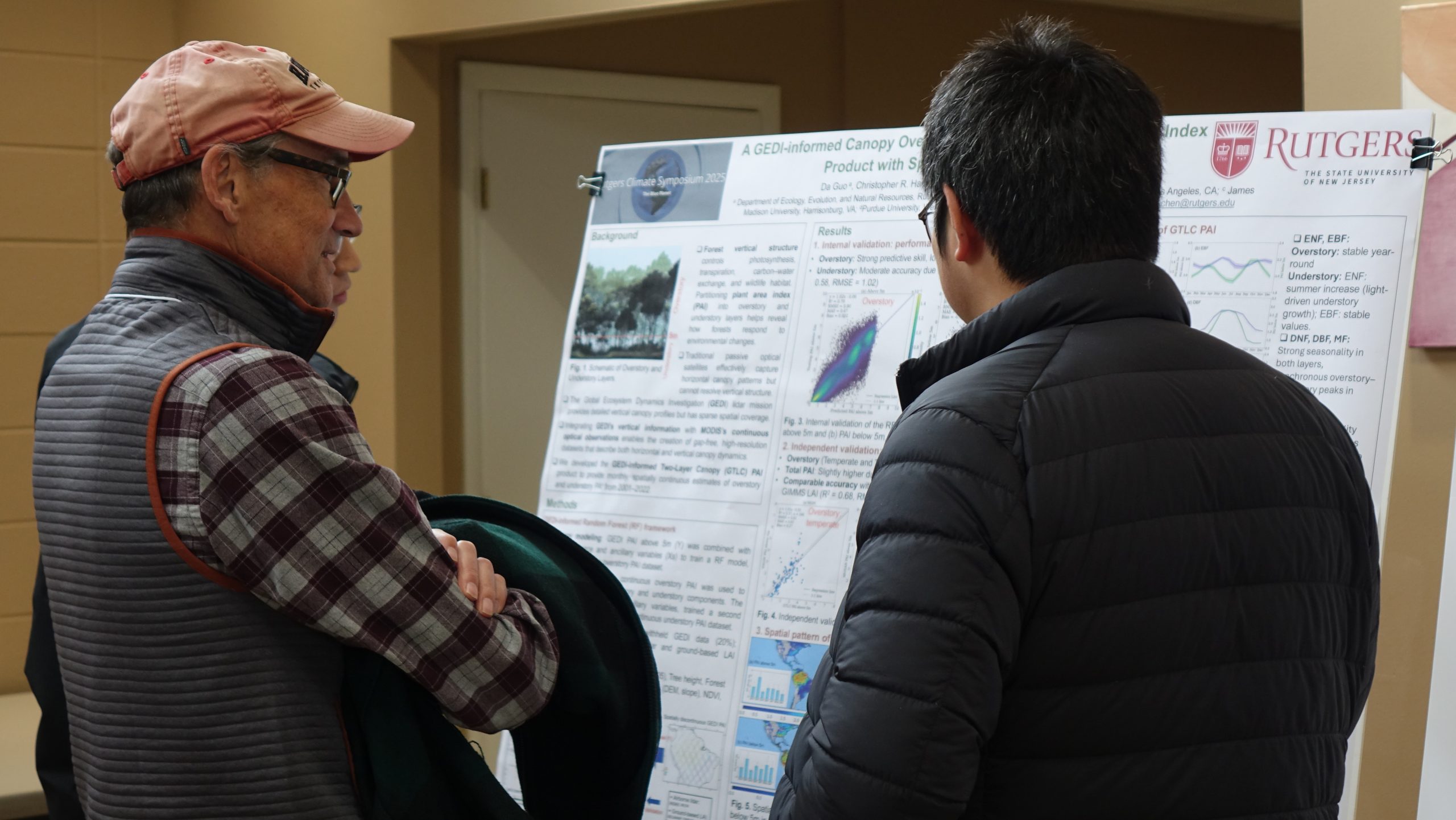
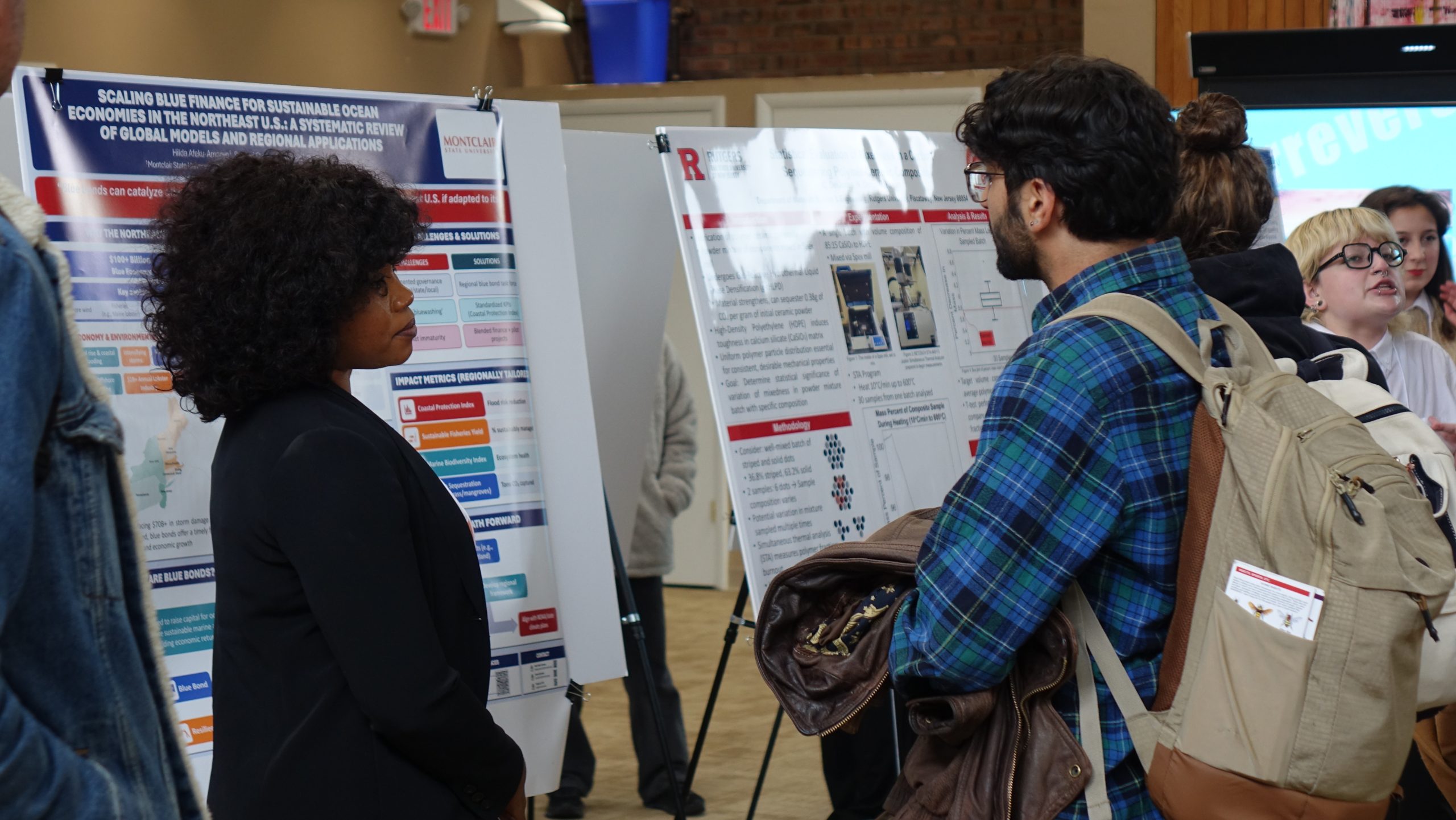
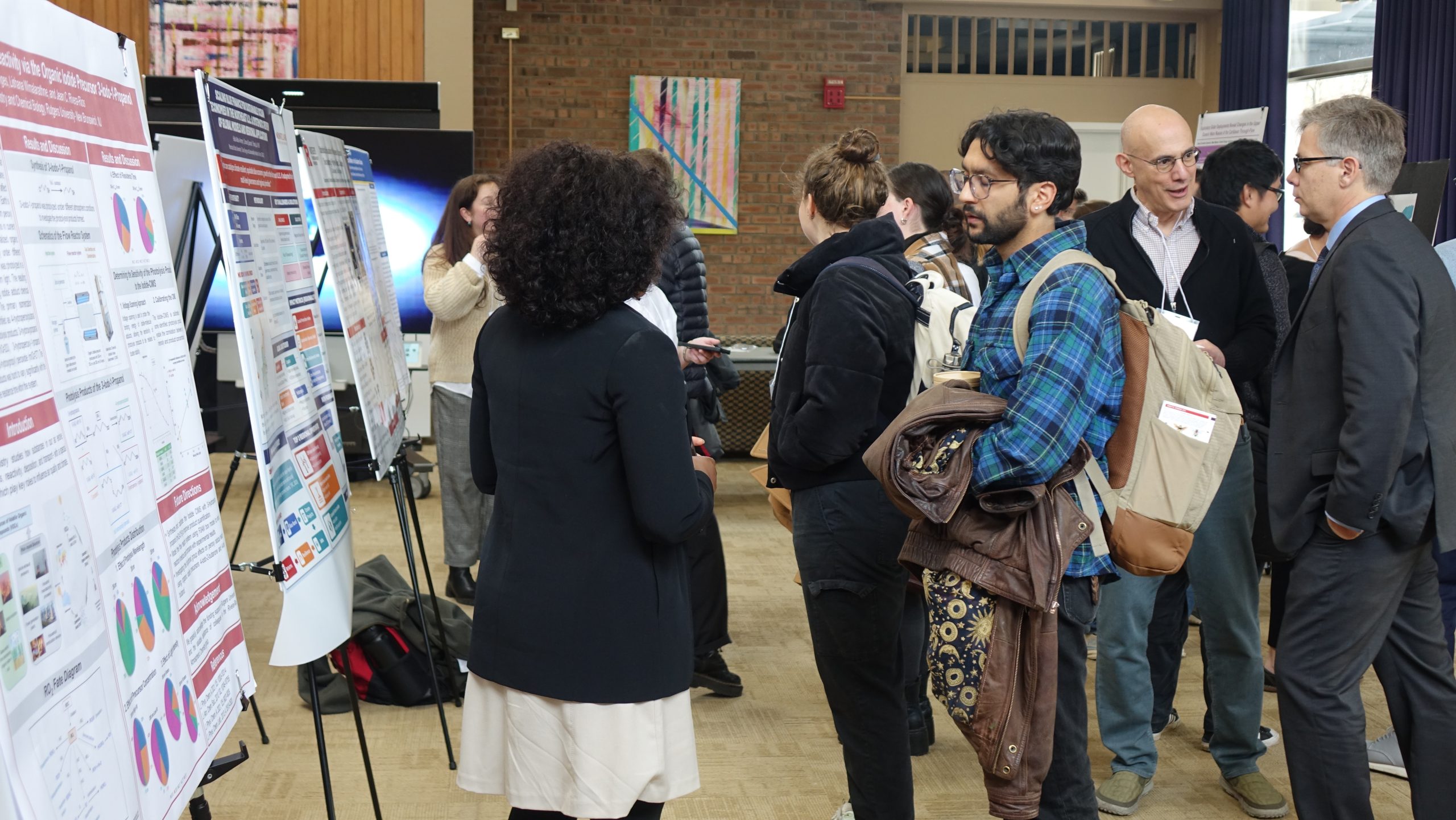
A dynamic afternoon poster session provided opportunities for sharing scholarly work on climate change and energy by researchers from throughout the Mid-Atlantic Region. The call for posters allowed for any topic related to climate change or renewable energy, not restricted to the theme of the Symposium. The 35+ posters presented showcased diverse research addressing ocean and coastal challenges, sustainable technologies, and climate adaptation strategies.
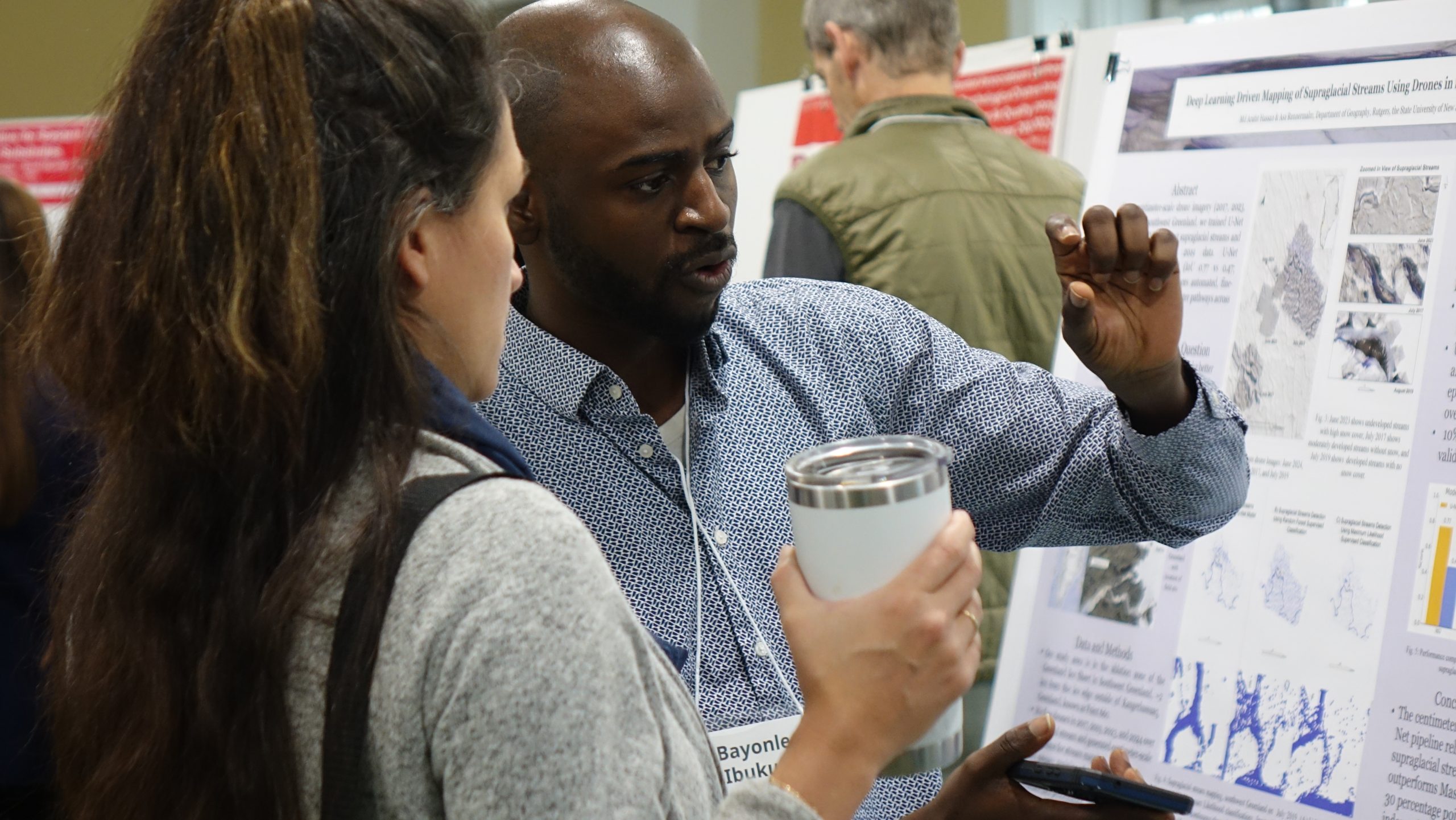
Several themes emerged from the poster presentations. Ocean health and marine ecosystems were prominent topics, with researchers presenting work on coral reef health diagnostics (Arroyo et al.), harmful algal bloom toxin tracking in New Jersey waters (Macchioni), Sargassum (seaweed) degradation dynamics (Nandi et al.), and supraglacial stream detection in Greenland using deep learning (Hassan et al.).
Sustainable materials and circular economy solutions featured prominently, including multiple presentations on low-carbon concrete alternatives. Researchers presented innovations in recycled carbonate concrete (Campbell), concrete waste recovery through mechanical processes (Dissanayaka Mudiyanselage et al.), and evaluation of low-carbon cement for oyster reef restoration (Jacobs et al.). Zhou and Li's work on cement recovery from waste concrete demonstrated significant potential for carbon reduction while maintaining economic competitiveness.
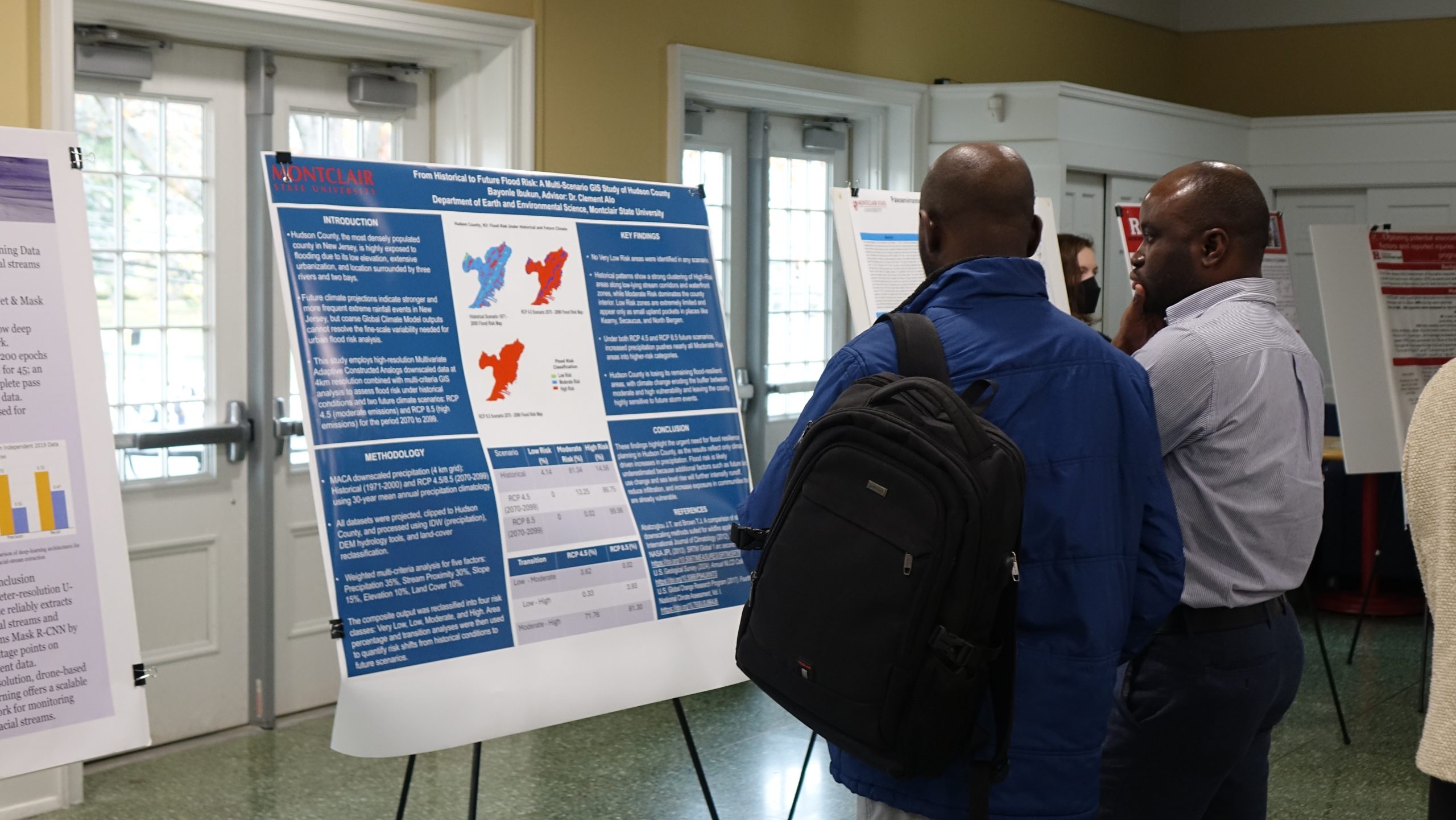
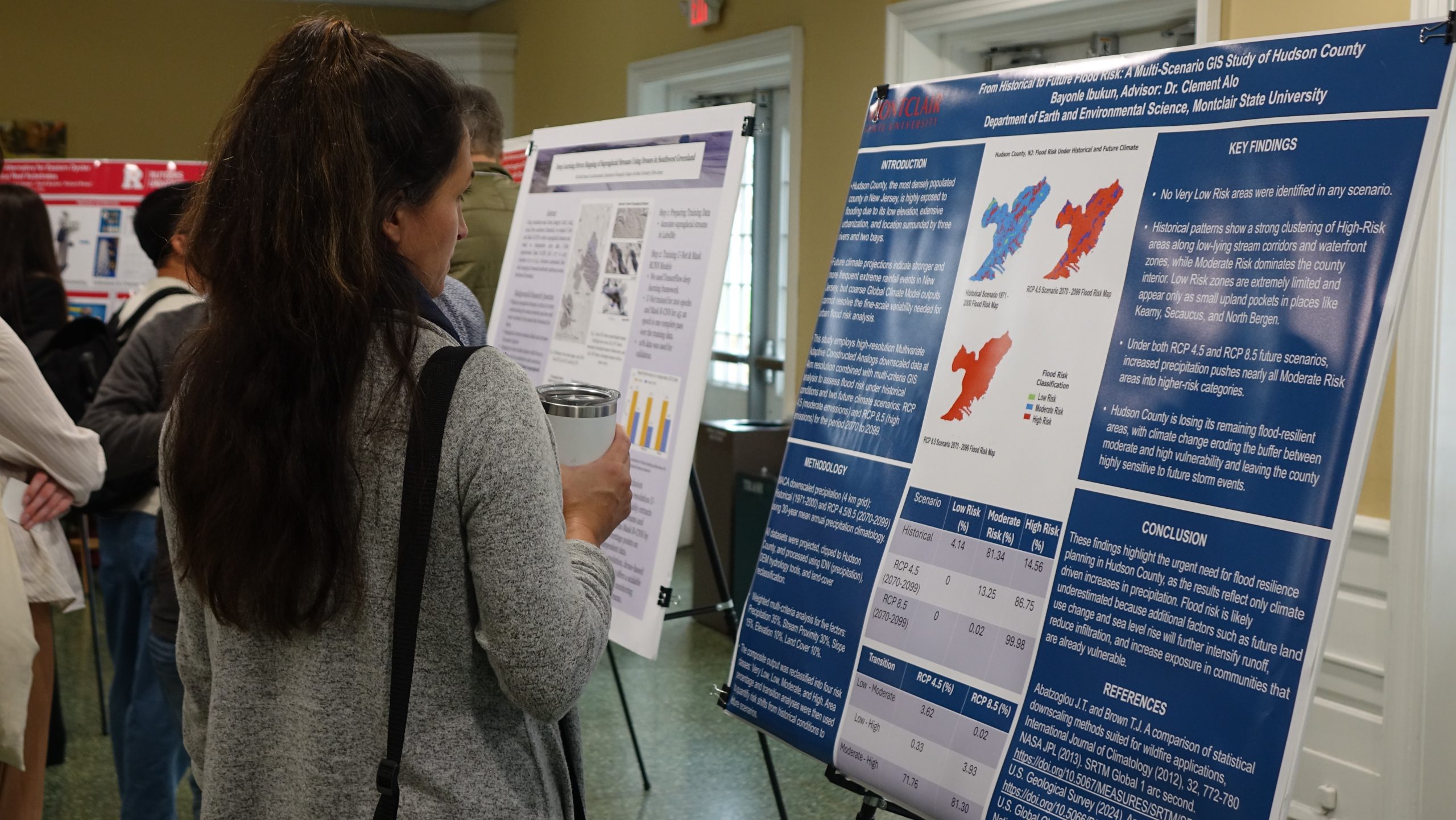
Climate impacts and adaptation strategies were explored across multiple scales, from local flooding risk assessments in Hudson County (Ibukun and Alo) to broader analyses of the Caribbean through-flow warming (Gradone et al.) and Southern Ocean vertical motions (Feinstein and Liang). Several posters addressed green infrastructure and community resilience, including community perceptions of flooding and green stormwater infrastructure in Wilmington, Delaware (Tripuraneni et al.).
Energy systems and decarbonization pathways were represented through research on distributed energy resource control (Zhang and Mieth), pest management modeling under future climate scenarios (Shope et al.), and blue finance mechanisms for sustainable ocean economies in the Northeast U.S. (Afeku-Amenyo and Lal).
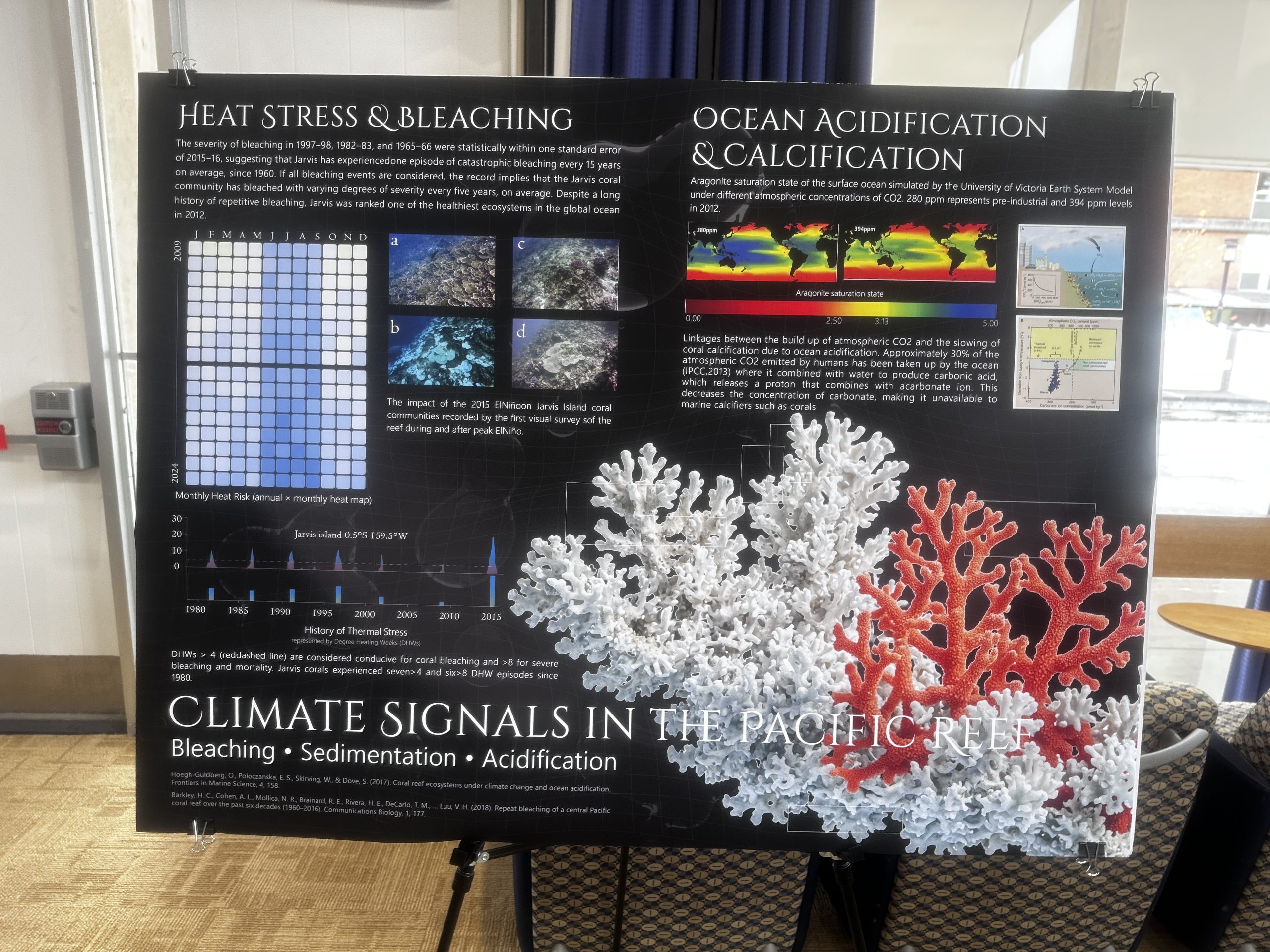
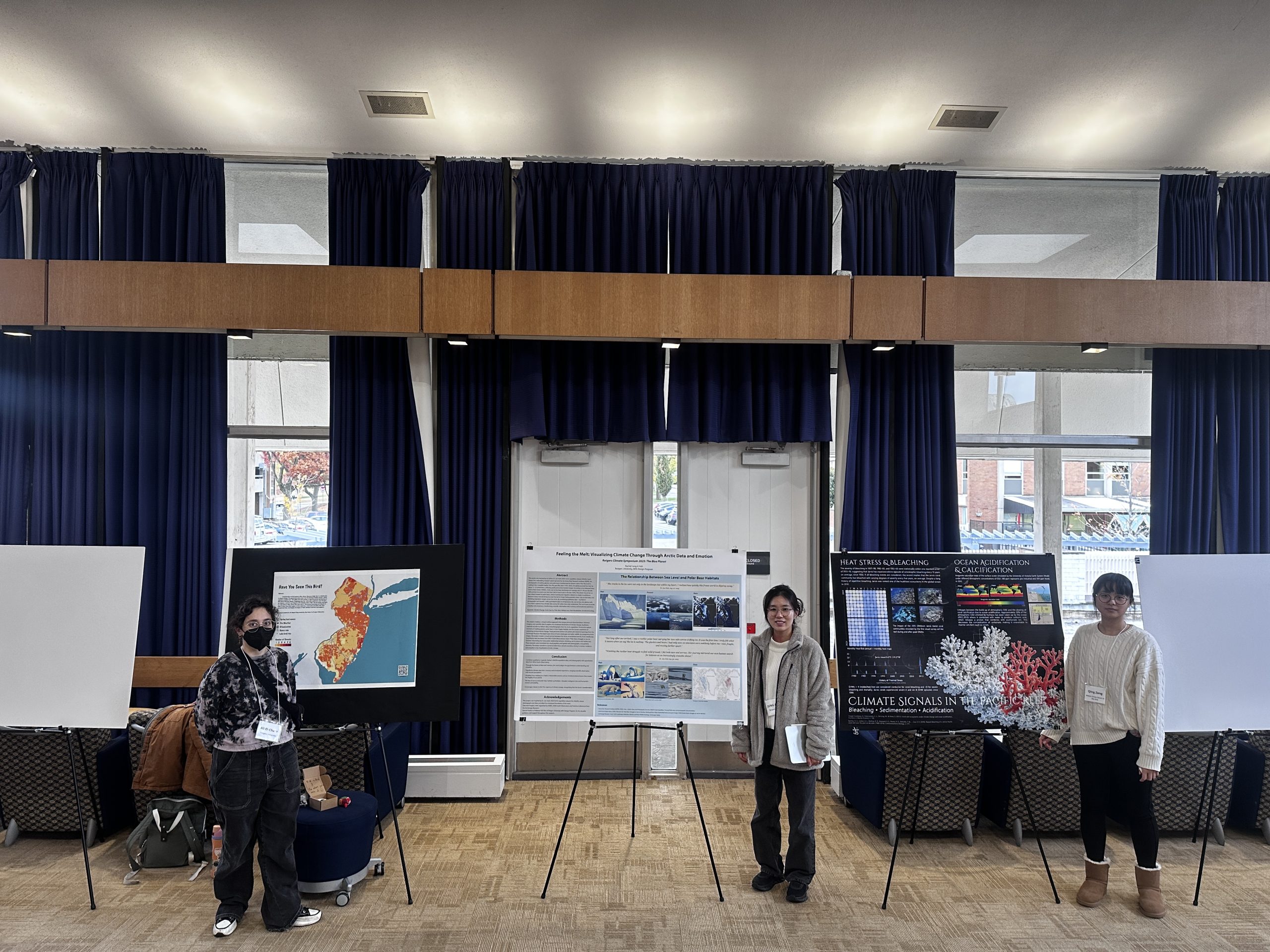
Students from the Mason Gross School of the Arts presented visual displays of quantitative data to enhance communications of climate and energy research (Huh; El-chaer; and Zeng). Also designed and displayed were music videos related to climate change that were created by Professor Akin’s students.
As one graduate student noted about previous symposia, "The RCEI Symposium provided me with the ability to meet potential collaborators across other disciplines who I wouldn't have met otherwise."
RCEI's annual climate symposium is an event that is free to attendees. It is supported in part by the Frank Sposato Memorial Endowment. To learn more about sponsorship options for a future Climate Symposium, visit here.
Rutgers Climate Symposium 2025
The Blue Planet
Douglass Student Center, New Brunswick, NJ
November 12, 2025
AGENDA
| 8:15 AM | Check-In (1st Floor Lobby) Poster Session Set-up (Douglass Lounge, 2nd Floor) Light Breakfast (Trayes Hall, 1st Floor) |
| 9:00 AM |
Welcome and Plenary I (Trayes Hall, 1st Floor) Welcome
Julie Lockwood, Director, Rutgers Climate and Energy Institute Climate and the Deep Blue Sea: Improving Prediction
Joellen Rusell, Distinguished Professor, and the Thomas R. Brown Distinguished Chair of Integrative Science in the Department of Geosciences, University of Arizona |
| 10:00 AM |
Plenary II (Trayes Hall, 1st Floor) History As a Tool for Addressing Climate Change
Helen Rozwadowski, Professor of History and founder of the Maritime Studies program at the University of Connecticut, Avery Point |
| 10:30 AM | Break |
| 10:45 AM |
Plenary III (Trayes Hall, 1st Floor) Powering and Cooling Data Centers Using Ocean Renewable Energy
Jason Cotrell, Founder and CEO, Sperra |
| 11:15 AM |
Plenary IV (Trayes Hall, 1st Floor) International Court Climate Change Opinions, Ocean Treaties: What’s Science Got to Do with It?
Cymie Payne, Professor in the Department of Human Ecology and at Rutgers Law School, Rutgers, The State University of New Jersey |
| 11:45 AM | Plenary Speakers Panel (Trayes Hall, 1st Floor) |
| 12:30 PM | Lunch (Trayes Hall, 1st Floor) |
| 1:30 PM | Poster Session (Douglass Lounge and NJC Lounge, 2nd Floor) |
| 3:00 PM | Adjourn |
Rutgers Climate Symposium is made possible through the generous support of the
Frank Sposato Memorial Endowment.
Learn how to become a sponsor at go.rutgers.edu/sponsor-climate-symposium.

Jason Cotrell
Jason Cotrell is the Founder and CEO of Sperra. He founded Sperra, originally RCAM Technologies, in 2017 after beginning his renewable energy career at NREL in 1995. With 30 years in the field, Jason focuses on turning breakthrough concepts into ocean energy infrastructure that scales. Sperra is at the forefront of the ocean energy industry with cutting-edge, locally manufactured infrastructure solutions. Under Jason’s leadership, Sperra has now reached commercialization stage for several 3D concrete-printed products, including gravity anchors for offshore wind and floating solar deployments, foundations for canal solar. Jason also leads the development of high-impact, emergent technologies such as the Floating Construction Station and solar-powered data centers.
Cymie Payne
Cymie Payne is Professor at Rutgers University, and a member of the Department of Human Ecology, SEBS and the Law School. She teaches climate change law and policy, international environmental law and policy and U.S. environmental law and policy. She publishes extensively on global governance of the environment and natural resources and the consequent evolution of international law, with a focus on ocean governance, climate change, and protection of the environment in relation to armed conflict.
As Chair of the Ocean Law Specialist Group of the International Union for Conservation of Nature (IUCN), World Commission on Environmental Law, Payne leads IUCN’s work on legal aspects of the Biodiversity Beyond National Jurisdiction Agreement. She led the team for IUCN’s submission to the International Tribunal for the Law of the Sea in its 2024 advisory opinion case on climate change and she has provided expert advice on environmental liability and reparations before courts including the International Court of Justice. She is a member of the Atrocity Crimes Advisory Group for Ukraine.
Payne is a Fellow of the American College of Environmental Lawyers; served as Chair of the American Society for International Law’s Steering Committee for the Signature Topic “Beyond National Jurisdiction”; was a member of the International Law Association Committee on Sustainable Natural Resource Management; and is a recipient of the 2025 Nicholas Robinson Award for Excellence in Environmental Law and Policy. She holds a Master’s degree from The Fletcher School of Law and Diplomacy and a Juris Doctor from the University of California, Berkeley.
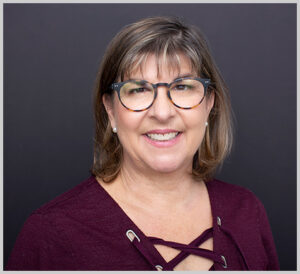
Helen Rozwadowski
Helen M. Rozwadowski is a professor of History and founder of the Maritime Studies program at the University of Connecticut, Avery Point. She graduated from Williams College and received her M.A. and Ph.D. from the University of Pennsylvania in 1996. Her teaching includes environmental history, history of science, and public history, as well as interdisciplinary maritime studies courses.
Her latest book, Vast Expanses: A History of the Oceans (2018), demonstrates that the human relationship with the ocean began in evolutionary time and has tightened dramatically since then, aims to provide a model for writing ocean history, and argues that ocean histories must examine and historicize the technologies and knowledges systems that enabled and accompanied human interactions with the sea. Her book, Fathoming the Ocean: The Discovery and Exploration of the Deep Sea (2005), which reveals the simultaneous scientific and cultural discovery of the ocean’s depths in the mid-nineteenth century, won the History of Science Society’s Davis Prize for best book directed to a wide public audience. She has written a history of 20th-century marine science, The Sea Knows No Boundaries (2002), a history of 20th-century marine sciences supporting international fisheries policy. She has co-edited three volumes that have helped establish the field of history of oceanography: Soundings and Crossings: Doing Science at Sea 1800-1970 (2017), The Machine in Neptune’s Garden: Perspectives on Technology and the Marine Environment (2004), and Extremes: Oceanography’s Adventures at the Poles (2007).
Rozwadowski has worked in the past both as a public historian and also in academia. She won the Ida and Henry Schuman Prize from the History of Science Society, was awarded the William E. & Mary B. Ritter Fellowship of the Scripps Institution of Oceanography, has been a guest researcher at the University of Oslo, and has received grants and fellowships from the Rachel Carson Center for Environment and Society, the UConn Humanities Institute, National Endowment for the Humanities, National Science Foundation, and the Smithsonian Institution.

Joellen Russell
Prof. Joellen Russell is an oceanographer and climate scientist, a Distinguished Professor, and the Thomas R. Brown Distinguished Chair of Integrative Science in the Department of Geosciences at the University of Arizona. Her research uses robot floats, supercomputers and satellites to observe and predict the ocean’s role in climate and the carbon cycle. Dr. Russell is the modeling lead for the Southern Ocean Carbon and Climate Observations and Modeling project (SOCCOM) and is the current US Representative to the International Association for the Physical Sciences of the Oceans (IAPSO). She is also one of the founding members of Science Moms (sciencemoms.com), a “group of nonpartisan climate scientists and mothers, working to give our children the planet they deserve.” Before joining UA, Dr. Russell was a Research Scientist at Princeton University and the National Ocean and Atmospheric Administration’s Geophysical Fluid Dynamics Laboratory (NOAA/GFDL). She received her PhD in Oceanography from Scripps Institution of Oceanography, University of California, San Diego, and her A.B. in Environmental Geoscience from Harvard.
| Authors | Title | Abstract | Link to Poster PDF |
|---|---|---|---|
| Hilda Afeku-Amenyo, Montclair State University Pankaj Lal, Montclair State University | Scaling Blue Finance for Sustainable Ocean Economies in the Northeast U.S.A : A Systematic Review of Global Models and Regional Applications | Coastal regions in the Northeastern United States face escalating environmental risks; including sea level rise, intensifying storms, and ecosystem degradation, while supporting a $100+ billion blue economy rooted in fisheries, offshore wind, maritime trade, and coastal tourism. Innovative financial mechanisms are urgently needed to fund climate-resilient, ocean-positive development. Blue bonds, debt instruments that channel capital toward marine conservation and sustainable ocean economies, offer a promising but underutilized tool in developed economies. This study conducts a systematic comparative analysis of five global blue bond case studies (Seychelles, Nordic Investment Bank, Bank of China, Indonesia, and Ecuador) across ten criteria, including financial structure, governance, environmental impact, and scalability, to identify transferable lessons for the Northeast U.S. Findings reveal high-potential applications in three areas: (1) financing offshore wind infrastructure and marine spatial planning, (2) deploying nature-based solutions (e.g., oyster reefs, wetland restoration) for coastal resilience, and (3) supporting transitions to sustainable fisheries and aquaculture. Critical success factors include standardized impact metrics (e.g., Coastal Protection Index, Sustainable Fisheries Yield), multistate coordination, and blended finance models that de-risk investments. Key barriers such as market immaturity, regulatory fragmentation, and risks of “blue washing” are identified. The study concludes with actionable recommendations resilience-linked bond structures that align with NOAA and state climate adaptation plans. | Poster PDF |
| Miriam Arroyo, Rutgers University Koosha Karimi, Rutgers University Erin Chille, Rutgers University Timothy Stephens, Rutgers University Debashish Bhattacharya, Rutgers University | Development of a point-of-care tool for diagnosing coral reef health | Coral health decline, due to stress or disease, is a serious and prevalent issue, with most coral reefs globally affected. Rising ocean temperatures and acidification causes significant metabolic stress to corals, increasing their mortality and weakening the health of survivors, elevating the rate of total ecosystem collapse. No tools currently exist for rapid, early detection of stress before visual decline and death occurs, preventing proactive management and conservation practices by local communities. Thus, our project focuses on the development of point-of-care tools for the diagnosis of coral health status. One goal is to utilize nucleic acid-based detection of stress or disease in corals, through loop-mediated isothermal amplification (LAMP). This approach requires less technical equipment and reagents than traditional polymerase chain reaction (PCR) amplification. The low reagent requirement increases the suitability for use in low resource areas. These regions are often devastated by the loss in food and employment opportunities due to climate change but are least able to mitigate its impacts. We have shown that the LAMP-based approach is sensitive and specific for a model template sequence in a laboratory setting, demonstrating its potential for field applications with coral specific markers. | Poster PDF |
| Nathanel O. Aviges, Rutgers University Lishana Wimalarathne, Rutgers University Jean C. Rivera-Rios, Rutgers University | Investigating the Peroxy Radical Reactivity via the Organic Iodide Precursor 3-Iodo-1-Propanol | Ozone and hydroxyl radicals are crucial for atmospheric chemistry, as they oxidize organic molecules like carbon monoxide and methane - which have radiative effects on climate. They react with volatile organic compounds (VOCs), affecting the greenhouse and albedo effect. Thus, understanding ozone and hydroxyl radicals is vital for studying climate change. A source of hydroxyl radicals is peroxyl radicals, which are difficult to measure due to factors such as short lifespans and inconsistencies. Peroxyl radical research is limited to alkyl radicals, which do not reflect atmospheric environments. This study focuses on functionalized organic iodide precursor 3-iodo-1-propanol and its reactivity under different atmospheric conditions. The organic iodide precursor was photolyzed in a flow reactor using 254 nm, 300 nm and 350 nm light. The resulting products were monitored and quantified using iodide adduct chemical ionization mass spectrometry (I--CIMS). The primary isomerization product formed upon photolysis was identified as 4-hydroperoxybutanal (m/Q = 217), the major bimolecular photolysis products 3-hydroxypropanal (m/Q = 201), 1,3-propanediol (m/Q = 203), 3-hydroperoxy-1-propanol (m/Q = 219), and the dimer bis(3-hydroxypropyl) peroxide (m/Q = 277). The distribution of photolysis products was found to vary significantly with the three wavelengths and the residence time within the flow reactor system. | Poster PDF |
| Simin Bazargan, Sacred Heart University | Multi-Dimensional Strategic Curriculum Studies of Our Planet’s Wonders Project | The Multi-Dimensional Strategic Curriculum Studies (MDSCS) framework, applied within the Our Planet’s Wonder Project (PWP_MDSCS), integrates science, art, and technology and its innovations to foster environmental awareness and sustainable learning from early childhood through lifelong education. This project represents a proactive and flexible curriculum, in which the aim is the acquisition of meta-cognitive abilities in life as a strategy to facilitate learners’ participation in the cycle of wisdom management, through transformative interaction among bases, principles, factors, and adaptable elements in both theoretical and practical dimensions of curriculum studies. The framework connects interdisciplinary themes through inquiry, creativity, and reflection, emphasizing process-based evaluation of learners’ skills, attitudes, and values toward sustainability. To date, 22 theses and more than 100 articles and workshops have been developed based on this approach, demonstrating its adaptability across cultural and educational contexts. It highlights that fostering transformative relationships with the environment requires flexible learning spaces that integrate lifelong, cross-curricular themes through the living and non-living components of our planet, using artistic and technological discovery-based methods. This holistic vision positions environmental education as a foundation for sustainable thinking, scientific reasoning, creative problem-solving, and human–nature harmony. The author welcomes opportunities for collaboration and shared research. | Poster PDF |
| Sarah Beganskas, Delaware River Basin Commission (DRBC) Joseph Fogarty, DRBC Sara Sayed, DRBC Elizabeth Brown, DRBC Jacob Bransky, DRBC Eric Engle, DRBC Amanda Khalil, DRBC Naomi Mendelsohn, DRBC Raveena Pachucki, DRBC | Advancing the climate resilience of water resources in the Delaware River Basin | The Delaware River Basin Commission (DRBC) is developing a Water Resources Resilience Plan that adapts the traditional climate resilience plan framework to apply to Basin-wide water resources. The 13,500-mi2 Delaware River Basin provides drinking water for 14.2 million people in New York, New Jersey, Pennsylvania, and Delaware. As the federal-interstate agency charged with managing, protecting, and improving shared water resources in the Basin, the DRBC is well poised to convene partners to advance the resilience of these resources. The DRBC began collecting input to inform the plan’s scope in December 2024, hosting an online comment card and 12 listening sessions. So far 150 Basin stakeholders have shared their thoughts. In subsequent phases, a vulnerability assessment will explore how seven broad water resource assets—streamflow, groundwater, reservoir storage, water quality, salinity gradient, aquatic life, and habitat—are most vulnerable to climate change-driven hazards, including flooding, drought, saltwater intrusion, and wildfire. A gap analysis will define a goal outcome for each asset, outline a pathway for achieving that outcome, and identify any gaps in knowledge, equity, or action that need to be addressed. Recommended actions that DRBC can take to improve climate resilience will be drawn from these gaps. | Poster PDF |
| Richie Campbell, Rutgers University | Recycled Carbonate Concrete | Developing fully recycled, low-carbon concrete provides a path toward sustainable construction and contributes to lowering the annual global CO₂ emissions produced by traditional concrete production. This research investigates the integration of concrete waste materials into wollastonite-based concrete formulations that harden through carbonation curing. Waste concrete was crushed and sieved into three particle size fractions before being incorporated into wollastonite-based concrete mixtures. These mixtures exhibited compressive strengths comparable to structural concrete. Formulations containing wollastonite, 3/8” aggregate, sand, and crushed concrete rubble achieved a baseline compressive strength of 10 ksi (68+ MPa) with peak values exceeding 12 ksi (80 MPa) for 3” × 6” cylinders after carbonation curing. In addition, concrete waste was used as a full replacement for sand and aggregate. A formulation containing only wollastonite and concrete waste exceeded 7 ksi (49 MPa) after carbonation curing. The incorporation of concrete rubble into these materials warrants further research and experimentation to optimize the use of recycled waste in carbonate concrete products. | Poster PDF |
| Deepangsu Chatterjee, Rutgers University Xiaomeng Jin, Rutgers University Randall V. Martin, Washington University Chi Li, Washington University Daven Henze, University of Colorado Boulder | Top-down NOx emissions using Resolution Optimized Mass Balance Approach (ROMBA) | Nitrogen Oxide (NOx) emission estimates from bottom-up inventories have considerable uncertainties. Space-based observations of NO2 columns offer information on surface NOx emissions through inverse modeling techniques such as the iterative finite difference mass balance (IFDMB) method. In this study, first, we evaluate the effective horizontal resolution for IFDMB method by conducting inversion experiments using the high-performance configuration of the GEOS‐Chem chemical transport model (GCHP). We simulate synthetic NO2 column density as observed by the Tropospheric Ozone Monitoring Instrument (TROPOMI) over eastern North America to test the ability of the IFDMB method to recover known NOx emissions as a function of resolution. Our synthetic tests with horizontal resolutions of 200 km, 100 km, and 55 km grids for June-August 2019 reveal that 100 km horizontal resolution simulations can recover the “true emissions” with a normalized mean error (NME) of 15.4% as compared to 200 km (NME = 16.4%) and 55 km (NME = 19.7%) grids after six iterations (no further change in tolerance). We further use this resolution-optimized mass balance approach (ROMBA) to retrieve surface NOx emissions using TROPOMI observed NO2 columns for June-August 2019. We use TROPOMI observed NO2 columns for June-August 2019 and GCHP simulated a priori at 100 km horizontal resolution to derive top-down NOx estimates. Our global a posteriori estimates for June-August 2019 land surface NOx emissions (42.1 Tg NO2) agrees closely with the CEDSv2 a priori (38.4), with the highest agreement over the eastern United States (10-15%). We observed significant regional differences with higher a posteriori NOx emission (30–60%) in the northern part of South America and Africa, southern Europe, western Canada and the United States, and the Middle-East. We observe lower a posteriori NOx emission (50-100%) over southern parts of South America, Africa, and India, and eastern parts of Europe and China. | |
| Gwen DelJones, Rutgers University Noemie Denis, Rutgers University Richard Riman, Rutgers University | Statistical Evaluation of Mixedness in a Carbon Sequestering Polymer-Ceramic Composite | To fabricate a polymer-ceramic material, a powder mixture of the two components is mixed in a Spex mill. Through a low-temperature solidification method, Gas-Reactive Hydrothermal Liquid Phase Densification (g-rHLPD), the composite strengthens and can sequester 0.38g of CO2 per gram of starting ceramic powder. The polymer is introduced into the ceramic matrix as a mechanism to induce toughness. The uniform distribution of polymer particles throughout the matrix is essential to inducing desirable and consistent mechanical properties. A methodology has been developed to statistically evaluate the accuracy of mixing within one batch in the Spex mill. 30 random samples from one batch were collected. Using a simultaneous thermal analysis (STA), the polymer fraction of these mixtures was burned off and quantified. The average mass loss for the set of thirty samples is found to be 5.92% ± 0.213 and is compared to 5.74%, the expected mass percent of polymer, through a t-test. For a significance level of 0.05, the resulting p-value is equal to 0.999, which indicates that there is no statistically significant difference between the average percent mass loss and the expected value. As a follow-up, 4 mixed batches will be evaluated for the batch-to-batch consistency of the mixtures. | Poster PDF |
| Ranuri S. Dissanayaka Mudiyanselage, Rutgers University Paul Antonick, Rutgers University Richard E. Riman, Rutgers University | A Novel Mechanical Process for Sustainable Concrete Recycling | Concrete, the most widely used construction material, imposes substantial environmental costs due to its high demand for natural resources, significant greenhouse gas emissions, and the generation of large volumes of concrete and demolition waste. A sustainable strategy to mitigate these impacts involves cleanly separating concrete’s constituent phases; cement hydrates, sand, and aggregates at the end of their life cycle for reuse in new formulations without compromising structural integrity. Conventional physical separation methods, such as electric pulse fragmentation, magnetic separation, thermal activation, and specialized crushing, encounter numerous energy, economic, and environmental challenges. This study investigates a novel mechanical process as an energy-efficient, low-cost method for selectively separating cement hydrates from aggregates in concrete rubble. It leverages the particle–particle collisions, promoting selective fracture based on intrinsic material property differences among concrete components. Preliminary results demonstrate that in less than ten minutes, the process produces smooth, clean aggregates concentrated in the coarser size fractions, while cement hydrate accumulate in the finer fractions. Although early trials showed some contamination of the cement hydrate, the results encourage that further process optimization could achieve efficient, selective separation and advance circularity in concrete recycling. | Poster PDF |
| Amy A. Ekka, Rutgers University Kate M. Waldie, Rutgers University | Exploring the Role of Hydricity for Iridium-Catalyzed Electrocatalytic Hydrogenation? | Electrocatalytic hydrogenation is an emerging sustainable alternative to traditional thermal hydrogenation, with potential application in biofuel upgrading, renewable energy storage with liquid organic hydrogen carriers, and fine chemical synthesis. Transition metal-hydride complexes provide a valuable platform for mechanistic investigations into the key electron and hydrogen transfer processes involved in the electrocatalytic hydrogenation reaction. A central focus lies in understanding how catalyst properties influence thermodynamic and kinetic hydricity, where the former represents the reaction free energy for heterolytic H– release (ΔGH–) and the latter governs the hydride transfer rate to a given hydride acceptor. Linear free energy relationships (LFERs), which correlate thermodynamic and kinetic parameters, can be employed to elucidate structure-activity relationships and guide further catalyst optimization. Our group has focused on [Cp*Ir(bpy)H][PF6], a known thermal hydrogenation and transfer hydrogenation catalyst and is also an active electrohydrogenation for reduction of carbonyl compounds. This complex has ΔGH− = 62 kcal/mol and pKa = 23.3 in MeCN. In this research, hydride transfer from a family of iridium-hydride complexes to four organic hydride acceptors N-methylacridinium, 10-Methyl-9-phenylacridinium, trityl, and 3,5-Bis(ethoxycarbonyl)-1,2,6-trimethylpyridinium that was confirmed by 1H-NMR spectroscopy, with reactions complete within 15 minutes, indicating thermodynamic favorability. | Poster PDF |
| Ali El-Chaer, Rutgers University | Have you seen this bird? | I analyze data on bird species in New Jersey that are at high risk of extinction due to climate change. The quantitative data come from the National Audubon Society, whose scientists compiled over 140 million bird observations to map the current distributions of 604 North American species. Complementing this, I will collect qualitative data through a participatory activity: participants will randomly select a high-risk bird species and mark on a map where in New Jersey they have seen it. This process encourages participants to reflect on how these birds appear in their daily lives, recall when and where they have encountered them, and imagine the impact of their absence from local environments. | |
| Maya Feinstein, Rutgers University Xinfeng Liang, University of Delaware | Vertical Motions in the Southern Ocean | Vertical motions (i.e., upwelling and downwelling) are crucial for the Southern Ocean's role in global ocean circulation and climate, as they govern the transport of heat, carbon, and nutrients. However, a comprehensive analysis of their variability is still needed. This study investigates the spatial and temporal variability of vertical velocities in the Southern Ocean using the ECCOv4 ocean state estimate. At the surface, there is a large-scale pattern of upwelling south of ~55°S and downwelling to the north, consistent with conventional wind-driven patterns. In deeper layers, this pattern is less uniform, with topography emerging as a key driver. We also find significant temporal variability on interannual scales, with potential links to the Southern Annular Mode and the El Niño-Southern Oscillation (ENSO). We find that positive SAM phase is moderately correlated with enhanced upwelling south of ~60°S and increased downwelling to the north. A moderate negative correlation exists between the Niño 3.4 Index and vertical velocity across most of the Pacific sector south of 50°S, indicating that El Niño conditions tend to suppress upwelling in this region. These findings suggest that SAM and ENSO can exert opposing influences on vertical mass transport in the Southern Ocean. This research provides a clearer picture of the vertical motions and mechanisms controlling vertical exchange in this climatically vital region. | Poster PDF |
| Isaiah Gangadeen, Joseph R. Biden, Jr. School of Public Policy & Administration, University of Delaware Kalim U. Shah, Joseph R. Biden, Jr. School of Public Policy & Administration, University of Delaware | Resource Curse and Emissions Pathways: An Emissions Decomposition of the Effects of Oil Production on Tropical Oil Producing Countries | Resource booms ultimately reshape the structural composition of an economy. With sectors having varied relative economic and environmental contributions, these resource-induced structural changes also affect emissions pathways. We utilize a generalized synthetic control model and the KAYA identity to provide a harmonized methodology for assessing commercial oil production in tropical countries affects the structural composition, population, carbon intensity, energy intensities and total emissions trajectories. We extend the growing literature that combines treatment-effect modeling and emissions decomposition. We find evidence of the adverse effects of oil production on the agriculture and services sectors, alongside significant industrialization. Energy intensity also falls significantly below their counterfactual levels, but this sustainability improvement alongside and reductions in non-extractive sectors are insufficient to offset the higher emissions from economic expansion and increasing GHG intensity. Our findings support the mediating role of government policy and income distribution, and the potential for low-carbon development. | |
| Oleksiy Golub, Rutgers University | Scaling the Carbonation Of Cementitious Materials Using Plastic Forming | Scaling the Carbonation of Cementitious Materials Using Plastic Forming One of the major challenges in sequestering CO2 by carbonation with cementitious materials is effectively scaling the procedure to be attractive for large scale adoption. The research attempts to create an analytical way of inducing plasticity in the cementitious materials so that low cost production methods, such as extrusion, become possible. A sample workable system was developed by controlling particle interactions such as particle size and measuring the resulting properties. The resulting system was able to be hand formed and demonstrated shear thinning behavior under shear. Further investigation will focus on improving the cohesion of the resulting system and testing the methodology on other cementitious materials. | |
| Joe Gradone, Rutgers University Travis Miles, Rutgers University Scott Glenn, Rutgers University Doug Wilson, University of the Virgin Islands Jaime Palter, University of Rhode Island | Warming and salinity changes of the upper ocean Caribbean through-flow since 1960 | The Caribbean Through-Flow (CTF) is a critical conduit linking tropical and subtropical Atlantic waters, modulating the exchange of heat and freshwater between low and high latitudes. Using historical observations since 1960, we document pronounced changes in upper-ocean water mass properties within the CTF: subsurface warming of ~0.2 °C decade⁻¹, surface freshening of ~0.13 g kg⁻¹ decade⁻¹, and subsurface salinification of ~0.05 g kg⁻¹ decade⁻¹. In the upper 0–200 m, temperature and stability increases are nearly three and twenty times larger, respectively, than global averages, underscoring the region’s outsized sensitivity to climate forcing. These shifts alter stratification, water mass transformation, and downstream export to the North Atlantic Subtropical Gyre, with potential consequences for the Atlantic Meridional Overturning Circulation (AMOC) and Atlantic-wide heat and salt budgets. By identifying the CTF as both a bottleneck and amplifier of upper-ocean change, our results highlight its role in Atlantic connectivity and stress the need for sustained subsurface observations to constrain the pathways and variability of climatically important water masses. | Poster PDF |
| Da Guo, Rutgers University Christopher R. Hakkenberg, University of California, Los Angeles Xiaojing Tang, James Madison University Jianmin Wang, Purdue University Chi Chen, Rutgers University | A GEDI-informed Canopy Overstory and Understory Plant Area Index Product with Spatiotemporal Continuity | Understanding the vertical structure of vegetation is essential for quantifying photosynthesis, transpiration, and carbon–water exchange. The Global Ecosystem Dynamics Investigation (GEDI) lidar provides detailed canopy vertical profiles but with limited spatial and temporal coverage, constraining its ability to monitor global structural dynamics. To overcome this limitation, we developed the GEDI-informed Two-Layer Canopy (GTLC) Plant Area Index (PAI) dataset by integrating GEDI canopy profiles with MODIS Nadir BRDF-Adjusted Reflectance and ancillary environmental variables using a random forest framework. The GTLC PAI provides monthly estimates of overstory (above 5m) and understory (below 5m) PAI at 0.005° (~500 m) resolution from 2001 to 2022. Validation against airborne lidar data and field-measured LAI demonstrates robust accuracy. The GTLC product reveals not only widespread terrestrial greening but also substantial vertical heterogeneity in forest structural changes across seasonal and annual timescales. By bridging footprint-scale lidar and global optical observations, the GTLC dataset enables large-scale monitoring of forest vertical structure and provides new opportunities to investigate ecosystem resilience, carbon dynamics, and vegetation–climate interactions. | |
| Shreya Gupta, BA, Rutgers Robert Wood Johnson Medical School Catherine Chen, MD, Rutgers University Hospital, Department of Medicine | Climate Impact of Subcutaneous vs. Oral Anticoagulants: A Comparative Waste Assessment | Background: Healthcare systems are responsible for 8.5 percent of total greenhouse gas emissions in the United States, and this has increased six percent from 2010 to 2018. Of this, pharmaceuticals account for 18 percent. Anticoagulants are used to prevent and treat blood clots and are available in subcutaneous (sub-Q) or oral (PO) forms. Sub-Q and PO forms may have different impacts on climate health and formal life cycle assessment (LCA) can support the sustainable usage of medications. Objective: To quantify the difference in waste produced through sub-Q versus PO anticoagulant administration in the inpatient setting in preparation for an LCA. | Poster PDF |
| Md Arafat Hassan, Department of Geography, Rutgers the State University of New Jersey, NJ, USA Asa Rennermalm, Department of Geography, Rutgers the State University of New Jersey, NJ, USA Md Ruman Islam, Department of Computer Science, University of Nebraska at Omaha, NE, USA Sasha Leidman, U.S. Geological Survey, Science Publishing Network, Moffett Field, CA, USA Pei-Chi Huang, Department of Computer Science, University of Nebraska at Omaha, NE, USA | Detecting Supraglacial Streams in Southwest Greenland Using Drone Imagery and Deep Learning | Supraglacial streams on the Greenland ice sheet transport meltwater, accelerate surface melting, and route meltwater into the ice sheet's subsurface, causing fluctuations in ice sheet velocity. However, fine-scale supraglacial stream detection has faced challenges because prior studies rely on coarse-resolution satellite images and manual detection techniques. In this study, we use high-resolution drone imagery from a study site in the southwest Greenland ice sheet. Three years of imagery were analyzed (2017, 2023, and 2024), each representing a range of melting conditions. Manual classification of this imagery was used to train two different types of deep learning (DL) segmentation models to identify pixels corresponding to supraglacial streams. The first was a semantic segmentation model called U-Net, which classifies each pixel as stream or non-stream without distinguishing between separate stream objects. The second was an instance segmentation model called Mask R-CNN, which identifies and separates individual stream features. The trained DL models were subsequently tested on independent imagery from 2019. Model performance was evaluated using three different geostatistical methods: 1) intersection-over-union (IoU), which quantifies the spatial overlap of predicted and true stream areas, 2) precision and recall, which measure the accuracy and completeness of stream detection, 3) inference speed, which reflects how quickly each model processes the imagery. The U-Net model significantly outperformed the Mask R-CNN model, achieving an IoU of 0.83 on training imagery (precision = ~0.89, recall = ~0.75) compared to an IoU of ~0.52 for Mask R-CNN (precision = ~0.49, recall = ~0.41). When applied to the independent 2019 dataset, the trained U-Net model showed promising generalization (IoU of 0.77 for U-Net, and IoU of 0.47 for Mask R-CNN) beyond the training imagery by accurately classifying supraglacial streams and smaller water bodies in some cases. Separating these features would require additional model refinement. These findings demonstrate that DL models, particularly U-Net, offer a viable and accurate approach for detecting supraglacial streams from drone images. | |
| Chathumini Nadeesha, Rutgers University Sriram Katipamula, Energies and Atomic Energy Commission, France Kate Waldie, Rutgers University | Cobalt Phosphine Complexes for Hydrogen Oxidation | The shift from fossil fuels to sustainable electricity sources is essential for mitigating CO₂ emissions and addressing global energy challenges. Hydrogen fuel is a promising pathway toward sustainable electricity generation, serving as a clean energy carrier that stores energy from renewable sources, such as solar and wind, and later releases it through fuel cells, which produce electricity with water as the only byproduct. Only a few homogeneous transition metal catalysts have been reported for electrochemical H2 oxidation, highlighting a key research gap for fuel utilization. Hydrogen oxidation may proceed via heterolytic H2 splitting where H2 is cleaved into a proton that is transferred to an exogenous base and hydride that is delivered to the catalyst, forming the metal-hydride complex. In this work, we have demonstrated that a cobalt-phosphine complex featuring a pendent-basic ligand reacts with H2 in a heterolytic fashion under ambient pressure in the presence of different bases. Reactivity studies reveal a clear correlation between base strength and formation of the cobalt-hydride complex: stronger bases result in faster conversion via multi-step proton- and electron-transfer equilibria. Furthermore, reactivity studies on the analogous complex without pendent-basic ligand sites showed negligible activity for H2 splitting, indicating the key role of these groups, likely as intramolecular proton relays. | Poster PDF |
| Jung A Huh, Rutgers University | Feeling the Melt: Visualizing Climate Change Through Arctic Data and Emotion | This poster was inspired by my father’s 2025 Arctic expedition aboard ARAON, South Korea’s first icebreaking research vessel operated by the Korea Polar Research Institute (KOPRI). His photographs of melting glaciers and polar bears transformed the distant notion that “the Earth is melting” into a tangible reality. Over the past fifty years (1975–2025), the global sea level has risen by about 11–12 centimeters, reflecting profound environmental change. According to the National Snow and Ice Data Center (NSIDC), Arctic sea ice has been declining at an average rate of 13% per decade, with summer ice extent now less than half of what it was in the late 1970s. This drastic loss of sea ice has a direct impact on polar bears, whose hunting and migration depend on stable ice platforms. Research shows that declining ice cover has led to longer fasting periods, lower cub survival rates, and shrinking population ranges across the Arctic. By combining qualitative data—my father’s photographs and records—with quantitative data on temperature rise, sea ice loss, and glacier melt, this project explores how climate data can be felt rather than only understood. The work seeks to evoke empathy and awareness, transforming scientific information into a sensory and emotional experience. | Poster PDF |
| Juhi Aggarwal, Rutgers School of Public Health and NJ Safe Schools Program Quincy W. Hunter, Rutgers School of Public Health and NJ Safe Schools Program Midhat Rehman, Rutgers School of Public Health and NJ Safe Schools Program Maryanne Campbell, Rutgers School of Public Health and NJ Safe Schools Program | Exploring potential associations between environmental factors and reported injuries in career-technical education programs in New Jersey 2012-2024 | New Jersey (NJ) administrative code requires reporting incidents or injuries to NJ Safe Schools Program (NJSS). Students or teachers sustained injuries from participating in career and technical education programs, on- or off-campus, and required treatment by a licensed medical doctor. In 2012 into 2013, NJSS transitioned physical reporting forms to an online platform, fully implemented by 2014. For 2012-2024, 495 reported injuries analyzed. Ambient/outdoor environmental data were obtained from NJ public online archives. We analyzed 166 of 495 injuries with environmental data: 28 outdoors, 35 semi-enclosed, 103 possibly semi-enclosed (construction/architecture, welding). Other injuries (329) were excluded: indoors (162), in-transit/travel (6); location undetermined (161). Most reported injuries involved hands, fingers, wrists; type of reported injury as skin injuries, which included abrasions, cuts/lacerations and scratches; and were in Architecture and Construction, Agriculture, Food and Natural Resources, and Transportation, Distribution and Logistics Career Clusters. Potential associations with higher outdoor air temperature on the day of injury (average, maximum) and average outdoor relative humidity on day of injury were noted. Understanding environmental factors contributing to reported injuries among susceptible, vulnerable young workers can inform future policies to reduce identified physical exposures or weather-related risk factors and develop new or enhance existing workplace safety trainings. | |
| Bayonle Ibukun, Montclair State University Clement Alo, Montclair State University | From Historical to Future Flood Risk: A Multi-Scenario GIS Study of Hudson County | Hudson County, New Jersey's most densely populated and urbanized county, faces a growing flood threat as climate change intensifies. This study uses a multi-criteria evaluation approach to assess flood risk under historical and future climate scenarios (RCP 4.5 and RCP 8.5, 2077-2099). Five primary drivers were integrated using weighted overlay analysis: precipitation at a resolution of 4km, proximity to streams, slope, elevation, and land cover. The results indicate that the likelihood of flooding will significantly escalate in all future scenarios. Historical conditions showed 81.34% of the county at moderate risk and 14.56% at high risk. Under RCP 4.5 scenario, high-risk areas expanded to 86.75% of the county, while virtually the whole county is classified at high risk and severe vulnerability under RCP 8.5. Transition analysis shows 71.76% of moderate-risk areas in historical scenario transist to high risk under RCP 4.5, while 81.30% shift to high risk under RCP 8.5. These findings show the localized impact of climate change and the urgent need for adaptation strategies, infrastructure improvements, and enhanced flood mitigation planning within the county. | |
| Sharbella Jacobs, Rutgers University Noemie Denis, Rutgers University Jenny Shinn, Rutgers University Emma Huntzinger, Rutgers University Scott Rikard, Auburn University David Bushek, Rutgers University Richard Riman, Rutgers University | Evaluation Of Low-Carbon Cement for Oyster Reefs | Approximately 85% of oyster reefs are now functionally extinct, posing a significant threat to coastal ecosystems. Oyster larvae rely on existing shells to settle and grow, but shell supplies from wild populations and recycling programs are insufficient for large-scale restoration efforts. To address this, concrete artificial reef structures are deployed to promote the restoration of oyster habitats. Although effective, the production of concrete accounts for 8% of global CO₂ emissions, raising sustainability concerns. This study investigates a low-carbon alternative for oyster habitat restoration. Larval settlement and juvenile oyster attachment strength were evaluated across several substrate types: a low-carbon-footprint cement with and without oyster shell, Oyster Castle®, and natural oyster shell. In a series of experiments, larval settlement and growth into spat and later-stage juvenile oysters were observed over a 2-month period. Oyster larvae showed a preference for the low-carbon cement in initial settlement. Two months post-settlement, differences in oyster densities across all tested materials were statistically insignificant – the low-carbon cement performed as well as oyster shell. Surface adhesion was weaker on the low-carbon cement. These findings suggest that the low-carbon cement offers a viable alternative for oyster reef restoration, striking a balance between ecological function and environmental sustainability. | Poster PDF |
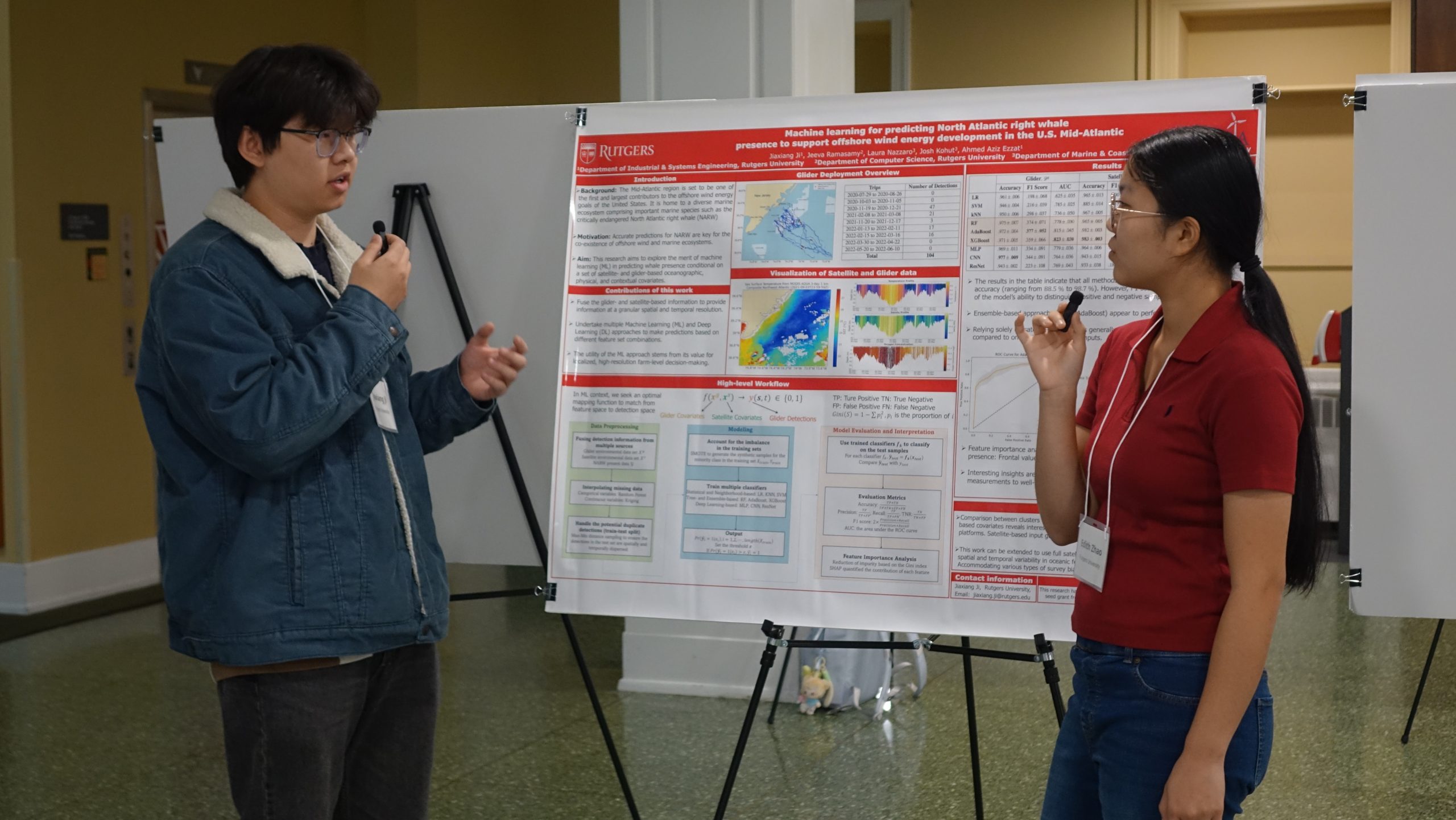
| Jiaxiang Ji, Rutgers University Jeeva Ramasamy, Rutgers University Laura Nazzaro, Rutgers University Josh Kohut, Rutgers University Ahmed Aziz Ezzat, Rutgers University | Machine learning for predicting North Atlantic right whale presence to support offshore wind energy development in the U.S. Mid-Atlantic | The Mid-Atlantic region is set to be one of the first and largest contributors to the offshore wind energy goals of the United States. Yet, the same region is home to a diverse marine ecosystem comprising important marine species such as the critically endangered North Atlantic right whale (NARW). To support the responsible development and operation of the planned offshore wind farms, there is a need for high-resolution modeling of NARW presence. Towards this, we leverage highly localized observations from nine glider deployments in the Mid-Atlantic to propose a machine learning approach for modeling NARW presence conditioned on a diverse set of glider- and satellite-based oceanic, physical, and contextual information. We find that tree- and ensemble-based models achieve the highest levels of accuracy, while maintaining a sensible balance of missed and false alarms. Interpretation of the machine-learnt features reveals interesting insights on the relative value of well-resolved satellite surface measurements to well-resolved vertical information from glider sampling in explaining the species-habitat patterns of NARWs. Our work constitutes the first machine learning attempt to jointly leverage glider- and satellite-based information for modeling of NARWs. | |
| Jackson Kaszas, Rutgers University Richard Riman, Rutgers University | Developing Instrumentation to Study Sustainable Concrete | Portland cement accounts for approximately 8% of anthropogenic CO2 emissions. Emission reduction can be achieved by replacing Portland cement with carbonate cements, which are binders that cure upon reaction with CO2 and sequester it within the concrete product. The large-scale use of carbonate cements is limited by non-uniform curing, a phenomenon in which concrete parts cure on their outer surfaces but retain a soft, powdery interior. An approach to solving this problem begins with reviewing physical and chemical phenomena that occur during carbonation curing. Building on the fundamental understanding of carbonation developed in this review, novel instrumentation is designed to study the carbonation curing process and engineer methods to limit or eliminate nonuniformity in carbonate concrete materials. | |
| Elizabeth Macchioni, Kean University | Tracking Toxins: Investigating Organic Contaminants Produced by Harmful Algal Blooms in New Jersey Waters | Harmful algal blooms (HABs) are increasingly common in New Jersey waters due to nutrient pollution and rising temperatures, producing organic toxins that threaten ecosystems and public health. Under climate change, HABs are expected to occur more frequently and become more widespread. This study investigates twelve HAB-associated toxins across freshwater and estuarine sites in New Jersey. Environmental parameters, including temperature, salinity, dissolved oxygen, and chlorophyll, were measured in situ using a YSI sonde. Water samples were filtered, extracted via solid phase extraction, and analyzed with ultrahigh performance liquid chromatography–tandem mass spectrometry (LC-MS/MS) to detect and quantify toxins. Pectenotoxin-2 (PTX2) and Dinophysistoxin-2 (DTX2) showed a strong correlation (r = 0.99), indicating co-occurrence of toxin-producing algae such as Dinophysis spp., while microcystin-YR (MC-YR) was more abundant in lower-salinity environments (r = –0.57), suggesting freshwater prevalence. The highest PTX2 concentrations (140 ng/L) were recorded at the Metedeconk River (a brackish site), likely produced by Dinophysis spp., while Brevetoxin PbTx2 levels remained low (<20 ng/L) across all sites. These findings show that HAB toxin distribution in New Jersey waters is linked to environmental conditions. Establishing and validating an LC-MS/MS protocol supports monitoring HAB drivers, guiding mitigation, and protecting aquatic ecosystems under changing climates. | Poster PDF |
| Shrinivas Nandi: Rutgers University Román M. Vásquez-Elizondo: Cinvestav Timothy. G. Stephens: Rutgers University Loretta Roberson: Marine Biological Laboratory Debashish Bhattacharya: Rutgers University | Drivers of microbiome dynamics in degrading Sargassum | Massive influxes of pelagic Sargassum spp. across the tropical Atlantic and Caribbean regions have created urgent ecological and economic challenges that need to be met to stabilize ecosystems. Use of this abundant resource as a source of bioproducts is a promising avenue but this requires elucidating the microbial processes that regulate Sargassum degradation, which are poorly understood. Here, we investigated the microbial degradation of the benthic Sargassum filipendula using multi-omics approaches. As expected, bacterial taxa with putative polysaccharide-degrading capabilities were enriched over time. Metagenomic and metatranscriptomic analyses identified diverse carbohydrate-active enzymes (CAZymes), including alginate lyases, fucoidanases, and cellulases, which were differentially expressed over the course of the degradation timeline. Compositional analysis supported the expression patterns of these lyase genes, particularly alginate, which was the most active class of CAZymes and showed a significant decrease between the start and end of the experimental period. Furthermore, we identified the need for arsenic detoxification pathways in organisms utilizing Sargassum derived substrates. We observed a suite of factors influencing microbial dynamics including prokaryotic competition, arsenic detoxification, viruses, and substrate availability. These factors appeared to influence prokaryote composition, with lineages capable of degrading recalcitrant polysaccharides like fucoidan rapidly outcompeted by other bacteria which utilized simpler sugars. These results highlight the metabolic potential of marine microbial communities to degrade complex Sargassum polysaccharides. Our findings elucidate microbial ecosystem dynamics during Sargassum stranding and provide novel insights that can be used to advance development of biotechnological approaches that leverage Sargassum biomass as a renewable resource. | |
| Vaishnavi Tripuraneni, Assistant Professor in Geography and Spatial Sciences, University of Delaware, vtripura@udel.edu Carolyn Voter, Assistant Professor in Civil and Environmental Engineering, University of Delaware, cvoter@udel.edu Victor Perez, Associate Professor in Sociology, University of Delaware, victorp@udel.edu Rachel Zobel, PHD Candidate in Civil and Environmental Engineering, University of Delaware, zobel@udel.edu Silvie Sandeen, Masters Student, Georgetown University, ssandeen@udel.edu Camryn Walker, Undergraduate Student, University of Delaware, cawalker@udel.edu | Community Perceptions of Flooding and Green Stormwater Infrastructure (GSI) in Northeast Wilmington, DE | In Wilmington, Delaware, climate change–driven increases in precipitation and sea level rise are straining the city’s aging combined sewer and stormwater systems. Green stormwater infrastructure (GSI) offers a sustainable strategy to mitigate flooding, improve water quality, and enhance community resilience; however, if inequitably implemented, GSI can reinforce environmental injustice. This research focuses on Northeast Wilmington, a community severely impacted by fluvial flooding during Hurricane Ida in 2021. The study integrates hydrologic data with community perspectives to identify GSI types and locations that align with both physical conditions and resident priorities. Using community-engaged methods—including twenty-six semi-structured interviews, sixty-one surveys, and three participatory mapping exercises—the project examines local experiences with flooding, perceptions of GSI, and barriers to adoption and maintenance. Results highlight frequent flooding along key corridors such as the 11th Street Bridge, Market Street, and E. 12th Street, and emphasize residents’ preferences for practical, attractive, and well-maintained GSI such as rain barrels, tree trenches, and sidewalk planters. Participants underscored the need for equitable investment, consistent maintenance, and inclusion in planning processes. Findings inform resilience planning by identifying community-supported and hydrologically appropriate sites for GSI, contributing to broader understanding of how participatory, place-based approaches advance equitable climate adaptation. | Poster PDF |
| Michelle Rozenfeld, Rutgers University Lindsay Downey, Bergen County Academies | Manual Clearcutting, Soil Permeability and Climate Dynamics: Assessing Environmental Impact in Black Rock Forest, NY | Background: Clearcutting and removal of trees can disrupt soil structure and alter soil permeability, leading to increased runoff and reduced carbon storage, exacerbating climate change. This study investigates the impact of a 2022 manual clearcutting event on soil permeability by comparing infiltration rates in recently clearcut and intact forested sites. Methods: Soil samples were collected at 15 cm depth from five locations within each land cover type in December 2024. Permeability was assessed through water percolation tests and infiltration times were recorded for statistical comparison using the Mann–Whitney U test. Results: Results indicate a slower mean percolation time in clearcut soils (100.9 ± 44.6 s) compared to forested soils (59.5 ± 32.1 s), suggesting reduced infiltration in disturbed sites, p = 0.0947. Although the statistical outcome did not support the initial hypothesis, the observed numerical trend highlights a possible trajectory toward long-term soil degradation. Implications: These findings reinforce the importance of managing deforested areas to preserve soil hydrological function. While limited by sample size and methodology, this investigation contributes local evidence of the ecological effects of manual deforestation. Studying this process at Black Rock Forest, NY, an important living research laboratory in our geographical area, helps scientists understand the local changes in ecosystem dynamics and can inform strategies to mitigate adverse climate effects. | Poster PDF |
| Stephanie Sharo, Graduate Program in Atmospheric Science, Rutgers University James Shope, Department of Environmental Sciences, Rutgers University Benjamin Lintner, Department of Environmental Sciences, Rutgers University David Robinson, Office of the New Jersey State Climatologist, Department of Geography, Rutgers University Mathieu Gerbush, Office of the New Jersey State Climatologist | New Jersey Statewide Temperature Statistical and Machine Learning Analysis | The urban heat island (UHI) effect increases urban residents’ heat exposure risk compared to their nonurban counterparts. We aim to identify and quantify the spatiotemporal modes of temperature variability across New Jersey relevant to urban heat amplification. First, average hourly temperatures from a subset of 43 Office of the New Jersey State Climatologist Mesonet weather stations from 2016–2024 were altitude corrected for lapse rate effects and compared to percentage of impervious surface surrounding the stations. The Mesonet stations do not show clear evidence of an air temperature UHI, which is unsurprising given that Mesonet sites exclude highly urbanized areas. Interestingly, the Pennsauken station, which is surrounded by the highest impervious percentage, is found to be consistently warmer. Given that factors besides urbanization appear to more strongly modulate Mesonet station temperature behavior, we seek to account for these through application of a suite of empirical orthogonal function, K-means clustering, and self-organizing maps analyses of both station-level and gridded reanalysis weather data from ERA5. Preliminarily, such analyses do show evidence of a weak UHI effect in the Mesonet stations. Our ongoing research explores the synoptic conditions that likely play a role in transient expression of the UHI and its spatial variability. | |
| Juhi Aggarwal, Rutgers School of Public Health and NJ Safe Schools Program Quincy W. Hunter, Rutgers School of Public Health and NJ Safe Schools Program Midhat Rehman, Rutgers School of Public Health and NJ Safe Schools Program Maryanne Campbell, Rutgers School of Public Health and NJ Safe Schools Program | Exploring Potential Associations between Mental Health/Indicators of Psychological Distress and Estimated Exposures of Ambient/Outdoor Air Quality Among Secondary School Teachers in New Jersey, 2022-2024 | Cross-sectional surveys of psychological distress were conducted among 12 training cohorts of NJ secondary school teachers for winter of 2021-22 school year (SY) - 2023-24 SY. We assessed symptoms associated with general mental health with Kessler-6 tool (K6+). Utilizing data from NJDEP/U.S. EPA Air Quality Monitoring Stations (AQMS), an estimated exposures to ambient/outdoor air quality database was constructed for initial environmental epidemiological study with ecological design. Cohorts were broken down by school district (SD) and paired with AQMS based on approximate geographic proximity for each SD’s school utilizing NJDEP’s NJ-GeoWeb after retrieving school addresses from NJ School Performance Reports database. Once addresses were reported and associated with 2+ AQMS, associated reviewed daily criteria pollutant data were retrieved from 2021-2023 for particulate matter (PM, PM10 and PM2.5) and ozone; 2024 data currently preliminary. Data downloaded were refined to include those associated with 12 virtual training date-ranges related to specified teacher cohorts, including two live session trainings per date-range consisting of 30 calendar days prior to its date to relate to K6+ questions. Data averaged for relevant stations. We present 2021-24 K6+ and environmental data analyses to spark discussion and inform future collaborative work in mental health and effects of environmental factors. | |
| James Shope, Rutgers University Department of Environmental Sciences Beth Ferguson, Rutgers University Department of Entomology Cesar Rodriguez-Saona, Rutgers University P.E. Marucci Center for Blueberry & Cranberry Research Peter Oudemans, Rutgers University P.E. Marucci Center for Blueberry & Cranberry Research Carrie Mansue, Rutgers University Cooperative Extension of Atlantic County | Informing Pest Control Timing: Modeling Plum Curculio and Blueberry Bloom Under Current and Future Climates | Plum curculio (Conotrachelus nenuphar) is a significant pest of pomaceous and stone fruits, including apples, peaches, plums, cherries, and blueberries. Its management is challenging due to potential overlap between optimal pesticide application timing and pollinator activity during bloom. To explore how blueberry bloom and PC activity periods may coincide, we analyzed monitoring data from 2012–2024 (bloom) and 2016–2024 (PC captures), converting each to percent progression per year. Logistic curves were fit to progression and accumulated degree days using a nonlinear mixed-effects model approach to account for variability across farms and years. These models help identify windows when honeybees might be safely removed to initiate PC control. On average, modeled peak bloom occurred around day 117 and peak PC activity around day 145, with significant farm-level variation. In both cases, progression start is highly variable while the development itself is consistent between sites. Differences in progression rates suggest that bloom–PC overlap may shift with warming springs. To explore future dynamics, we applied the developed models to temperature projections from 16 CMIP6 climate models for 2035–2065. This analysis can help inform adaptive pest management strategies that balance crop protection with pollinator safety with climate change. | |
| Kassia Symstad, Rutgers University Mary Whelan, Rutgers University Zoë Gold, Cornell University, Blair Young, Rutgers University | Negative carbonyl sulfide fluxes measured from bryophyte samples | Carbonyl sulfide (OCS) is taken up by plants during photosynthesis along similar pathways to carbon dioxide. Because OCS is not respired, it is a potential tracer gas for terrestrial carbon uptake. The OCS fluxes of other ecosystem components must be known for OCS to be used to estimate gross primary production. The OCS fluxes of bryophytes such as mosses and liverworts are relatively understudied. They may vary with environmental conditions such as moisture, temperature, and UV light exposure. This work addresses the uncertainty in bryophyte OCS fluxes by measuring gas fluxes from bryophyte samples under laboratory manipulations of temperature. Moss samples were collected from Harvard Forest, MA, a transition hardwood forest, in June and November 2024. Samples were placed in a PFA jar with a self-contained thermocouple and data logger to measure temperature. OCS and CO2 concentrations were measured with a quantum cascade laser first at room temperature, and then at a range of temperatures from 15° C to 35° C. The fluxes were then calculated. OCS fluxes were mostly positive, indicating uptake. | Poster PDF |
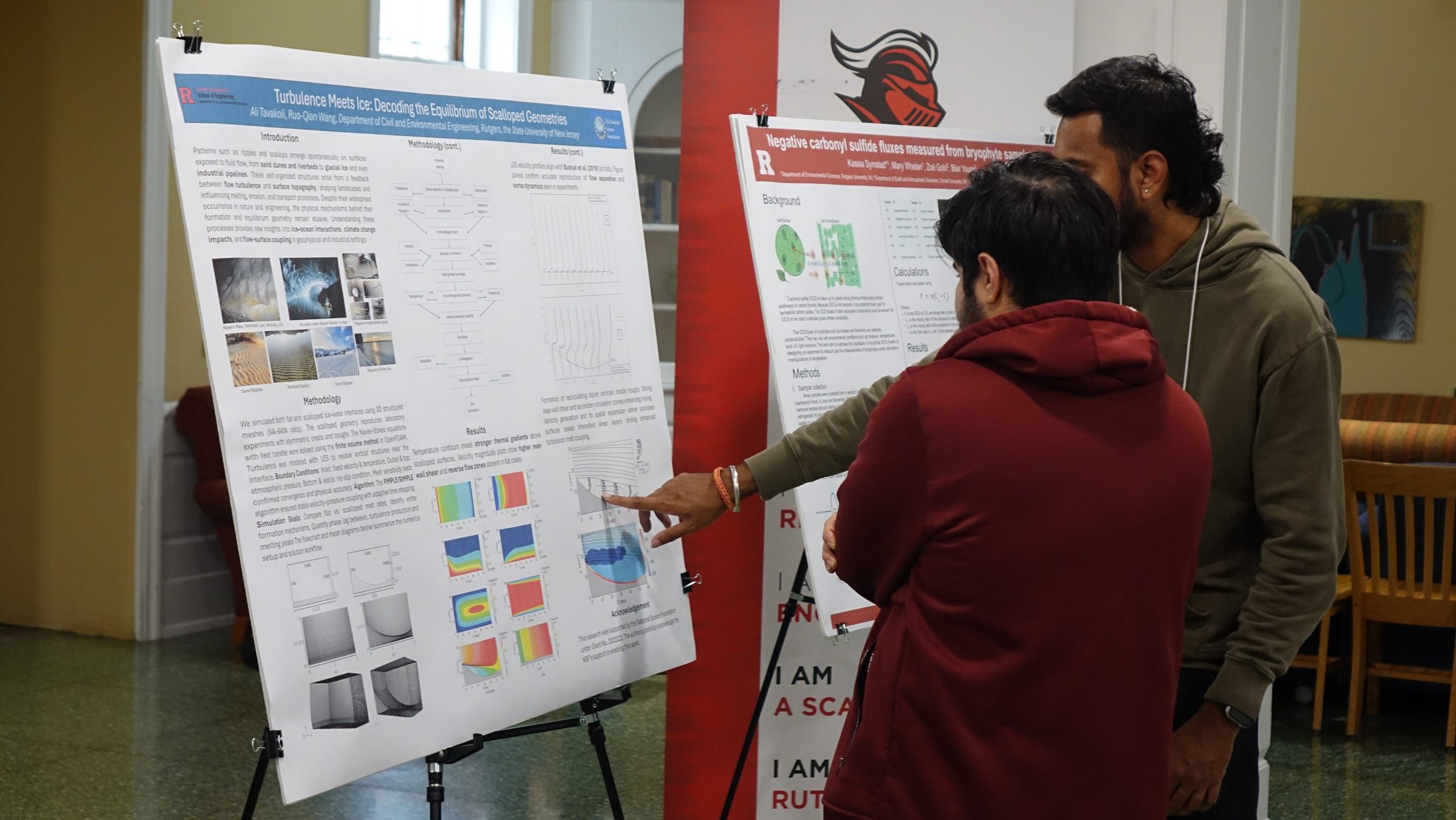
| Ali Tavakoli, Rutgers University Ruo-Qian Wang, Rutgers University | Turbulence Meets Ice: Decoding the Equilibrium of Scalloped Geometries | Scalloped ice surfaces, commonly observed beneath glaciers, bottom of floating ice, and other turbulent water-ice interface, emerge from a self-organized interaction between turbulent flow and melting topography. To uncover the physical mechanisms governing their equilibrium geometry, we performed two-dimensional simulations of flat and scalloped ice–water interfaces by developing a high fidelity Computational Fluid Dynamics model. Results reveal that scalloped geometries intensify near-wall shear, generate recirculating dipole vortices within troughs, and enhance local heat transfer leading to spatially varying melt rates. Compared to flat surfaces, scallops exhibit stronger turbulence melt coupling and distinct phase lags between turbulent energy production and melting peaks. These processes, observed at the microscale, are fundamental to understanding how turbulence modulates ice–ocean heat exchange and the overall rate of ice mass loss. The findings provide a mechanistic link between laboratory-scale dynamics and global ice melting processes, offering improved parameterizations for climate and ocean models that seek to predict sea-level rise more accurately. | Poster PDF |
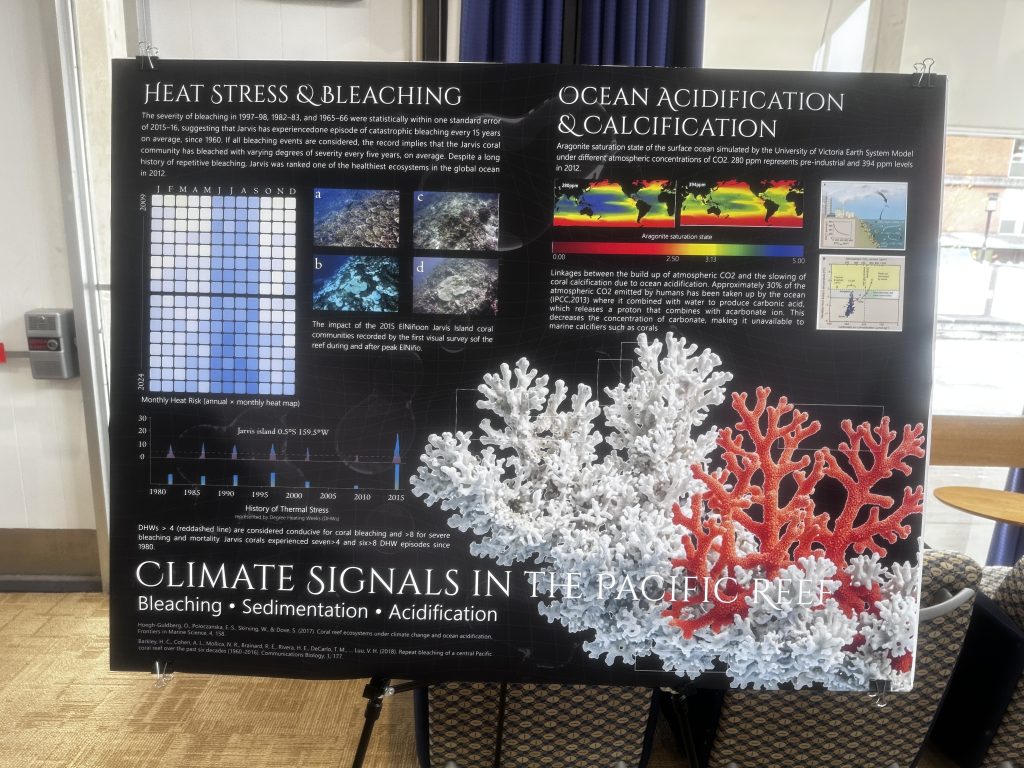
| Qing Zeng, Rutgers University | Three Futures of One Coral | This poster visualizes how current climate change threatens coral reefs. It highlights three major stressors: (1) thermal stress from rising sea-surface temperatures, which disrupts coral–zooxanthellae symbiosis and triggers bleaching and mortality; (2) sea-level rise that increases suspended sediments and gradually smothers corals; and (3) ocean acidification from elevated CO₂, which weakens coral skeleton formation. A single coral is used as the central figure, with different sections of the same organism showing how it deforms or adapts under each stressor, supported by concise data labels and mini-charts. The narrative suggests a coral living in a warming era and being pushed into three parallel, pressured futures—yet ones that remain alterable through human interventions. Dark backgrounds and a highly saturated, high-contrast rendering of the coral emphasize damage, causality, and current responses. | |
| Gejia Zhang, Rutgers University Robert Mieth, Rutgers University | Reliability-Aware Control of Distributed Energy Resources using Multi-Source Data Models | Distributed energy resources offer a control-based option to improve distribution system reliability by ensuring system states that positively impact component failure rates. This option is an attractive complement to otherwise costly and lengthy physical infrastructure upgrades. However, required models that adequately map operational decisions and environmental conditions to system failure risk are lacking because of data unavailability and the fact that distribution system failures remain rare events. Our project addresses this gap and proposes a multi-source data model that consistently maps comprehensive weather and system state information to component failure rates. To manage collinearity in the available features, we propose two ensemble tree-based models that systematically identify the most influential features and reduce the dataset's dimensionality based on each feature's impact on failure rate estimates. These estimates are embedded within a sequential, non-convex optimization procedure, that dynamically updates operational control decisions. We perform a numerical experiment to demonstrate the cost and reliability benefits that can be achieved through this reliability-aware control approach and to analyze the properties of each proposed estimation model. | |
| Yu Zhou, Rutgers University Yalin Li, Rutgers University | Cement Recovery from Waste Concrete: Carbon Reduction Potential and Techno-Economic Competitiveness | As the cornerstone of modern infrastructure and one of the largest CO2 contributors, the cement industry is a key driver of climate change. In 2023, global cement production reached approximately 4.1 billion tons, releasing about 1.6 billion tons of CO2-eq, or 8% of total anthropogenic emissions. Meanwhile, the United States generated over 400 million tons of concrete waste, containing a substantial amount of recoverable cementitious materials that remain underutilized. The dual challenge of large carbon emissions and increasing construction waste underscores the urgent need for circular and low-carbon solutions in the cement industry. Recovering cement from waste concrete provides a sustainable and cost-effective pathway, mitigating both carbon emissions and waste generation. This study evaluates three potential mechanical and chemical routes for cement recovery from waste concrete and analyzes their environmental and economic performance. The results indicate that these pathways can significantly lower the carbon footprint of cement production, while being market competitive with traditional Portland cement through co-product sales and tipping fee revenues. Such recovery-based strategies advance low-emission cement production and support the broader goal of deep decarbonization in the construction materials sector. | Poster PDF |